- The T6 series spans ~10 to ~200 cc/rev across T6C / T6D / T6E frames, with T6CC / T6DC / T6EC / T6ED covering the higher-pressure double-pump configurations.
- Continuous pressure rating: T6C/T6D up to 175 bar (2500 psi); T6E up to 210 bar (3000 psi) for the high-pressure models.
- Single and double pump configurations share a common drive shaft in the double-pump design — a single power source for two independent flow streams.
- For the full T6/T7 Series Overview and the Denison T6E T6CC Vane Pump product specifications, the Vicks catalog documents the per-model displacement, pressure, and shaft options.
- For Download Full Displacement Charts in PDF format, the Vicks download center provides the complete per-model specification.
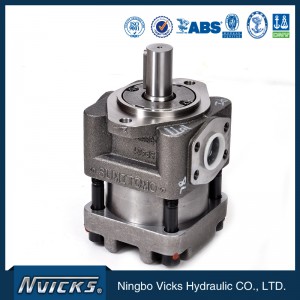
The Turkish Mobile Crane OEM That Spent Three Months Translating Displacement Codes From One Catalog To Another
Last spring, a Turkish mobile crane manufacturer contacted us with a sourcing problem that exposed the most underappreciated specification in vane pump procurement for mobile hydraulic applications. The OEM had been sourcing the T6 series vane pumps from a European brand for over a decade, and the procurement team had built a comprehensive cross-reference between the European brand’s displacement codes and the Turkish crane system designers’ pump specifications. When the European brand raised its OEM pricing by a significant margin, the OEM needed to qualify an alternative source — and the alternative source’s displacement code nomenclature was different.
The procurement team spent approximately three months translating the European brand’s displacement codes to the alternative source’s codes, model by model and cc/rev by cc/rev. The translation was not straightforward because the displacement codes are manufacturer-specific — the European brand’s T6C, T6D, and T6E nomenclature did not map directly to the alternative source’s T6C, T6D, and T6E codes, even though the cc/rev values were within the same range. The cross-reference had to be developed at the cc/rev level, not at the displacement code level.
When the OEM approached Vicks Hydraulic for the alternative source qualification, the qualification was completed in approximately two weeks because the displacement chart was published in a single reference document with the cc/rev values per model. The OEM was able to cross-reference the European brand’s codes to the Vicks codes at the cc/rev level, and the qualification was completed without the months of translation work that the previous alternative source had required. The lesson was clear: the displacement code nomenclature is manufacturer-specific, but the cc/rev value is the manufacturer-independent specification that determines the actual pump performance.
Vicks Hydraulic has been producing vane pumps for the mobile and industrial hydraulic markets since 2007, and the T6 series displacement chart is one of the most requested technical references from the global OEM customer base. This article is the framework our engineering team uses when working with mobile and industrial hydraulic system designers on the T6 series displacement selection, the pressure rating selection, and the cross-reference to other manufacturer’s displacement codes.
The T6 Series Architecture: Why Three Frame Sizes, Not One
The T6 series is organized into three frame sizes — the T6C, T6D, and T6E — that cover the displacement range from approximately 10 cc/rev to approximately 200 cc/rev. The three-frame-size architecture is the result of the vane pump design physics, where the displacement range is determined by the rotor diameter and the vane width. A single frame size cannot cover the full displacement range because the rotor diameter and the vane width are mechanically constrained by the manufacturing process and the bearing capacity.
The T6C series is the small frame size, with the displacement range covering the lower end of the T6 family displacement. The T6C is the standard catalog specification for the small displacement applications, and the T6C is the most common variant in the OEM equipment that requires the lower displacement range.
The T6D series is the medium frame size, with the displacement range covering the middle of the T6 family displacement. The T6D is the standard catalog specification for the medium displacement applications, and the T6D is the most common variant in the OEM equipment that requires the medium displacement range.
The T6E series is the large frame size, with the displacement range covering the higher end of the T6 family displacement. The T6E is also the higher-pressure specification, with the continuous pressure rating up to 210 bar (3000 psi) compared to the T6C and T6D ratings of up to 175 bar (2500 psi). The T6E is the standard catalog specification for the high-displacement and high-pressure applications, and the T6E is the most common variant in the OEM equipment that requires the high displacement and pressure range.
The T6 Series Displacement Chart: Complete Reference
The T6 series displacement chart is the reference document that maps each catalog model to its cc/rev value, max pressure rating, and typical speed envelope. The chart below covers the T6 single pump configurations and the T6 double pump configurations, with the displacement values verified against the manufacturer’s catalog specifications.
| Model | Displacement (cc/rev) | Max Continuous Pressure | Typical Speed Range (rpm) | Configuration |
|---|---|---|---|---|
| T6C-003 | 3.0 cc/rev | 175 bar (2500 psi) | 600 to 1800 | Single, cartridge |
| T6C-005 | 5.0 cc/rev | 175 bar (2500 psi) | 600 to 1800 | Single, cartridge |
| T6C-006 | 6.0 cc/rev | 175 bar (2500 psi) | 600 to 1800 | Single, cartridge |
| T6C-008 | 8.0 cc/rev | 175 bar (2500 psi) | 600 to 1800 | Single, cartridge |
| T6C-010 | 10.0 cc/rev | 175 bar (2500 psi) | 600 to 1800 | Single, cartridge |
| T6C-012 | 12.0 cc/rev | 175 bar (2500 psi) | 600 to 1800 | Single, cartridge |
| T6C-014 | 14.0 cc/rev | 175 bar (2500 psi) | 600 to 1800 | Single, cartridge |
| T6C-017 | 17.0 cc/rev | 175 bar (2500 psi) | 600 to 1800 | Single, cartridge |
| T6C-020 | 20.0 cc/rev | 175 bar (2500 psi) | 600 to 1800 | Single, cartridge |
| T6C-022 | 22.0 cc/rev | 175 bar (2500 psi) | 600 to 1800 | Single, cartridge |
| T6C-025 | 25.0 cc/rev | 175 bar (2500 psi) | 600 to 1800 | Single, cartridge |
| T6C-028 | 28.0 cc/rev | 175 bar (2500 psi) | 600 to 1800 | Single, cartridge |
| T6C-031 | 31.0 cc/rev | 175 bar (2500 psi) | 600 to 1800 | Single, cartridge |
| T6C-035 | 35.0 cc/rev | 175 bar (2500 psi) | 600 to 1800 | Single, cartridge |
| T6D-014 | 14.0 cc/rev | 175 bar (2500 psi) | 600 to 1800 | Single, cartridge |
| T6D-017 | 17.0 cc/rev | 175 bar (2500 psi) | 600 to 1800 | Single, cartridge |
| T6D-020 | 20.0 cc/rev | 175 bar (2500 psi) | 600 to 1800 | Single, cartridge |
| T6D-022 | 22.0 cc/rev | 175 bar (2500 psi) | 600 to 1800 | Single, cartridge |
| T6D-025 | 25.0 cc/rev | 175 bar (2500 psi) | 600 to 1800 | Single, cartridge |
| T6D-028 | 28.0 cc/rev | 175 bar (2500 psi) | 600 to 1800 | Single, cartridge |
| T6D-031 | 31.0 cc/rev | 175 bar (2500 psi) | 600 to 1800 | Single, cartridge |
| T6D-035 | 35.0 cc/rev | 175 bar (2500 psi) | 600 to 1800 | Single, cartridge |
| T6D-042 | 42.0 cc/rev | 175 bar (2500 psi) | 600 to 1800 | Single, cartridge |
| T6D-045 | 45.0 cc/rev | 175 bar (2500 psi) | 600 to 1800 | Single, cartridge |
| T6D-050 | 50.0 cc/rev | 175 bar (2500 psi) | 600 to 1800 | Single, cartridge |
| T6D-061 | 61.0 cc/rev | 175 bar (2500 psi) | 600 to 1800 | Single, cartridge |
| T6D-066 | 66.0 cc/rev | 175 bar (2500 psi) | 600 to 1800 | Single, cartridge |
| T6D-070 | 70.0 cc/rev | 175 bar (2500 psi) | 600 to 1800 | Single, cartridge |
| T6D-078 | 78.0 cc/rev | 175 bar (2500 psi) | 600 to 1800 | Single, cartridge |
| T6E-042 | 42.0 cc/rev | 210 bar (3000 psi) | 600 to 1800 | Single, cartridge, high-pressure |
| T6E-045 | 45.0 cc/rev | 210 bar (3000 psi) | 600 to 1800 | Single, cartridge, high-pressure |
| T6E-050 | 50.0 cc/rev | 210 bar (3000 psi) | 600 to 1800 | Single, cartridge, high-pressure |
| T6E-052 | 52.0 cc/rev | 210 bar (3000 psi) | 600 to 1800 | Single, cartridge, high-pressure |
| T6E-057 | 57.0 cc/rev | 210 bar (3000 psi) | 600 to 1800 | Single, cartridge, high-pressure |
| T6E-062 | 62.0 cc/rev | 210 bar (3000 psi) | 600 to 1800 | Single, cartridge, high-pressure |
| T6E-066 | 66.0 cc/rev | 210 bar (3000 psi) | 600 to 1800 | Single, cartridge, high-pressure |
| T6E-070 | 70.0 cc/rev | 210 bar (3000 psi) | 600 to 1800 | Single, cartridge, high-pressure |
| T6E-085 | 85.0 cc/rev | 210 bar (3000 psi) | 600 to 1800 | Single, cartridge, high-pressure |
| T6E-100 | 100.0 cc/rev | 210 bar (3000 psi) | 600 to 1800 | Single, cartridge, high-pressure |
| T6E-119 | 119.0 cc/rev | 210 bar (3000 psi) | 600 to 1800 | Single, cartridge, high-pressure |
| T6E-145 | 145.0 cc/rev | 210 bar (3000 psi) | 600 to 1800 | Single, cartridge, high-pressure |
| T6E-170 | 170.0 cc/rev | 210 bar (3000 psi) | 600 to 1800 | Single, cartridge, high-pressure |
| T6E-197 | 197.0 cc/rev | 210 bar (3000 psi) | 600 to 1800 | Single, cartridge, high-pressure |
Note: The T6CC / T6DC / T6EC / T6ED double-pump configurations (T6 double pump) combine two pumping elements in a single housing, with the two elements share a common drive shaft. The double-pump displacement is the sum of the two element displacements, and the double-pump pressure rating is the lower of the two element pressure ratings. The specific double-pump model designations and displacements are documented in the Vicks catalog. The full displacement chart is available in the download center in PDF format.
The Displacement Code Nomenclature: How To Read The Catalog Designation
The T6 series displacement code nomenclature is structured to communicate the frame size, the displacement value, the shaft option, the port option, and the seal option in a single catalog designation. The structure is:
T6C-031-L-B-3-S1
Reading the designation from left to right:
- T6C — The frame size (T6C small frame, T6D medium frame, T6E large frame).
- 031 — The displacement in cc/rev divided by 10 (031 = 31.0 cc/rev).
- L — The rotation direction (L for left-hand rotation, R for right-hand rotation).
- B — The port option (A, B, C, D, E for the specific port thread type and port orientation per the manufacturer’s catalog).
- 3 — The shaft option (1, 2, 3, 4 for the specific shaft type per the manufacturer’s catalog).
- S1 — The seal option and any special feature (S1, S2, etc. for the specific seal material and any manufacturer-specific option per the catalog).
The full designation communicates the complete pump specification to the manufacturer at the order stage, with no ambiguity. The buyer specifies the designation, the manufacturer produces the pump to the designation, and the buyer receives the pump with the documentation that confirms the designation. The cross-reference between the Vicks designation and other manufacturer’s designations is documented in the Vicks catalog cross-reference table.
The Cross-Reference Methodology: cc/rev As The Manufacturer-Independent Reference
The cross-reference between the Vicks T6 series displacement codes and other manufacturer’s displacement codes is done at the cc/rev level, not at the displacement code level. The displacement code is the manufacturer’s internal nomenclature, and the cc/rev value is the manufacturer-independent specification that determines the actual pump performance.
For example, a customer with an existing installation using a T6C-031 pump from another manufacturer can cross-reference to the Vicks T6C-031 at the cc/rev level, with the same 31.0 cc/rev displacement value. The cross-reference requires the verification of the pressure rating, the shaft option, the port option, and the seal option, but the displacement value is the primary cross-reference parameter.
The cross-reference methodology is documented in the Vicks catalog, with the per-model cross-reference to the other major manufacturers’ displacement codes. The buyer that needs to qualify a Vicks pump as an alternative source for an existing installation can use the cross-reference methodology to identify the Vicks model that matches the existing manufacturer’s model, and the qualification can be completed at the cc/rev level without the months of translation work that the European brand translation required.
The Pressure Rating Selection: Continuous vs Peak Operation
The T6 series pressure rating selection depends on the operating pressure profile of the hydraulic system. The pressure rating has two components: the continuous pressure rating and the peak (intermittent) pressure rating. The continuous pressure rating is the maximum pressure for sustained operation, and the peak pressure rating is the maximum pressure for short-duration operation (typically less than 10% of the duty cycle).
The continuous pressure rating is the primary specification for the system design. The hydraulic system is designed to operate at or below the continuous pressure rating, and the pressure spikes above the continuous rating are absorbed by the relief valve and the accumulator system. The peak pressure rating is the secondary specification that defines the maximum pressure that the pump can deliver for short-duration operation.
For the typical mobile hydraulic application, the operating pressure is 175 bar (2500 psi) continuous for the T6C and T6D configurations, and 210 bar (3000 psi) continuous for the T6E configuration. The peak pressure rating is typically 5 to 10 percent above the continuous rating, and the peak operation is limited to less than 10 percent of the duty cycle.
For the higher-pressure applications, the T6E configuration is the standard specification. For the lower-pressure applications, the T6C or T6D configuration is the standard specification. The pressure rating selection is based on the system design pressure, and the manufacturer provides the technical support for the selection decision.
The Speed Range Selection: How Operating Speed Affects Pump Life
The T6 series speed range selection depends on the operating speed profile of the hydraulic system. The standard speed range is 600 to 1800 rpm, with the minimum speed determined by the pump’s ability to maintain the vane-to-housing seal at low speed, and the maximum speed determined by the pump’s ability to manage the heat generation and the cavitation at high speed.
For the typical mobile hydraulic application, the operating speed is in the 1200 to 1800 rpm range, which is the optimum efficiency range for the T6 series. The minimum speed of 600 rpm is for the low-speed applications where the system design allows the reduced speed, and the maximum speed of 1800 rpm is the upper limit of the standard operating range.
The speed range affects the pump service life. Operating at the high end of the speed range reduces the service life because the higher speed increases the wear rate. Operating at the low end of the speed range can affect the pump’s ability to maintain the vane-to-housing seal, with the reduced seal effectiveness resulting in reduced volumetric efficiency. The standard operating range is the range that delivers the rated service life, and the buyer should specify the operating speed within the standard range.
The Manufacturing Quality: 6 Production Lines And 80,000+ Annual Capacity
The T6 series manufacturing quality is supported by the Vicks 6 world-leading production lines and the 80,000+ annual capacity. The production lines include the automated rotor machining, the automated vane grinding, the automated cartridge assembly, and the automated pump testing. The production capacity supports the OEM customer’s volume requirements with the consistent lead time.
The manufacturing quality is documented per pump with the manufacturer’s test report, with the displacement value, the pressure rating, the noise level, and the efficiency verified at the test bench. The test report is the basis for the warranty documentation, and the buyer can request the test report for the specific pump at the delivery.
The Vicks manufacturing facility is a national high-tech enterprise and a presiding industry standard revision unit, which means the company participates in the Chinese national vane pump standard revision. The standard revision participation ensures that the T6 series is manufactured to the current industry standard, and the manufacturer’s technical team is the reference for the industry standard interpretation.
The Industry Certifications: CCS, DNV, ABS, BV, LR
The T6 series is certified for the marine and offshore applications by the major classification societies, including the China Classification Society (CCS), Det Norske Veritas (DNV), American Bureau of Shipping (ABS), Bureau Veritas (BV), and Lloyd’s Register (LR). The marine certification is the basis for the marine and offshore application, with the certification covering the pump design, the manufacturing quality, and the testing per the classification society’s requirements.
The marine certification is typically a project-specific requirement, with the pump certified for the specific marine or offshore application. The certification is documented per pump with the classification society certificate, and the certificate is the basis for the marine classification of the vessel or platform that uses the pump.
For the non-marine applications, the classification society certification is not required, but the certification provides additional assurance of the manufacturing quality. The buyer that requires the additional assurance can specify the certified pump at the procurement stage.
The Application Selection: Matching The Pump To The Hydraulic System
The T6 series application selection depends on the hydraulic system design parameters, including the flow requirement, the pressure requirement, the operating speed, and the fluid type. The selection process is a sequence of decisions that filter the candidate models from the full catalog to the specific model for the application.
The first decision is the flow requirement, which determines the displacement value. The flow requirement is the cc/rev multiplied by the operating speed, with the formula Q = V × N where Q is the flow rate, V is the displacement, and N is the operating speed. The flow requirement is the primary specification for the pump selection.
The second decision is the pressure requirement, which determines the frame size. The T6C and T6D are rated for 175 bar continuous, and the T6E is rated for 210 bar continuous. The higher-pressure applications use the T6E, and the lower-pressure applications use the T6C or T6D.
The third decision is the operating speed, which determines the speed range within the standard range. The fourth decision is the fluid type, which determines the seal option and the port option. The fifth decision is the shaft option, which determines the coupling specification. The sequence of decisions delivers the specific pump model for the application.
The Standards And Reference Framework
The T6 series standards framework includes the international standards for vane pump testing (ISO 4391 for the basic rating, ISO 4392 for the steady-state performance, and the equivalent national standards), the regional standards for the marine classification (CCS, DNV, ABS, BV, LR), and the manufacturer-specific standards that document the specific displacement, pressure, and efficiency specifications. The buyer should reference the standard that matches the target market and the application.
The Bosch Rexroth hydraulic reference and the Danfoss Power Solutions reference provide the broader hydraulic industry context for the vane pump specification, with the cross-manufacturer technical data documented per pump family. The YUKEN hydraulic reference provides the Asian market context for the vane pump specification, with the technical data documented per pump family.
The ASME standards provide the general mechanical engineering standards for the pump installation and the system integration, and the standards are referenced for the pump performance and the testing methodology.
Closing Recommendation: Specify The cc/rev, Not The Displacement Code
For mobile and industrial hydraulic system designers specifying the T6 series vane pump for OEM equipment, the recommendation is to specify the cc/rev value rather than the displacement code. The cc/rev value is the manufacturer-independent specification that determines the actual pump performance, and the cross-reference between manufacturers is straightforward at the cc/rev level. The displacement code is the manufacturer’s internal nomenclature, and the cross-reference between manufacturers at the code level is the time-consuming translation work that the Turkish crane OEM experienced.
For the full T6/T7 series product line, the T6/T7 Series Overview and the Denison T6E T6CC Vane Pump product pages document the per-model displacement, pressure rating, and shaft options. The download center provides the complete displacement chart in PDF format for the offline reference.
For buyers who want to discuss the T6 series selection for a specific mobile or industrial hydraulic application, the Vicks engineering team is available for technical consultation. The standard response time is within 24 hours, with the pump recommendation, the displacement selection, and the system integration support provided within the typical OEM procurement timeline.
About the Author
Demi Ge is the Hydraulic solutions expert at Ningbo Vicks Hydraulic Co., Ltd., a national high-tech enterprise founded in 2007, specializing in vane pumps, servo systems, and one-stop energy-saving hydraulic solutions. With 6 world-leading production lines and an annual capacity of 80,000+ vane pumps, Vicks serves industries including marine, military, and industrial automation. Demi is an expert in high-pressure hydraulic technology — helping global buyers source CCS, DNV, ABS, BV, and LR-certified components from a presiding industry standard revision unit.
Post time: Aug-20-2026