Summary
Turkey’s injection molding sector has grown rapidly in recent years, and many first-time buyers source hydraulic components from international suppliers. This article walks through the most common and expensive mistake in first-time imports, with practical guidance on avoiding it.
- Model-name match is not the same as OEM part-number match; the gap between them causes premature failures.
- T6 single-section configurations suit 100 to 200 ton machines; larger cells need T6D/T6E or double-section designs.
- Five documents must be in writing before any order: catalog page, test certificate, material certification, warranty, service contact.
- Sea freight from China to Turkey takes 25 to 35 days; plan 90 to 120 days ahead of installation.
- Customs duties and brokerage fees add 5 to 10 percent on top of the pump cost for first-time importers.
Turkish injection molders expanding their operations have become an important customer segment for my team over the past three years, and I have personally walked several first-time buyers through the import process. The Istanbul, Bursa, and Izmir clusters continue to grow, and procurement teams at these molders are increasingly sourcing hydraulic vane pumps from Chinese OEM suppliers rather than from European or American brands. The opportunity for cost savings is real, but so is the risk of expensive first-time mistakes.
In this article I distill the single most common error I see in first-time imports from Turkish customers, along with the practical steps I recommend to avoid it. The mistake is simple, consistent across customers, and almost always discovered too late. Knowing the pattern upfront saves the kind of money that determines whether an import program gets a second order or gets shut down by procurement leadership.
The Mistake That Costs Turkish Molders the Most Money
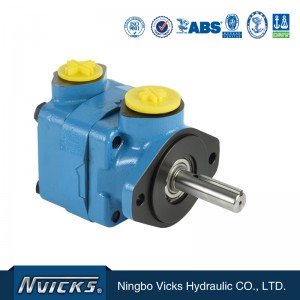
The single most expensive mistake I see in first-time imports is specifying the pump by model name without verifying the OEM part number against the specific OEM catalog being offered. A T6 series vane pump from one supplier can differ substantially from a T6 series pump from another supplier, even when both suppliers claim to offer OEM-equivalent products.
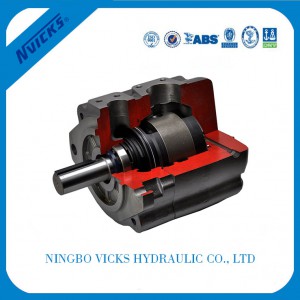
The differences are not visible during installation. The pumps bolt up to the same SAE flanges, share the same shaft geometry, and produce flow curves that look similar on the test bench. The differences appear over time. Internal port timing varies, pressure plate flatness tolerance differs, and compensator settings are calibrated to different performance targets. After 2,000 to 4,000 operating hours, the imported pump starts showing wear patterns that do not match the original OEM specifications, and the failure mode is often outside the supplier’s warranty coverage.
I have worked with multiple Turkish customers who received pumps that physically installed correctly but failed well before the rated service life. In each case, the root cause was a mismatch between the model designation on the order and the actual OEM specification documented in the manufacturer’s catalog. The pumps were not defective. They were simply different from what the customer intended to buy.
What “Model Name Match” Really Means
The Denison T6 platform includes T6C, T6D, T6E, T6GC, T6GCC, and T6EEC variants. Each variant has specific pressure plate designs, port timing configurations, and compensator calibrations documented in the OEM catalog. A T6C from one supplier and a T6C from another supplier can deliver identical flow at rated pressure but produce different wear patterns over time if the internal specifications differ.
Buyers researching vane pump selection can reference the Eaton vane pump catalog for cross-reference comparisons against the T6 specifications covered in this article.
Buyers evaluating the complete product range can review the full products catalog to compare T6 specifications against the broader T7, V, and V10/V20 families before finalizing the supplier selection.
The Vickers V and VQ platforms follow a similar structure. A V/VQ designation without the specific OEM catalog part number does not guarantee that two suppliers are offering equivalent products. The OEM catalog page, with dimensional drawings and performance curves, is the reference document that establishes the specification boundary. Without that page in the documentation package, the buyer has no reliable basis for verifying what is being supplied.
For Turkish buyers specifically, this issue is compounded by the long supply chain. When a Chinese supplier is two communication channels removed from the OEM engineering team, the model designation is the easiest specification to communicate but the easiest one to misinterpret. The buyer believes they are buying what was specified. The supplier believes they are selling what was ordered. The pump ships. The mismatch only becomes apparent after installation.
The Five Documents Every First-Time Importer Should Require
Across the first-time import projects I have reviewed, the buyers who consistently avoid the model-name mismatch problem all required the same five documents before issuing a purchase order. These documents do not eliminate all import risk, but they catch the most common specification errors before the pump ships.
The European Federation of Materials Handling provides additional guidance on hydraulic component specification standards applicable to injection molding equipment.
Document one is the OEM catalog page for the specific pump model. The catalog page should include dimensional drawings, performance curves, and the part number breakdown. If the supplier cannot provide this document, they are not an authorized source for that specific OEM catalog item.
Document two is the test certificate for the individual pump being shipped. Test certificates record flow, pressure, and efficiency measurements at rated conditions. The certificate should be traceable to a specific pump serial number. Generic test certificates that cover multiple pumps are not adequate documentation for technical procurement.
Document three is the material certification for the cartridge and housing. The certification should reference the heat treatment specifications and the material grades used. Without this document, the buyer has no way to verify that the cartridge meets the rated wear specifications.
Document four is the warranty terms in writing. Verbal warranty commitments from sales representatives are not enforceable across borders. The written warranty should specify duration, coverage scope, and the process for filing claims. Suppliers who refuse to provide written warranty terms are not the right suppliers for international customers.
Document five is the supplier’s service contact information for ongoing technical support. Hydraulic pumps require service life planning, troubleshooting guidance, and replacement cartridge sourcing across multiple years. Suppliers who cannot provide a named service contact for international customers will not be reachable when the pump needs replacement parts three years after installation.
T6 Variant Selection for Injection Molding Machines
For Turkish injection molding buyers evaluating the T6 platform, the variant selection should be driven by the machine’s clamping force and cycle time requirements rather than by the lowest headline price.
Buyers can reference the ISO hydraulic system standards for the rated performance testing methodology that should appear in any supplier test certificate.
For buyers comparing different pump series, the V series platform offers an alternative displacement range that suits different machine class requirements.
The T6C single-section configuration is the most common starting point for injection molding cells in the 100 to 200 ton clamping force range. The single-section design provides a clean hydraulic circuit with predictable flow characteristics. Cycle times of 8 to 15 seconds are typical for this configuration in the 150 ton machine class.
For larger machines in the 250 to 400 ton range, the T6D or T6E single-section variants provide higher displacement without changing the circuit architecture. The displacement increase shortens cycle time for high-volume production runs. Buyers should match the variant to the typical cycle time rather than sizing up speculatively.
For machines with separate clamping and injection circuits, the T6CC or T6DC double-section designs offer integrated flow paths in a single housing. The double-section approach saves space and simplifies piping compared with two separate pumps, but it also creates a single point of failure that can halt production if either section requires service. The trade-off between integration and redundancy should be evaluated against the production schedule.
T6GCC and T6EEC triple-section designs are typically reserved for very large machines and specialized applications. For standard injection molding cells in the Turkish market segment, single or double-section designs cover the bulk of new equipment requirements.
Shipping Logistics From China to Turkey
Standard sea freight from Ningbo or Shanghai to Istanbul takes 25 to 35 days, plus 5 to 10 days for Turkish customs clearance and inland trucking to the manufacturing site. The total transit time runs 30 to 45 days for a typical sea freight shipment. Air freight reduces transit time to 7 to 10 days at four to six times the sea freight cost. For first-time importers, sea freight is the standard choice unless the pump is needed urgently for a production line restart.
Logistics standards for international pump shipments are documented through the ISO cleanliness standards applicable to hydraulic component transportation.
Customers who source complete hydraulic power units often pair the pump with the vane motor family for positioning and auxiliary drive systems.
The packaging standards for hydraulic pumps matter for international shipments. Pumps should be shipped in vacuum-sealed protective wrapping inside wooden crates with foam padding. Suppliers who use thin cardboard boxes or skip the vacuum seal risk water damage during the long ocean transit. I always recommend inspection of packaging standards before ordering is a small step that prevents a much larger replacement cost, which my team has seen customers absorb when they skipped the inspection step.
Planning the order 90 to 120 days ahead of the installation date provides comfortable buffer for any customs or logistics complications. First-time importers who plan too tight typically experience delays that cascade through the production schedule, since the replacement pump is harder to source on short notice than the original.
Turkish Customs and Documentation Requirements
Imports into Turkey require a commercial invoice, packing list, bill of lading, certificate of origin, and a CE declaration of conformity. The CE declaration is not always required for industrial components, but it simplifies customs clearance and reduces delays at the port. Some shipments also require the supplier’s ISO 9001 certificate and the product-specific test certificates for verification.
Tariff classification guidance for industrial equipment imports is available through the ISO international standards framework.
Working with a customs broker in Turkey simplifies the documentation review and helps avoid common errors that delay clearance. Customs brokers charge 1 to 3 percent of the shipment value for their services, but the time savings and error reduction typically justify the cost for first-time importers. The broker can also advise on the correct HS code classification for the hydraulic pumps, which determines the duty rate applied.
First-time importers should budget 5 to 10 percent of the pump cost for customs duties and brokerage fees. The exact percentage depends on the HS code classification and the country of origin tariff rates applicable at the time of import. Turkey applies variable duty rates to industrial equipment depending on the country of origin and any applicable trade agreements.
Payment Terms and Currency Considerations
First-time orders from new suppliers typically require 30 to 50 percent deposit with the balance against copy of bill of lading. Established relationships can move to letter of credit or net 30 terms. Smaller first orders below USD 5,000 are sometimes 100 percent deposit. The deposit requirement protects the supplier against the risk of a first-time customer canceling the order after production has started.
Wire transfer fees, currency conversion costs, and potential delays in deposit confirmation should all be factored into the budget when comparing supplier pricing across borders. A pump quoted 10 percent below the alternative supplier may end up costing more once the international payment friction costs are added.
Currency volatility between the Turkish lira, the US dollar, and the Chinese yuan adds an additional layer of uncertainty to first-time import pricing. Buyers who lock in the exchange rate through a forward contract or through the supplier’s dollar-denominated pricing avoid the worst of this volatility. Suppliers who quote in Chinese yuan expose the buyer to currency risk that the buyer may not have the hedging capacity to manage.
Supplier Verification for Cross-Border Buyers
Turkish buyers evaluating Chinese suppliers for the first time should verify three supplier credentials beyond the model and pricing details. First, the supplier’s business license and export license. Second, the supplier’s track record with other international customers, ideally with references in Europe or the Middle East. Third, the supplier’s quality certification, which should be ISO 9001 at minimum and ideally a more specific certification such as ISO 14001 or industry-specific accreditation.
Buyers should also request a video call or in-person factory visit before placing a significant order. The video call allows the buyer to inspect the production line, the test bench, and the packaging area before committing to the order. Suppliers who refuse video calls or limit them to the sales office rather than the factory floor are not the right suppliers for ongoing international partnerships.
The combination of quality certification, export experience, and willingness to provide factory access signals a supplier who treats international customers as long-term partners rather than one-time transactions. The first-time import is the foundation for a relationship that may extend across multiple replacement cycles over 10 to 15 years of equipment life.
Installation and Commissioning Across Borders
The installation and commissioning phase presents its own challenges for cross-border pump imports. The supplier can rarely send an installation engineer to Turkey for a first-time order, so the buyer must rely on phone and video support during commissioning. Suppliers who provide detailed commissioning manuals with the shipment, plus responsive technical support during the installation week, dramatically reduce the risk of installation errors.
The commissioning manual should cover pump orientation, suction line sizing, reservoir recommendations, filtration requirements, and the initial startup procedure. Suppliers who provide only a generic installation pamphlet are not adequately supporting the buyer’s commissioning process. The first-time import is the test case that determines whether the buyer will return for the second order.
For buyers who want additional commissioning support, factory training visits are occasionally available for larger orders. The buyer sends the maintenance team to the supplier’s facility for a 2 to 3 day hands-on training program covering installation, commissioning, and basic maintenance procedures. The training cost is typically offset by the reduced risk of commissioning errors on subsequent installations.
Total Cost of First-Time Import
For a first-time Turkish buyer importing a T6 single pump, the total cost picture typically includes the pump cost, shipping cost, customs duties, brokerage fees, and installation preparation. The pump cost represents 75 to 80 percent of the total. Shipping adds 3 to 5 percent by sea or 15 to 25 percent by air. Customs duties and brokerage add another 5 to 10 percent. Installation preparation, including filtration upgrades and reservoir modifications if needed, adds another 2 to 5 percent.
The total cost should be compared against the local alternative pricing, not just the pump pricing. Buyers who compare only the pump cost often find that the import savings shrink substantially once the full landed cost picture is calculated. The savings are still meaningful, but they need to be calculated accurately to support a sound procurement decision.
The post-installation cost picture includes spare parts inventory, ongoing maintenance, and the eventual cartridge replacement cost. Building a spare parts inventory at the time of the initial order reduces the disruption risk for cartridge replacement 12 to 18 months after installation. Buyers who defer the spare parts procurement until the first cartridge replacement typically experience longer downtime waiting for the spare parts shipment than is necessary.
Working With Vicks Hydraulic on Turkish Projects
For Turkish buyers evaluating T6 series vane pumps for the first time, our team provides the five-document package referenced earlier as part of our standard quotation. The OEM catalog page, test certificate, material certification, warranty terms, and service contact information come with every international order, along with the commissioning manual and ongoing technical support.
The pricing model for international orders includes the same five-document package regardless of order size, so first-time buyers do not face higher per-unit documentation costs than repeat customers. This approach supports the long-term relationship model rather than optimizing for individual shipment economics.
Buyers who want to evaluate the supplier before placing a significant order can request a video factory tour through the contact page. The tour covers the production line, the test bench, the packaging area, and the warehouse. Tours typically take 30 to 45 minutes and give buyers a clear picture of the supplier’s operational maturity.
The technical documentation center on our site also contains detailed specifications for the T6, T7, V, and V10/V20 product families. Buyers evaluating multiple platforms for different machines can use the documentation center to compare specifications and select the right platform for each application.
Conclusion: Building the First Import Right
The first import order sets the foundation for an international supplier relationship that may extend across multiple replacement cycles over 10 to 15 years. The model-name-mismatch mistake I outlined at the start of this article is the most common way that foundation cracks. The five-document requirement catches the mistake before it costs the buyer money.
For Turkish injection molders expanding their operations, the cost savings from importing hydraulic components from Chinese OEM suppliers are real and meaningful. The risks are also real, but they are manageable with the right documentation requirements and the right supplier verification process. The first import order is the hardest one, because both sides are testing the relationship. Subsequent orders are much smoother once the documentation pattern and the communication channels are established.
The buyers who succeed with first-time imports treat the order as the start of a multi-year partnership rather than as a one-time transaction. They invest the time in supplier verification, documentation review, and communication setup before the pump ships. The investment pays back across every subsequent order and across the entire service life of the equipment.
Frequently Asked Questions
What is the most common mistake when Turkish molders import vane pumps?
The single most expensive mistake is specifying the pump by model name only without verifying the OEM part number against the specific OEM catalog the supplier is offering. Turkish molders frequently receive pumps that match the model designation but differ in pressure plate design, internal port timing, or compensator specifications from the original OEM catalog. The mismatch is usually invisible during installation but causes premature failure within the first 2,000 to 4,000 operating hours.
Which T6 series variant works best for injection molding?
The T6C single-section configuration is the most common starting point for injection molding cells in the 100 to 200 ton clamping force range. For larger machines and higher flow demands, the T6D or T6E single-section variants provide higher displacement. For machines with separate clamping and injection circuits, the T6CC or T6DC double-section designs offer integrated flow paths. The selection should be driven by the machine’s clamping force and cycle time requirements, not by the lowest headline price.
What documentation should Turkish buyers request from vane pump suppliers?
First-time importers should request five documents: (1) the OEM catalog page for the specific pump model with dimensional drawings, (2) the test certificate showing flow, pressure, and efficiency measurements at rated conditions, (3) the material certification for the cartridge and housing, (4) the warranty terms in writing, and (5) the supplier’s service contact information for ongoing technical support. Missing any of these five documents is a strong indicator that the supplier cannot back the product long-term.
How long does shipping from China to Turkey take?
Standard sea freight from Ningbo or Shanghai to Istanbul takes 25 to 35 days, plus 5 to 10 days for customs clearance and inland trucking. Air freight reduces transit time to 7 to 10 days at 4 to 6 times the cost. For first-time importers, sea freight is the standard choice unless the pump is needed urgently for a production line restart. Planning the order 90 to 120 days ahead of the installation date provides comfortable buffer for any customs or logistics complications.
Do imported vane pumps need Turkish customs documentation?
Yes, imports into Turkey require a commercial invoice, packing list, bill of lading, certificate of origin, and a CE declaration of conformity. Some shipments also require the supplier’s ISO 9001 certificate and the product-specific test certificates. Working with a customs broker in Turkey simplifies the documentation review and helps avoid common errors that delay clearance. First-time importers should budget 5 to 10 percent of the pump cost for customs duties and brokerage fees.
What payment terms are typical for first-time vane pump imports?
First-time orders from new suppliers typically require 30 to 50 percent deposit with the balance against copy of bill of lading. Established relationships can move to letter of credit or net 30 terms. Smaller first orders below USD 5,000 are sometimes 100 percent deposit. Wire transfer fees, currency conversion costs, and potential delays in deposit confirmation should all be factored into the budget when comparing supplier pricing across borders.
Demi Ge
Hydraulic Solutions Expert, Ningbo Vicks Hydraulic Co., Ltd.
Demi Ge is a hydraulic solutions expert at Vicks Hydraulic, a national high-tech enterprise founded in 2007 in Ningbo, China. The company designs and manufactures T6, T7, V, VQ, and V10/V20 vane pumps plus Denison and Vickers vane motors, with five major classification society certifications (CCS, DNV, ABS, BV, LR). Demi works directly with injection molding, marine, and offshore platform customers on cartridge selection, service life optimization, and total cost of ownership analysis.
Post time: Jul-24-2026