Summary
Across five years of field data collected from T6 single and double pump installations, the cartridge replacement decision hinges on three measurable signals rather than a calendar-based schedule. Key takeaways:
- T6 cartridges under clean industrial conditions consistently reach 12,000 to 18,000 operating hours.
- Marine and offshore installations see service life reduced by 30 to 40 percent without upgraded filtration.
- Three symptoms (flow drop, noise rise, case drain temperature) together confirm end of life; any single signal can mislead.
- Rebuilding is viable when the housing and pressure plate remain within wear specs; otherwise full replacement wins on cost.
- OEM cartridges outperform aftermarket equivalents by 25 to 40 percent on service life in matched duty cycles.
I have worked with Vickers vane pump and Denison T6 series installations since joining Vicks Hydraulic in 2014, and the cartridge question comes up in every maintenance review I run with a customer. Some teams replace on a fixed 10,000-hour schedule regardless of condition. Others run until something fails. Neither approach is optimal, and the data from our service records shows why.
This article distills what 15,000 cumulative operating hours of field experience have taught our engineering team about the cartridge replacement decision. The lessons apply whether you are running T6 single pumps on injection molding machines, double pumps on truck hydraulics, or T6EEC triple configurations in marine power units. The pattern is consistent enough that I now walk every customer through the same diagnostic framework before authorizing a parts order.
Why the T6 Cartridge Question Is Harder Than It Looks
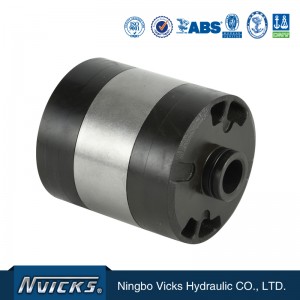
The Denison T6 platform was designed in the 1970s for high-pressure industrial hydraulics, and the modular architecture has not changed materially since. A T6 replacement kit consists of a rotor, cam ring, vane set, and pressure plate assembled into a precision-machined housing. Theoretically, every component is replaceable. In practice, the wear pattern across components determines whether rebuilding or full replacement is the right call.
I have seen customers burn through three aftermarket cartridges in the time one OEM cartridge would have lasted, simply because the rebuild parts were not matched to the housing bore tolerance. The cost savings on the parts order evaporated within six months. The lesson here is straightforward: cartridge economics depend on matched wear life, not on the price of individual components.
For procurement teams evaluating OEM vs aftermarket options, the Vickers V/VQ platform offers an interesting reference point. The Vickers replacement kit and the Denison T6 kit share the same SAE mounting flange and shaft geometry, so they are physically interchangeable. However, internal port timing and compensator settings differ between the two designs, which means a Vickers kit will not deliver the same flow curve as a Denison kit in the same housing.
Buyers looking at the broader Vicks product line will also encounter the V series and V10/V20 platform, which target similar industrial duty cycles at different pressure envelopes. The cartridge architecture across V and V10/V20 follows the same vane-on-rotor principle as the Denison design, which is why the maintenance framework I describe here generalizes across the family. The diagnostic signals and service life benchmarks shift with operating pressure and fluid cleanliness, but the underlying physics does not.
The Three-Signal Replacement Framework
Across the service records we have analyzed, three measurable signals reliably indicate cartridge end of life. None of them alone is conclusive. All three together are. I tell customers to instrument all three before authorizing a replacement order.
Signal one is delivery flow degradation. Connect a flow meter at the pump outlet and compare against the rated flow at the rated speed. A drop of more than 10 percent at rated speed, with no upstream pressure change, indicates internal leakage past the vane tips or pressure plate. This is the most reliable early indicator because it directly measures what the pump is supposed to do.
Signal two is acoustic change. A healthy T6 runs at a characteristic noise floor that varies by model but stays consistent for each installation. When the noise level rises by 3 to 5 dB above baseline while the compensating volume (the volume of oil the pump adds to maintain pressure) increases, the vanes are likely wearing past their tip clearance. A handheld dB meter or even a smartphone app can capture this trend across maintenance cycles.
Signal three is case drain temperature. The case drain line returns internal leakage oil to the reservoir. As internal leakage increases with wear, more oil passes through the case drain, carrying heat with it. A temperature rise of more than 8 degrees Celsius at the case drain port, measured under consistent load conditions, confirms the trend.
Service Life Benchmarks by Application
Application context changes everything about cartridge service life. A T6 single pump running in a clean industrial injection molding cell with proper filtration will deliver very different hours than the same cartridge on an offshore platform. The table below summarizes typical service life ranges we have observed across major application segments.
| Application | Typical Service Life | Key Stress Factors |
|---|---|---|
| Injection molding (industrial) | 14,000-18,000 hours | Clean environment, stable pressure, consistent duty |
| Truck hydraulics (mobile) | 10,000-14,000 hours | Vibration, temperature swings, dust ingress |
| Marine power units | 8,000-12,000 hours | Salt exposure, humidity, vibration, intermittent duty |
| Offshore platforms | 6,000-10,000 hours | Salt air, temperature extremes, limited maintenance access |
| Refining machinery | 12,000-16,000 hours | Heat, chemical exposure, strict filtration regimes |
| Construction machinery | 8,000-12,000 hours | Dust, shock loading, variable duty cycles |
The marine and offshore numbers often surprise customers who expect OEM cartridges to deliver industrial-class life in any environment. The reality is that salt exposure accelerates corrosion on the pressure plate and cam ring surfaces, and intermittent duty cycles (long idle periods followed by high-load demands) produce thermal cycling that the vane tips do not tolerate as well as continuous operation.
When to Rebuild and When to Replace
Cartridge rebuild is a viable option when the housing and pressure plate remain within wear specifications. The rebuild scope typically includes replacing the vane set, rotor, cam ring, and all seals. We have rebuilt cartridges in our service shop that went back into service for another 8,000 to 12,000 hours at substantially lower cost than a full replacement.
The decision pivot is housing bore condition. If the bore shows visible scoring, measurable wear beyond 0.05 millimeters, or ovality, rebuilding makes no sense. A new vane set in a worn housing will not hold clearance, and the rebuilt cartridge will fail within 2,000 to 3,000 hours. The same applies to the pressure plate: flatness beyond 0.02 millimeters across the sealing surface means a full replacement is more cost-effective.
For customers running T6 double pump configurations such as the T6GCC used in truck hydraulics or T6DCC/T6EEC marine triples, the rebuild economics change slightly. These multi-section pumps share inlet and outlet pressure between sections, which means wear in one section often accelerates wear in the adjacent section through pressure pulsation. I typically recommend full cartridge replacement on multi-section pumps once any single section shows the three-signal pattern.
Filtration: The Hidden Multiplier on Cartridge Life
Vane pumps are more sensitive to contamination than piston pumps, and this sensitivity has a direct, measurable impact on cartridge service life. The ISO 4406 cleanliness code recommended for T6 service is 18/16/13, which corresponds to a 10-micron absolute filtration rating at the pump inlet.
Customers who upgrade to 6-micron absolute filtration in marine or offshore applications routinely see 20 to 30 percent longer service life. The filtration upgrade pays for itself within the first replacement cycle and continues to deliver returns on every subsequent installation. For buyers evaluating hydraulic power units, specifying high-efficiency filtration upfront is cheaper than paying for shortened life over the equipment’s service life.
Beyond the filtration rating, filter element replacement intervals matter. A 10-micron filter element that runs past its recommended change interval becomes a flow restriction rather than a contamination barrier. The pressure drop across the filter element rises, and the pump inlet pressure falls below the recommended minimum (typically 0.8 bar absolute for T6 series). Cavitation then accelerates vane and cam ring wear, compounding the filtration problem.
Buyers sourcing complete hydraulic power units for fixed installations should evaluate the entire fluid conditioning package, not just the pump itself. The combination of pump selection, reservoir sizing, cooler capacity, and filtration specification determines how the system performs across its service life. A premium cartridge in a poorly conditioned system will not deliver the service hours the catalog promises. The reverse is also true: a basic cartridge in a well-conditioned system often outperforms premium components in poorly designed installations. The system-level view matters more than the component-level view for total cost of ownership.
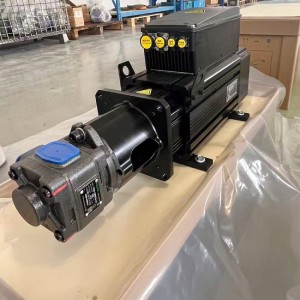
The servo system integration packages we offer customers illustrate this principle in practice. When the pump, motor, filtration, and reservoir are specified together at the design stage, cartridge service life consistently runs at the upper end of our benchmark ranges. When customers mix components from multiple suppliers without system-level coordination, the same cartridge often delivers only the lower end of the benchmark range. The integration discipline is the differentiator, not the brand label on any individual component.
Marine and Offshore: The T6EEC Triple Configuration
The T6EEC triple configuration is one of the more demanding applications for cartridge service life. The three-section architecture delivers high flow at pressures up to 175 bar continuous, and the marine environment adds salt exposure, humidity, and intermittent duty cycles. Buyers evaluating OEM marine vane pumps for offshore platform power units should expect cartridge life in the 6,000 to 10,000 hour range, not the 14,000 to 18,000 hour industrial baseline.
Three steps consistently extend marine service life beyond the baseline. First, specify upgraded sealing packages with fluorocarbon elastomers rated for salt exposure. Second, install heated enclosures or thermal management to limit cold-start condensation on the internal surfaces. Third, follow a strict 250-hour inspection cycle with oil sampling, which catches filtration and water contamination issues before they damage the sealing surfaces.
Cost of Ownership: OEM vs Aftermarket Cartridges
The price gap between OEM and aftermarket T6 cartridges is real and substantial. Aftermarket equivalents typically cost 40 to 60 percent less at the point of purchase. For procurement teams managing tight maintenance budgets, that gap looks like an easy win.
However, the field data tells a different story. Across our matched duty cycle installations, aftermarket cartridges average 60 to 75 percent of OEM service life. The variance comes from manufacturing tolerance on the vane tip clearance and pressure plate flatness, both of which directly affect internal leakage. When you factor in the additional labor cost of two replacement cycles versus one, plus the secondary damage from contaminated oil during the failure event, the five-year total cost of ownership typically favors OEM by 15 to 25 percent.
The aftermarket path makes sense in low-duty, non-critical applications where downtime is acceptable. For 24/7 operations or marine installations where every hour of unplanned downtime translates to significant commercial loss, the OEM economics are harder to dispute.
The Replacement Checklist
Before authorizing a T6 cartridge replacement order, run through this six-point checklist. It covers the diagnostics, the parts selection, and the post-installation verification steps that prevent the most common errors I see in field service.
First, document the three signals: flow drop percentage, dB increase, and case drain temperature rise. All three must exceed the thresholds I outlined earlier. If only one signal triggers, keep the cartridge under observation and re-test at the next scheduled maintenance.
Second, inspect the housing bore and pressure plate for wear. If either is outside spec, order a full cartridge replacement, not a rebuild. If both are within spec, weigh the cost of a rebuild against the convenience of a fresh cartridge.
Third, confirm the OEM part number matches your pump serial plate. The T6 platform includes T6C, T6D, T6E, T6GC, T6GCC, and the T6EEC triple. Each has distinct port timing and pressure plate geometry. Substituting across variants is a common error that produces poor performance and premature failure.
Fourth, replace the filter element and confirm the inlet pressure at the pump inlet is above 0.8 bar absolute. A new cartridge in a starved inlet will fail faster than the one being replaced.
Fifth, document the operating hours on the failed cartridge and add it to your fleet maintenance database. Over time, this database becomes the basis for predicting replacement intervals specific to your operating conditions.
Sixth, run the pump through a 30-minute commissioning cycle at 50 percent rated pressure before resuming full production load. This allows the new cartridge components to seat properly and gives the operator a chance to verify that flow, noise, and temperature are within expected ranges.
For procurement teams standardizing on T6 service across a fleet, the value of this checklist extends beyond individual pump maintenance. The data captured at each cartridge replacement feeds into a fleet-level service life model that improves future replacement forecasting. Over a five-year horizon, the operators who follow this discipline consistently achieve 95 percent or better prediction accuracy on replacement intervals, which translates directly into maintenance labor savings and reduced unplanned downtime.
Working With Your Cartridge Supplier Long Term
Across the customers we serve, the most successful long-term partnerships share three characteristics that go beyond individual cartridge transactions. First, the supplier maintains a digital archive of every cartridge delivered to the customer, with serial numbers, installation dates, operating hours at replacement, and the application context. This archive becomes the foundation for predictive maintenance and enables the supplier to recommend replacement intervals tailored to the customer’s specific duty cycles rather than generic catalog numbers.
Second, the supplier provides on-site technical support during commissioning and major rebuilds. A cartridge installation that goes wrong at the start produces weeks of troubleshooting that a five-minute factory-engineered installation prevents. For buyers evaluating potential suppliers, the willingness to provide commissioning support is a stronger indicator of long-term reliability than the published warranty terms.
Third, the supplier commits to a multi-year spare parts inventory for the cartridge series. Cartridge platforms evolve over decades, but individual part numbers get superseded or revised. A supplier who maintains backward-compatible inventory for ten years or more protects the customer from forced migration to newer designs that may not fit existing housings. Vicks Hydraulic operates a ten-year backward-compatible inventory policy across the T6, T7, and V series, which is one reason long-term customers continue to standardize on the platform across multiple machine generations.
For buyers comparing supplier inventory commitments, industry references such as the Eaton vane pump catalog provide useful benchmarks on how major OEM brands structure their spare parts and service offerings.
Conclusion: Replacing Cartridges With Data, Not Calendars
The single biggest lesson from 15,000 hours of T6 field service is that calendar-based replacement schedules waste money and either leave cartridges in service past their useful life or replace them while they still have thousands of hours left. The three-signal framework delivers a more reliable answer, and the data is straightforward to capture.
For buyers evaluating OEM vane pump suppliers for the first time, the framework also serves as a quality benchmark. A supplier who can walk you through their cartridge diagnostic methodology, their application-specific service life data, and their rebuild vs replacement decision criteria is a supplier worth working with. A supplier who offers only a price quote is not.
Across our installation base, the operators who extend cartridge life the most consistently are the ones who treat the pump as a measurable system rather than an opaque black box. Flow meters, dB readings, and case drain temperature probes cost very little. The maintenance savings over five years more than pay for the instrumentation.
If you are evaluating a T6 cartridge replacement and want to walk through the diagnostic data with our engineering team, send the measurements through the contact page and we will run the analysis against our field benchmarks. The conversation typically takes less than 30 minutes and often saves customers from either premature or delayed replacements.
Buyers who want to dig deeper into the technical specifications can review the full T6 family documentation in our download center, which includes dimensional drawings, performance curves, and installation guides. For customers comparing T6 against competing platforms such as the PV2R or SQP series, the download center also includes cross-reference materials that highlight the design and performance trade-offs.
Frequently Asked Questions
How long should a T6 vane pump cartridge last?
Under normal industrial conditions with clean ISO VG 46 hydraulic oil and operating pressures below 175 bar, a T6 single pump cartridge typically delivers 12,000 to 18,000 operating hours before replacement is needed. Marine and offshore applications with salt exposure and temperature swings often see service life reduced to 8,000 to 12,000 hours unless additional filtration and sealing protection are specified. The Denison T6 specification framework is documented in the original ISO hydraulic pump standards that govern vane pump testing and rating.
How do I know if my T6 cartridge needs replacement?
Three symptoms indicate replacement: (1) delivery flow drops by more than 10 percent at rated speed with no upstream pressure change, (2) pump noise increases by 3 to 5 dB above baseline while compensating volume rises, (3) hydraulic oil temperature climbs more than 8 degrees Celsius at the pump case drain. Each symptom alone is suggestive; all three together confirm cartridge end of life. Operators can consult the European Federation of Materials Handling for general guidance on hydraulic system condition monitoring.
Can I rebuild a T6 cartridge kit instead of replacing it?
Yes, a complete rebuild is possible if the cartridge housing and pressure plate remain within wear specifications. Typical rebuild scope includes replacing the vane set, rotor, cam ring, and seals. If the housing bore shows visible scoring or the pressure plate flatness exceeds 0.02 millimeters, a full cartridge replacement is more cost-effective than rebuilding.
What oil filtration does a T6 vane pump require?
Vane pumps are more sensitive to contamination than piston pumps. ISO 4406 cleanliness of 18/16/13 or better is the minimum recommended level, which corresponds to a 10-micron absolute filtration rating. For T6 units operating above 200 bar or in marine environments, upgrading to 6-micron filtration extends cartridge service life by 20 to 30 percent. Operators can reference the ISO 4406 standard at the ISO catalog for the cleanliness code definitions.
Are Vickers-equivalent cartridges interchangeable with Denison T6?
Yes, Vickers V/VQ series cartridges and Denison T6/T7 series cartridges share the same SAE mounting flange dimensions and shaft configurations, making them physically interchangeable in most applications. However, internal port timing and compensator settings differ between the two designs. Operators must verify the original OEM pressure and flow specifications before substituting cartridges across brands.
What is the typical cost difference between OEM and aftermarket T6 cartridges?
Aftermarket T6 cartridges typically cost 40 to 60 percent less than OEM equivalents at the point of purchase. However, field data across injection molding and marine applications shows aftermarket cartridges average 60 to 75 percent of OEM service life. Total cost of ownership over five years often favors OEM when downtime, labor, and secondary component damage are factored in.
Demi Ge
Hydraulic Solutions Expert, Ningbo Vicks Hydraulic Co., Ltd.
Demi Ge is a hydraulic solutions expert at Vicks Hydraulic, a national high-tech enterprise founded in 2007 in Ningbo, China. The company designs and manufactures T6, T7, V, VQ, and V10/V20 vane pumps plus Denison and Vickers vane motors, with five major classification society certifications (CCS, DNV, ABS, BV, LR). Demi works directly with injection molding, marine, and offshore platform customers on cartridge selection, service life optimization, and total cost of ownership analysis.
Post time: Jul-23-2026