Summary
The 5,000 PSI (350 bar) threshold is the dividing line above which VSD economics on vane pump systems start to break down. This article walks through when VSD delivers real savings and when fixed-speed operation remains the better choice.
- VSD cuts energy consumption 25 to 45 percent when average operating pressure stays below 60 percent of rated maximum.
- Above 80 percent of rated pressure, VSD savings shrink to single digits and rarely justify the capital cost.
- T7-E vane pumps are rated for VSD operation between 200 and 1,800 RPM continuous.
- Two- and three-shift injection molding operations see VSD payback in 18 to 36 months.
- Single-shift operations or near-rated-pressure duty cycles typically never recover the VSD investment.
The 5,000 PSI question comes up in nearly every injection molding energy audit I run with European customers. The plant manager wants lower electricity bills. The maintenance supervisor wants to keep the existing pump infrastructure. The CFO wants a payback calculation. Each stakeholder frames the question differently, and the answer depends on data that is not always obvious from the system specifications alone.
This article distills what I have learned from VSD retrofit projects across injection molding cells, machine tool hydraulics, and mobile equipment applications. The framework applies whether you are evaluating a T7-E high-pressure vane pump upgrade or specifying a new servo hydraulic system. The 5,000 PSI threshold is not arbitrary; it reflects the efficiency curve where VSD economics shift from compelling to marginal.
How VSD Energy Savings Actually Work
Variable speed drive technology reduces pump energy consumption by matching motor speed to flow demand. In a fixed-speed pump system, the pump delivers full flow whenever the motor runs, and excess flow is dumped across the pressure relief valve. That dumped flow represents pure waste: the motor draws full power to compress oil that immediately becomes heat.
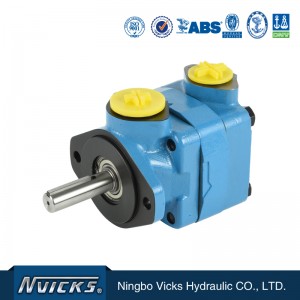
For buyers evaluating V-series pumps alongside T6/T7 platforms, the energy savings calculation methodology applies identically across both families.
VSD eliminates the dump loss by slowing the motor when flow demand drops. The pump delivers only what the system needs, and the relief valve stays mostly closed. The relationship between motor speed and energy consumption is roughly cubic, which means a 20 percent speed reduction cuts energy consumption by approximately 50 percent.
For buyers evaluating variable speed drive retrofits, the critical measurement is the duty cycle profile of the actual installation, not the theoretical maximum savings. A pump that runs at 80 percent of rated pressure for 16 hours per day and idles for 8 hours will see different economics than a pump that runs at 95 percent of rated pressure continuously. The first scenario delivers strong payback. The second does not.
The 5,000 PSI Threshold and Why It Matters
The 5,000 PSI (350 bar) figure keeps appearing in VSD retrofit feasibility studies because it sits at the inflection point of the pump efficiency curve. Below this pressure, fixed-speed vane pumps deliver reasonable efficiency even when throttling back through the relief valve. Above this pressure, the volumetric and mechanical losses compound, and the wasted energy becomes a much larger share of input power.
In practice, most injection molding cells operate below 5,000 PSI for the majority of the cycle. The high-pressure phase occurs during mold clamping and injection, which together might represent 20 to 35 percent of the cycle time. The remaining 65 to 80 percent is the cooling, plastication, and ejection phase, which operates at 800 to 1,800 PSI. VSD on this duty cycle delivers substantial savings because the pump spends most of its time at low pressure.
The economic picture changes for high-pressure applications such as die casting, stamping, and certain hydraulic press operations. These systems may operate at 4,000 to 5,000 PSI continuously, leaving little headroom for VSD optimization. The pump runs near its maximum efficiency point regardless of VSD, so the drive electronics add cost without proportional benefit.
VSD-Compatible Vane Pump Specifications
Not every vane pump handles VSD operation. The minimum speed constraint matters most. Vane pumps require sufficient rotational speed to extend the vanes against the cam ring by centrifugal force. Below this minimum, the vanes do not fully extend, internal leakage increases, and wear accelerates dramatically.
The full T7-E specification is available in the technical download center, including rated efficiency curves across the operating speed range.
The T7-E series that we recommend for VSD applications is rated for continuous operation between 200 and 1,800 RPM. This range allows significant speed reduction for low-flow demand periods while maintaining vane extension integrity. Operating below 200 RPM is technically possible for short durations but accelerates wear and is not recommended for continuous duty.
The motor specification matters as much as the pump specification. Standard induction motors are not designed for the voltage spikes and harmonic content produced by typical variable frequency drives. Inverter-duty motors with reinforced insulation, lower temperature rise ratings, and often a separate cooling fan are required for reliable VSD service. Using a standard motor on VSD power is a common source of premature motor failure.
| Application Profile | Average Operating Pressure | VSD Payback Period | Recommendation |
|---|---|---|---|
| Injection molding (2-3 shift) | Below 1,800 PSI | 18-30 months | Strong VSD candidate |
| Injection molding (1 shift) | Below 1,800 PSI | 36-60 months | Marginal; review electricity rates |
| Hydraulic press | 2,500-4,500 PSI | 40-72 months | Borderline; depends on cycle |
| Die casting / stamping | 4,000-5,000 PSI | 60+ months | Generally not recommended |
| Machine tool hydraulics | 1,200-2,500 PSI | 24-36 months | Strong VSD candidate |
| Mobile equipment | Variable | N/A | Different optimization path |
When VSD Does Not Save Energy
The pressure profile alone does not determine VSD economics. Three additional factors can turn a theoretically attractive VSD project into an energy-wasting retrofit.
First, motor and drive electrical losses offset a portion of the pump savings. Variable frequency drives typically run at 95 to 98 percent efficiency, and inverter-duty motors add 2 to 5 percent losses compared to standard motors. When these electrical losses are added to the pump efficiency gains, the net system improvement shrinks. For very small pumps, the electrical overhead can exceed the pump savings entirely.
Second, applications with rapid pressure transients defeat VSD optimization. If the system pressure swings between 500 and 4,500 PSI every few seconds, the drive cannot respond fast enough to optimize speed for each phase. The pump ends up running at near-maximum speed to handle the transient peaks, which negates most of the energy savings potential.
Third, VSD on systems with inadequate thermal management can produce worse outcomes than fixed-speed operation. Variable speed motors generate more heat at low speeds due to reduced cooling airflow. If the motor is not rated for the duty cycle or if the installation lacks supplementary cooling, motor winding temperatures rise and motor service life shortens dramatically.
VSD Versus Load-Sensing: Choosing the Right Technology
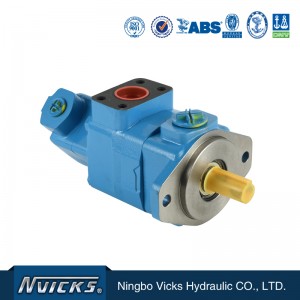
Load-sensing hydraulics delivers comparable energy savings to VSD through a different mechanism. Instead of varying pump speed, load-sensing varies pump displacement to match pressure demand. The pump output adjusts continuously based on system pressure feedback, with the pump swashplate angle controlling flow.
Load-sensing responds faster than VSD to pressure transients, making it suitable for applications with rapid demand changes. The trade-off is complexity: load-sensing pumps require pressure compensators, control valves, and feedback lines that add cost and require more sophisticated maintenance. VSD uses standard fixed-displacement pumps, which simplifies the hydraulic circuit at the cost of more complex electrical infrastructure.
For new system design, the choice often comes down to existing infrastructure and operator expertise. Plants with strong electrical maintenance capabilities and a preference for standard hydraulic components favor VSD. Plants with strong hydraulic expertise and existing load-sensing infrastructure favor load-sensing on new installations. Retrofitting one technology into a system designed for the other rarely makes economic sense.
Implementation Checklist for VSD on Vane Pump Systems
For buyers ready to evaluate VSD on an existing vane pump installation, the following six-step checklist prevents the most common implementation errors I have seen in field service.
Industry references such as the European Federation of Materials Handling provide additional guidance on VSD integration with hydraulic power units in industrial settings.
First, capture the actual duty cycle profile over at least two weeks of representative production. Log the pump discharge pressure, flow demand, and motor current at one-second intervals. The resulting dataset drives the energy savings calculation and confirms whether the duty cycle supports VSD economics.
Second, verify the pump is rated for variable speed operation within the planned speed range. The T7-E and most modern vane pump platforms are rated accordingly, but older pumps may not be. Operating a non-rated pump under variable speed produces accelerated wear and premature failure.
Third, specify an inverter-duty motor with class F or higher insulation and a 1.15 service factor or better. Standard motors will fail within 12 to 24 months under VSD operation. The motor upgrade cost should be included in the VSD payback calculation.
Fourth, configure the drive with pump-specific speed profiles. Minimum speed should be set no lower than 300 RPM to maintain vane extension integrity. Acceleration and deceleration ramps should be set at 5 to 10 seconds to prevent hydraulic shock. Skip frequencies that excite mechanical resonances should be programmed out.
Fifth, install pressure transducers with appropriate response time. Standard industrial pressure transmitters with 100-millisecond response times are adequate for most VSD applications. Faster-response transmitters (10-millisecond) are needed for high-dynamic systems but add cost.
Sixth, plan for harmonic mitigation on the electrical side. Variable frequency drives produce harmonic distortion that can affect other equipment on the same electrical service. Line reactors or harmonic filters are often required for compliance with IEEE 519 standards, and the cost should be included in the VSD project budget.
Energy Savings Calculation Example
A typical injection molding cell running two shifts provides a useful reference for VSD energy savings calculation. The fixed-speed pump operates at 15 kW rated power, with the motor running continuously. The average power consumption across the cycle, accounting for relief valve losses during low-pressure phases, is approximately 9.5 kW.
Adding VSD with proper speed profiling reduces average power consumption to approximately 5.8 kW. The energy savings work out to 3.7 kW continuously, or about 31,000 kWh per year at 8,400 operating hours. At an industrial electricity rate of USD 0.10 per kWh, the annual savings are approximately USD 3,100.
The VSD system cost, including the drive, inverter-duty motor, installation labor, and harmonic filters, typically runs USD 6,000 to USD 9,000 for a 15 kW retrofit. The simple payback period is therefore 24 to 36 months, depending on installation specifics and local electricity rates. Three-shift operations cut the payback by half, and single-shift operations extend it by 50 to 100 percent.
VSD on Vane Pumps Versus Servo Hydraulic Systems
Servo hydraulic systems, which integrate the pump, motor, drive, and control electronics into a single package, represent the high-end alternative to VSD on a standard vane pump. Servo systems deliver faster response, higher precision, and energy savings comparable to or better than VSD, but at a significantly higher capital cost.
For applications requiring precise pressure and flow control, such as advanced injection molding with closed-loop process control, servo hydraulic systems are the appropriate choice. The energy savings often exceed VSD by 5 to 15 percentage points because servo systems optimize both speed and displacement simultaneously.
For applications where the existing vane pump infrastructure is performing adequately and the goal is energy cost reduction, VSD retrofit is typically the more cost-effective path. The capital cost is 40 to 60 percent lower than a complete servo hydraulic system, and the energy savings capture most of the available efficiency improvement.
Five Operating Conditions Where VSD Fails
Across the VSD retrofits I have reviewed, the failures cluster into five recurring patterns. Understanding these patterns upfront saves customers from investing in a system that will not deliver the projected savings. Each pattern is detectable with one to two weeks of duty cycle data collection, which is far cheaper than discovering the problem after the VSD equipment is installed.
Standards for VSD energy efficiency are documented in the ISO 50001 energy management standard, which provides the framework for quantifying and verifying savings claims.
Pattern one: constant high-pressure operation. Die casting cells and high-tonnage hydraulic presses often operate above 4,000 PSI for 80 percent or more of the duty cycle. The pump runs near its maximum efficiency point continuously, leaving little headroom for VSD optimization. Adding VSD to such systems typically delivers single-digit percentage energy savings, which does not justify the capital investment.
Pattern two: rapid pressure transients. Stamping operations and certain test stand applications swing pressure from idle to maximum in less than one second. The variable speed drive cannot respond fast enough to optimize speed for each transient, so the motor ends up running at near-maximum speed throughout. The energy savings vanish and the drive electronics add electrical losses.
Pattern three: extended idle periods. Applications where the pump idles for hours at a time without significant flow demand already see low average energy consumption. Adding VSD reduces the idle power by slowing the motor, but the absolute savings are small because the baseline power draw is already low. Payback periods extend beyond equipment life.
Pattern four: severe contamination environments. Foundries, mining operations, and certain chemical processing plants expose hydraulic systems to contamination levels that exceed the vane pump’s filtration tolerance. VSD operation at reduced speeds increases internal leakage and accelerates wear in contaminated conditions. The cartridge life reduction often offsets the energy savings.
Pattern five: legacy pump platforms. Pre-2000 vane pump designs were not rated for variable speed operation. The minimum speed ratings, vane tip clearances, and bearing configurations assumed fixed-speed service. Adding VSD to these legacy pumps accelerates wear and reduces service life, even when the duty cycle profile would otherwise support VSD economics.
Beyond Energy: Secondary Benefits of VSD
Energy savings are the headline VSD benefit, but the secondary benefits often matter more to plant operators than the electricity bill. Three secondary benefits consistently emerge in post-installation interviews with Vicks Hydraulic customers.
Buyers evaluating VSD component quality can reference the ISO hydraulic system standards for performance testing protocols and rated efficiency measurement methods.
The first benefit I want to highlight is noise reduction. Fixed-speed pumps running at relief pressure produce substantial noise that travels through the hydraulic system and the building structure. VSD slows the motor during low-demand periods, cutting noise levels by 5 to 15 dB at typical measurement points. In noise-sensitive manufacturing environments such as clean rooms or packaging lines, this reduction often justifies the VSD investment independent of energy savings.
The second is reduced heat generation. The energy saved by avoiding relief valve throttling does not disappear; it stays in the oil as heat. Lower heat generation means smaller coolers, reduced cooling water consumption, and slower oil degradation. The maintenance savings on oil change intervals and cooler maintenance often add another 10 to 15 percent to the total VSD benefit beyond the direct electricity savings.
The third benefit I focus on is improved process control. VSD allows precise flow matching to process demand, which improves cycle time consistency in injection molding and reduces part variation. For molding operations targeting tight dimensional tolerances, the quality improvement from consistent flow profiles often delivers more economic value than the energy savings themselves.
Total Cost of Ownership: Five-Year View
A useful VSD evaluation framework looks at the five-year total cost of ownership rather than just the energy payback period. The five-year view captures maintenance costs, motor and drive service life, and any production quality benefits that fall outside the direct electricity calculation.
For buyers comparing motor and drive options, the Eaton vane pump catalog includes reference materials on inverter-duty motor specifications and harmonic mitigation requirements.
For a 15 kW injection molding cell retrofit, the five-year picture typically includes: VSD equipment and installation at USD 8,000, motor upgrade at USD 1,500, electrical infrastructure at USD 2,000, harmonic mitigation at USD 1,200, total capital outlay of USD 12,700. Energy savings at USD 3,100 per year for five years total USD 15,500. Maintenance savings on oil changes and cooler service add another USD 1,800 over five years. Quality improvement value is harder to quantify but typically adds USD 2,000 to USD 5,000 per year for high-tolerance molding.
The five-year net benefit for this typical case ranges from USD 7,000 to USD 30,000, depending on the quality improvement valuation. The simple payback on capital alone runs 24 to 36 months, but the total economic benefit over five years is two to three times the capital cost. This is why VSD retrofits in two- and three-shift injection molding operations are almost always justified when the duty cycle supports them.
Conclusion: The Honest VSD Answer
I have found that the 5,000 PSI question does not have a single answer that applies to every installation I review. In my experience, the honest response is to gather duty cycle data, calculate the realistic energy savings, and weigh those savings against the capital cost of the drive system with the appropriate motor and infrastructure upgrades. I always tell customers that the calculation must include motor replacement, electrical infrastructure, and harmonic mitigation costs to be honest about the payback period. I would rather walk away from a project that does not make economic sense than install equipment that fails to deliver the projected savings.
For two- and three-shift injection molding operations running well below rated pressure, VSD delivers clear economic returns. For single-shift operations or high-pressure continuous-duty applications, the VSD investment is harder to justify and may never pay back. The middle ground depends on local electricity rates, the existing pump’s efficiency, and the operator’s tolerance for capital projects with multi-year payback.
For buyers ready to run the analysis on a specific installation, our engineering team can review the duty cycle data and provide a VSD feasibility assessment. Send the captured pressure and flow logs through the contact page and we will run the calculation against current VSD component pricing and typical industrial electricity rates. The assessment typically takes a few days and gives buyers the data they need to make an informed capital investment decision.
The technical specifications and selection guidance for the pumps and servo systems referenced in this article are available in our download center. For buyers comparing VSD retrofit against complete servo hydraulic system replacement, the download center also includes comparison data and application case studies.
Frequently Asked Questions
At what pressure does VSD on a vane pump start to save meaningful energy?
Variable speed drive technology delivers meaningful energy savings when the system operates significantly below maximum pressure for extended periods. In injection molding applications where the average operating pressure is below 60 percent of the pump’s rated maximum, the drive typically cuts energy consumption by 25 to 45 percent. Above 80 percent of rated pressure, the efficiency gains shrink to single digits and the payback period often exceeds the equipment life.
Can a T7-E vane pump handle variable-speed drive operation?
Yes, the T7-E series is rated for VSD operation within specific speed ranges, typically 200 to 1,800 RPM continuous. Operating outside this range accelerates vane wear and reduces service life. The T7-E also requires an inverter-duty motor with reinforced insulation to handle the voltage spikes from the drive. Standard induction motors without inverter-rated insulation will fail prematurely under VSD operation.
What is the payback period for VSD on a vane pump system?
For injection molding cells operating two or three shifts, VSD retrofit payback typically runs 18 to 36 months based on energy savings alone. For single-shift operations or applications where the pump runs near rated pressure most of the time, payback may never materialize. The calculation should include motor and drive replacement costs, electrical infrastructure upgrades, and the cost of any required motor cooling modifications.
Does VSD operation reduce vane pump service life?
VSD operation can reduce vane pump service life if the drive is not programmed correctly. Operating below the pump’s minimum rated speed (typically 600 RPM for vane pumps) causes incomplete vane extension and accelerated wear. Operating above the maximum rated RPM (typically 1,800 RPM) causes cavitation risk. Properly configured VSD with pump-specific speed profiles typically delivers the same cartridge life as fixed-speed operation.
What is the difference between VSD and load-sensing hydraulics?
VSD varies the pump speed to match flow demand, reducing energy at low demand. Load-sensing varies the pump displacement to match pressure demand, achieving the same goal through a different mechanism. Load-sensing responds faster to pressure changes but adds cost and complexity. VSD adds electrical infrastructure cost but uses standard fixed-displacement pumps. The choice depends on duty cycle variability and existing infrastructure.
Are VSD and VFD the same thing?
Yes, VSD (Variable Speed Drive) and VFD (Variable Frequency Drive) refer to the same technology. The terms are interchangeable in hydraulic and pump applications. Both control motor speed by varying the frequency and voltage supplied to the AC motor. The marketing preference varies by region and industry, but the underlying technology and energy savings are identical.
Demi Ge
Hydraulic Solutions Expert, Ningbo Vicks Hydraulic Co., Ltd.
Demi Ge is a hydraulic solutions expert at Vicks Hydraulic, a national high-tech enterprise founded in 2007 in Ningbo, China. The company designs and manufactures T6, T7, V, VQ, and V10/V20 vane pumps plus Denison and Vickers vane motors, with five major classification society certifications (CCS, DNV, ABS, BV, LR). Demi works directly with injection molding, marine, and offshore platform customers on cartridge selection, service life optimization, and total cost of ownership analysis.
Post time: Jul-17-2026