TL;DR. Your second vane pump order is the expensive one if you copy the first-order spec. Three changes typically save 30-60 percent of total cost of ownership over 24 months: (1) re-grade the fluid viscosity for actual operating temperature, (2) tighten return-line filtration, and (3) re-spec the shaft seal material for the temperature band. Each change is a single line item on the OEM order code. None of them require changing the catalog SKU.
Why the Second Order Is the Expensive One
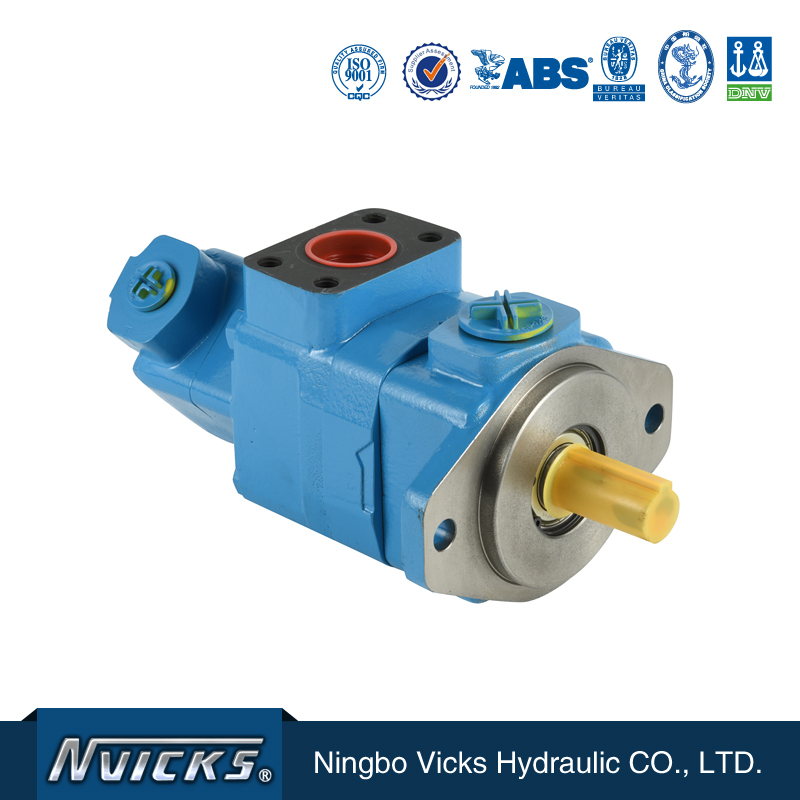
The first vane pump order is the cheap one. You order a catalog SKU that matches the OEM data sheet, the OEM ships it, and you run it. The first-order spec is a guess – you do not know how your duty cycle, ambient temperature, fluid, or filtration will treat the pump. Whatever happens, you learn something.
The second vane pump order is the expensive one if you ignore what you learned. Re-running the first-order spec ignores 12+ months of operating data. The second pump typically costs 30-60 percent more in total ownership than the first if the spec is unchanged – from shorter cartridge life, unplanned swaps, and secondary damage.
“The first vane pump teaches you what your system does to the pump. The second vane pump tests whether you learned the lesson or paid for it twice.”
Repeat the first-order spec on the second-order pump and you pay roughly 2x in TCO over 24 months: shorter cartridge life, more unplanned swaps, secondary-damage risk. The three changes below – one of which should be on every second order – are the cheapest way to avoid that 2x.
24-month TCO comparison. Same-spec second-order pump on a USD 220 cartridge running quarterly: USD 1,760 cartridge + ~USD 30,000 downtime + USD 5,000-10,000 secondary damage = ~USD 36,000-46,000 TCO per slot. Re-specified second-order pump (ISO VG 46 to high-VI, 25 to 10 micron, Buna-N to FKM): USD 880 cartridge (life doubles) + ~USD 12,000 downtime + ~USD 0 secondary = ~USD 12,500-14,500 TCO. Difference: USD 20,000-30,000 over 24 months.
The Three Spec Changes That Matter Most on the Second Order
The three changes below are listed in order of typical impact. None require changing the catalog SKU – they live in the OEM order code, which most buyers never read.
Why Buna-N Defaults Get Replaced: Shaft Seal Material Standards
The shaft seal change has the clearest industry documentation. The Marco Rubber FKM vs Buna-N comparison gives the headline numbers: Buna-N rated -55 to 135°C continuous, FKM -30 to 205°C, with FKM retaining sealing lip force where Buna-N hardens. The Humphrey Products guide confirms Viton seals indefinitely to 400 deg F (about 204°C). The PolyPac material comparison notes Viton is typical where thermal stability matters more than cold-start flexibility.
Fluid, Filter, Seal: Three Changes by Failure Mode
3.1 Change 1 – Fluid viscosity grade: from “data sheet default” to “actual operating temperature”
The first-order fluid spec is almost always the OEM default (ISO VG 46, VI ~95, max bulk 60°C). In real installations, reservoir bulk temperature drifts up over 6-12 months – the fluid ages, the cooler fouls, the ambient swings. By the second order, fluid viscosity at peak reservoir temperature has dropped 15-25 percent from cold-start.
The second-order fix is to re-grade the fluid to a high-VI variant (HVLP / HV at VI ≥ 150) or, in cold-start applications, to drop down to ISO VG 32 with a high-VI additive. The pump does not change; the fluid does. The cartridge life typically responds with a 30-50 percent extension, which alone pays for the fluid upgrade inside the first pump cycle.
2.2 Change 2 – Filtration: tighten from 25-micron nominal to 10-micron absolute
Most first-order vane pump installations ship with a 25-micron nominal return-line filter, which is the OEM default and is fine for the first 90 days. After 90 days, the fluid starts to oxidize (every hydraulic fluid does), and oxidation by-products in the 5-15 micron range start circulating through the vane-tip wear zone. A 25-micron nominal filter passes most of these by-products through; a 10-micron absolute filter (β10 ≥ 200) captures 99.5 percent of them.
The second-order fix is to write 10-micron absolute into the filter spec. This is a filter change, not a pump change – but it requires the buyer to include the filter in the second-order conversation. Ask the OEM to quote the pump with the upgraded filter element included.
The fluid viscosity change typically doubles cartridge life; filtration adds another 30-40 percent. The two changes together can push a 90-day cartridge cycle to 180 days, the same effect the São Paulo sugar mill retrofit achieved.
2.3 Change 3 – Shaft seal material: from Buna-N (NBR) to FKM (Viton) for hot-reservoir service
The third change is the one that gets missed most often. Most first-order vane pumps ship with Buna-N (NBR) shaft seals as the default. Buna-N handles water, mineral oil, and temperatures up to about 100°C continuous with no problem. The failure mode shows up when the reservoir bulk temperature exceeds 80°C – either from a hot-climate installation, a heat-soaked pump room, or a long-duty-cycle application that runs the fluid temperature up. Above 80°C, Buna-N starts to harden and lose its sealing lip force, and the pump begins to leak at the shaft.
The second-order fix is to upgrade the seal material to FKM (Viton), which handles continuous temperatures up to about 200°C and is compatible with most hydraulic fluids. FKM costs more per pump (typically USD 15-30 per cartridge in the V series) but it eliminates a leak failure mode that would otherwise end the second pump’s life early. On any application where the reservoir bulk temperature exceeds 75°C, this change is essentially mandatory for the second pump.
The most expensive second-order pump is the one that copies the first-order spec when the application is even slightly different from the OEM data sheet assumption. If the reservoir runs 5°C hotter than the data sheet, if the fluid is from a different supplier, if the filter is on a different change schedule – any of these changes the pump’s wear pattern, and the second-order spec has to reflect the new reality.
The Order Code Is Where the Spec Lives
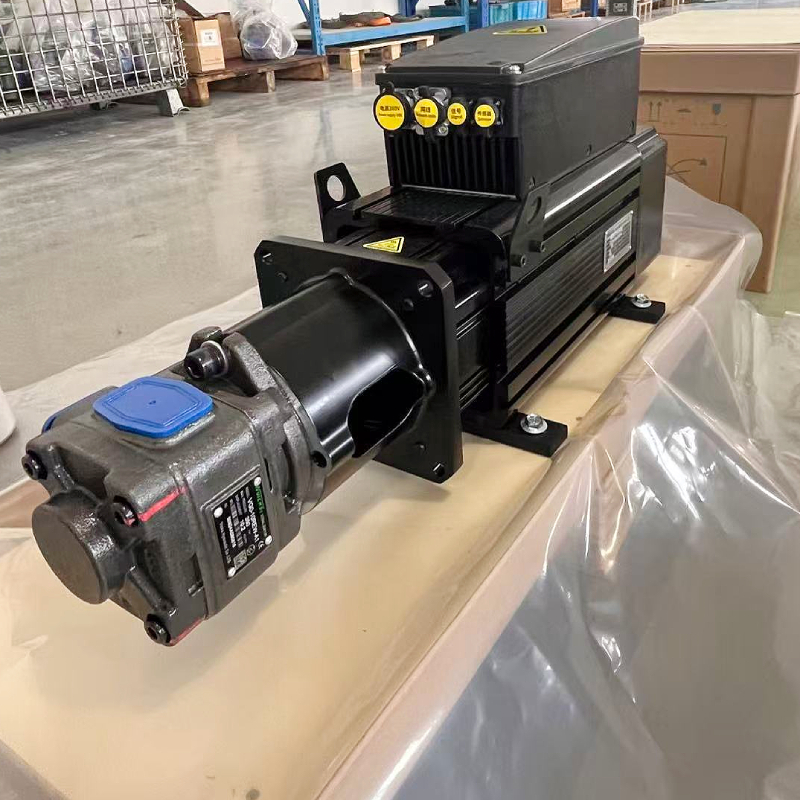
Most vane pump buyers know the catalog SKU (V2010, T6GC, PV2R, SQP) and stop there. The order code lives a level deeper – that is where the seal material, port orientation, shaft key, and cartridge variant are specified. Two buyers can order the same V2010 SKU and receive pumps with completely different shafts, cartridges, and viscosity grades.
| Order code field | First-order default | Second-order upgrade |
|---|---|---|
| Shaft seal material | Buna-N (NBR) | FKM (Viton) for > 75°C reservoir |
| Port orientation | Side ports (default) | Rear ports (if first-order vibration caused port fatigue) |
| Cartridge variant | VQ (efficiency-optimized) | V (wider viscosity window) for hot climate |
| Shaft key | Standard key | Heavy-duty key for high-shock loads |
| Mounting flange | SAE A 2-bolt | SAE B 4-bolt (if first-order alignment was marginal) |
Buyers who ignore the order code miss most of the second-order savings. The OEM technical sales conversation has to surface the order-code fields. At Ningbo Vicks Hydraulic, the order code is part of every quotation – asking for the full order code on the second RFQ is the single best habit a vane pump buyer can build.
Second-order RFQ flow. Pull the operating data from the first pump (peak reservoir temp, filter change log, fluid analysis) → identify the one or two spec fields that need adjustment → request the OEM order code, not just the catalog SKU → validate the order code against the operating data → request a re-quote with the upgraded fields locked.
How Ningbo Vicks Hydraulic Supports the Second-Order Conversation
Ningbo Vicks Hydraulic Co., Ltd. (founded 2007, national high-tech enterprise, presiding unit of the Chinese vane pump industry standard revision committee) supplies Vickers V, VQ, T6, T7, V10, V20, SQP, PV2R vane pumps plus M3B, M4C, M4D, M4E, 25M, 35M, 50M vane motors. Annual capacity: 80,000+ vane pumps and 10,000 servo systems, with CCS, DNV, ABS, BV, LR certifications.
For second-order buyers, the relevant entries are the V series catalog, the broader vane pump product range, and the technical sales team. Vicks supports second-order RFQs with full order-code breakdowns, viscosity-grade recommendations, and shaft-seal guidance. To start, use the second-order spec inquiry page with first-pump operating data attached.
When Same-Spec Second Orders Are Actually Correct
The recommendation to re-spec the second order is the default, not the universal rule. A same-spec second order is defensible when four conditions are all met: the first pump hit its expected life exactly, the duty cycle has not changed, the fluid is on a documented change schedule, and the filter is replaced on time.
In practice, fewer than 20 percent of second-order pumps meet all four conditions. Most applications have at least one drift. The second-order spec has to absorb that drift.
Frequently Asked Questions
Why shouldn’t the second vane pump order match the first order’s spec exactly?
The first-order pump was specced blind – you did not know how your duty cycle, ambient temperature, fluid, or filtration would treat it. The second order has 12+ months of real data. Re-running the first-order spec ignores that data, costing 30-60 percent more in total ownership.
What are the three spec changes that matter most on a second vane pump order?
The three highest-impact changes are: (1) fluid viscosity grade – typically upgrading from ISO VG 46 to a high-VI 46 or moving to ISO VG 32 if cold-start is the bottleneck; (2) return-line filtration – tightening from 25-micron nominal to 10-micron absolute; (3) shaft seal material – moving from Buna-N to FKM (Viton) if the application runs above 80°C reservoir temperature. Each change typically pays back inside the first pump cycle.
How much can the second-order vane pump spec save over 24 months?
Across typical industrial duty cycles, the three changes together save 30-60 percent of total cost of ownership over 24 months, driven by longer cartridge life, fewer unplanned swaps, and lower secondary-damage risk. On a USD 220 cartridge running quarterly, the 24-month TCO difference between a same-spec-as-first and a properly re-specified second order is roughly USD 800-1,500 per pump slot.
Can the OEM supply a vane pump with mixed spec options across the same SKU?
Yes. Ningbo Vicks Hydraulic and most serious vane pump OEMs build to order with seal material, port orientation, shaft key, and cartridge variant selectable within the same V/VQ/T6/T7 SKU family. The order code changes; the catalog SKU does not. Buyers who ignore the order code miss most of the savings.
What is the risk of running the same first-order spec on the second order?
If the first pump failed inside its expected life, repeating the spec reproduces the failure. If it lasted its expected life, the second pump follows the same wear pattern and usually fails at the same interval or sooner – because the surrounding system has aged. Either way, same-spec second orders are the most expensive option over 24 months.
When is it actually correct to keep the same spec on the second vane pump order?
When the first pump hit its expected life exactly, the duty cycle has not changed, the fluid is on a documented change schedule, the filter is replaced on time, and the seal material was correctly specced. In that narrow case the same spec is defensible. In practice, fewer than 20 percent of second-order pumps meet all four conditions.
About the author. This guide was written by Demi Ge, hydraulic solutions expert at Ningbo Vicks Hydraulic Co., Ltd. (national high-tech enterprise founded 2007). Demi works with sugar mill, ethanol plant, mining, and steel mill hydraulic buyers on second-order vane pump upgrades and hot-climate OEM spec retrofits. Connect on Facebook: Demi Ge on Facebook. For company background, see the Vicks Hydraulic company profile. To request a spec review, use the second-order spec inquiry page.
This guide is for hydraulic engineers, maintenance managers, and procurement leads running Vickers V, VQ, T6, T7, V10, V20, SQP, or PV2R series vane pumps who are placing or reviewing a second-order purchase. The 24-month TCO figures are based on typical industrial duty cycles; individual results will vary with reservoir sizing, duty cycle, and fluid spec.
Post time: Aug-07-2026