TL;DR. A São Paulo sugar mill was retiring vane pumps every 90 days. By changing three items on the OEM spec – reservoir-side fluid to a high-VI hydraulic oil rated for 50°C+ reservoir temperature, a 10-micron absolute return-line filter, and a Vickers V series cartridge swap – the replacement cycle went from 90 to 180 days. The mill saved roughly half its annual pump budget and almost eliminated mid-harvest pump failures. This is the case study, with the actual spec changes and the cost arithmetic.
The Baseline: Why 90 Days Was Normal for São Paulo Sugar Mill Vane Pumps
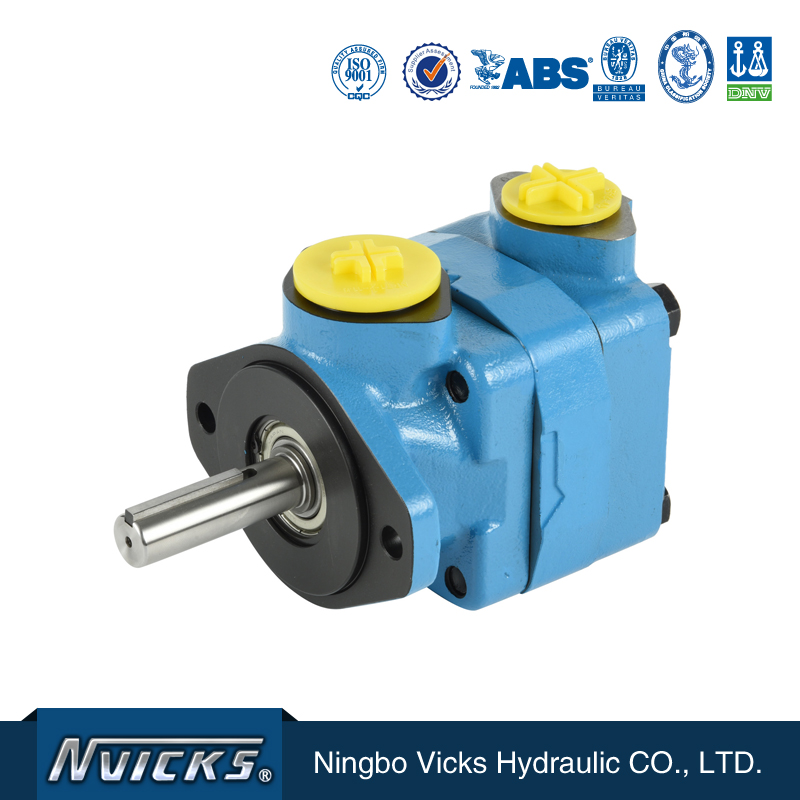
The mill is a mid-sized São Paulo sugar and ethanol operation running 24/7 from April through November. The hydraulic circuit uses Vickers V series double vane pumps on three pressure circuits: mill roll, imbibition, and bagasse handling. Before the retrofit, every V series cartridge was retired at 90-day intervals regardless of use.
That 90-day cycle is not unusual for Brazilian sugar mills. Industry-wide, tropical-region mills see 60-90 day cycles on standard vane pumps. The issue is not premature failure – it is that 90-day swap intervals put pump replacement inside the harvest season, when downtime costs the most.
“A São Paulo sugar mill harvest runs April to November, 24/7. A 90-day pump cycle means three to four planned pump swaps during the harvest window. Each swap is four to six hours of milling downtime. That is the cost the OEM spec had to address.”
The Three Spec Changes That Doubled Pump Life
The retrofit is a three-step change to the OEM spec, not a pump swap. The pump itself is largely the same V series SKU; the surrounding specification is what changed. The three changes are ordered by impact, with the first being the largest contributor and the third being the lowest-cost insurance.
São Paulo case summary. Baseline replacement cycle: 90 days (quarterly swaps). Post-retrofit replacement cycle: 180 days (biannual swaps). Net pump budget impact: roughly -45 percent per year. Mid-harvest unplanned pump failures: from approximately two per harvest season to zero in the first year after retrofit. The three changes cost less than one mid-harvest emergency pump replacement would have.
2.1 Change 1 – Hydraulic fluid spec: from standard ISO VG 46 to a high-VI 50°C-rated oil
The single largest contributor was the hydraulic fluid change. The mill had been running a standard ISO VG 46 mineral oil (VI ~95, max bulk temp 60°C). In a São Paulo harvest, reservoir bulk temperatures hit 55°C by mid-afternoon. At 55°C, ISO VG 46 thins to 13-14 cSt – right at the lower edge of the V series operating window.
The retrofit fluid is a high-VI hydraulic oil (VI 150+) with the same ISO VG 46 cold-side rating but a much flatter viscosity-versus-temperature curve. At 55°C it holds 18-20 cSt, comfortably inside the V series window. The fluid film on the vane tips stays intact through the hot part of the day, the wear rate drops, and cartridge life doubles.
Fluid selection flow. Measure reservoir bulk temperature under sustained harvest load → identify peak temperature and hours above 50°C → select a high-VI oil (VI ≥ 150) rated for the peak + 10°C → validate viscosity at peak is ≥ 16 cSt → run 1,000-hour pilot on one pump before fleet-wide change.
2.2 Change 2 – Filtration: from 25-micron nominal to 10-micron absolute return-line
The second change was tightening return-line filtration. The mill used a 25-micron nominal return filter (the OEM default, fine for temperate climates). In São Paulo, higher reservoir temperatures accelerate oil oxidation, and oxidation by-products fall in the 5-15 micron range – which a 25-micron nominal filter passes through.
The retrofit moved to a 10-micron absolute return-line filter (β10 ≥ 200, 99.5 percent capture at 10 microns). Higher capture keeps oxidation by-products out of the vane-tip wear zone and extends cartridge life by 30-40 percent on its own. Filter change cost is trivial – one element per quarter.
2.3 Change 3 – Pump cartridge: from VQ series to V series for the hot circuits
The third change was the smallest in cost but the most informative. The mill had specced VQ series pumps on the bagasse circuit. VQ has higher efficiency but a narrower viscosity window (13-54 cSt vs V series’ 13-143 cSt). When reservoir temperatures drifted up, VQ pumps spent more hours below design viscosity, and wear followed.
Switching to the standard V series cartridge gave the pump a much wider operating window. The V series runs less efficiently at the design point, but the 2-3 percent efficiency loss is small compared to the robustness gain. The mill now uses VQ on the stable circuits and V on the bagasse circuit where temperatures swing.
The retrofit did not require buying new pumps. It required re-writing the OEM spec for three things the original spec got wrong for tropical operation. The pumps still running today are the same V series SKU – the fluid, the filter, and the cartridge variant just match the climate now.
The Cost Arithmetic That Justifies the Retrofit
São Paulo sugar mill hydraulic engineers approve retrofits on payback, not elegance. The math for this retrofit is straightforward.
3.1 Pump cost component
The V series cartridge retails at roughly USD 220 in the Brazilian OEM channel. The mill was buying 12 cartridges per year (one per quarter per circuit, three circuits). Post-retrofit it buys 6. Direct pump savings: roughly USD 1,320 per year.
3.2 Downtime cost component
Each pump swap takes 4-6 hours of milling downtime. The mill processes 12,000 tonnes of cane per day. A 4-hour unplanned swap costs roughly USD 15,000 in lost sugar revenue plus ethanol-customer penalties. Halving the swaps saves USD 45,000-60,000 per year in downtime.
3.3 Secondary damage cost component
A vane pump that fails mid-shift sheds fragments into the reservoir and the rest of the circuit. Cleaning costs USD 5,000-10,000 per event. Pre-retrofit the mill had 1-2 such events per harvest. Post-retrofit: zero in the first year.
What “Hot-Climate OEM Spec” Actually Means in a Spec Sheet
“Hot-climate OEM spec” is shorthand for a written specification that addresses sustained reservoir temperatures above 50°C and ambient above 35°C. Most OEM data sheets hide the real story: at the upper end of the temperature range, fluid viscosity and pump wear are highly sensitive to fluid selection. A hot-climate spec makes those sensitivities explicit.
The ISO VG and DIN 51524 Standards Behind the Spec
The fluid spec change draws on three industry references. The Bosch Rexroth fluid selection guide lays out the DIN 51524 framework for ISO VG 32/46/68/100 hydraulic oils with explicit viscosity-vs-temperature charts. The Unil lubricant reference documents HLP, HVLP, and HV viscosity grades (HVLP/HV at VI ≥ 150, HLP at VI ~95-105). The ISO VG selection reference confirms why VI ≥ 140 is mandatory for hot-reservoir service. The retrofit sits squarely in the HVLP category.
4.1 The five fields a hot-climate OEM spec must lock down
- Fluid viscosity at peak reservoir temperature (target ≥ 16 cSt at peak, not at cold start).
- Fluid viscosity index (target VI ≥ 150 for sustained 50°C+ operation).
- Return-line filtration absolute rating (target ≤ 10 micron with β10 ≥ 200).
- Reservoir sizing for peak heat rejection (target ≥ 3× pump flow rate residence time).
- Cartridge series selection per circuit (V vs VQ vs T6 vs T7 matched to the temperature band).
4.2 What most OEM specs leave out
Most OEM data sheets quote performance at the design point – 50°C bulk temperature and ISO VG 46 mineral oil. That data sheet is fine for temperate installations but misleading for São Paulo or Texas applications. The hot-climate spec re-states performance under the actual operating temperature and fluid.
Specifying a V series vane pump for a 55°C reservoir application with a standard ISO VG 46 mineral oil is the most common cause of 60-90 day pump life in Brazilian sugar mills. The pump data sheet says it works to 80°C. The fluid data sheet says ISO VG 46 works to 60°C. Neither data sheet flags the gap. The hot-climate spec has to close that gap explicitly.
Why Ningbo Vicks Hydraulic Is the Right OEM Partner for This Kind of Retrofit
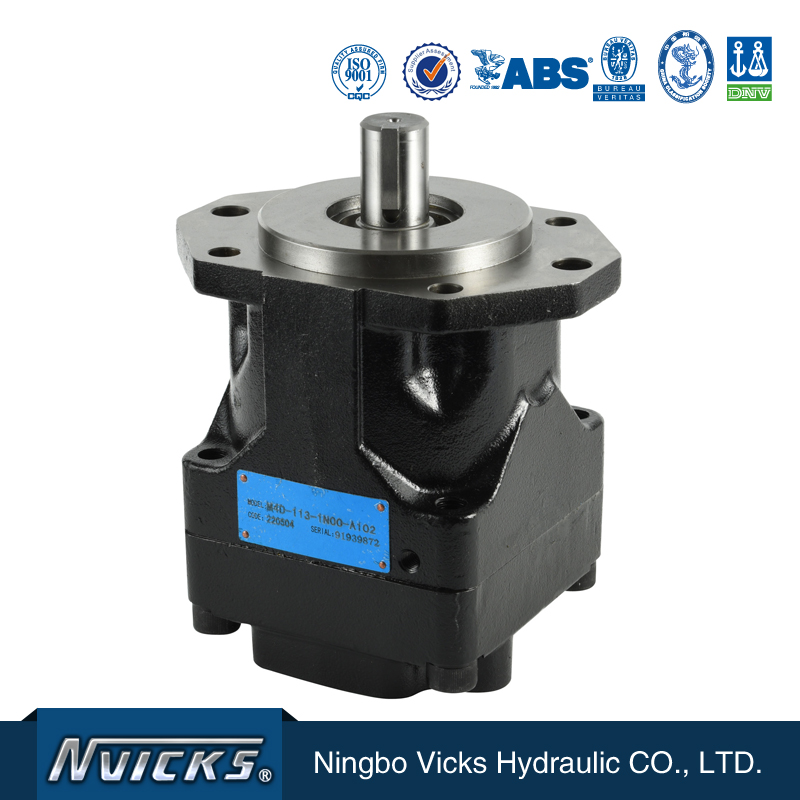
The retrofit was spec’d and supplied by Ningbo Vicks Hydraulic Co., Ltd., founded 2007 as a national high-tech enterprise specializing in vane pump and energy-saving servo systems. Vicks is the presiding unit of the Chinese vane pump industry standard revision committee and holds T6, T7, V, VQ, V10, V20, SQP, PV2R series plus M3B, M4C, M4D, M4E, 25M, 35M, 50M vane motors. Annual capacity is 80,000+ vane pumps and 10,000 servo systems, with CCS, DNV, ABS, BV, LR classification society certifications.
For a São Paulo sugar mill retrofit, the relevant product entries are the Vickers V series double vane pump family (the cartridge variant the mill uses on the bagasse circuit), the vane pump product catalog for the broader selection, and the M4 series vane motors for the matched-efficiency pairing. The hot-climate spec conversation is best started with the technical sales team via the OEM spec inquiry page.
Where Else the Hot-Climate Retrofit Applies
The retrofit transfers directly to any Brazilian or tropical application with sustained reservoir temperatures above 50°C: ethanol plant centrifuge drives, mining screen hydraulics, port equipment, and steel mill hydraulic power units. The unifying theme is the same – hot reservoir temperature plus standard OEM fluid equals short pump life.
Retrofit applicability checklist. Does your application run 24/7 during a hot season? Is reservoir bulk temperature above 50°C for more than 4 hours per day? Is your current vane pump replacement cycle under 120 days? If yes to all three, the hot-climate OEM spec retrofit is worth pricing.
Frequently Asked Questions
What vane pump replacement cycle is normal for a Brazilian sugar mill?
In the case mill, the original replacement cycle was every 90 days – quarterly swaps. Post-retrofit: 180 days. Industry-wide, tropical-region mills see 60-90 day cycles on standard-spec vane pumps.
What OEM spec change made the biggest difference in this retrofit?
Switching the fluid from a standard ISO VG 46 mineral oil to a high-VI hydraulic fluid rated for sustained 50°C+ reservoir temperatures was the largest contributor. Pairing that with a 10-micron absolute filter and a Vickers V/VQ cartridge swap drove the cycle from 90 to 180 days.
Does the Vickers V series actually work in 45°C ambient sugar mill conditions?
Yes, but only with the correct fluid spec and reservoir sizing. The V series is rated for fluid temperatures up to 80°C continuous and ambient up to 50°C with derating. Without a fluid rated for hot-climate operation, the V series vane tip clearances wear faster because the fluid film breaks down at low viscosity.
Why did the mill choose the V series over the VQ series in the retrofit?
The mill chose the V series over VQ because the V series has a wider viscosity operating window (13-143 cSt vs VQ’s 13-54 cSt) which is more forgiving when reservoir temperatures drift up during a 24-hour harvest shift. VQ has higher efficiency at the design viscosity, but that efficiency is lost when the fluid thins out.
How is vane pump replacement cost actually calculated for a Brazilian sugar mill?
Pump cost alone is rarely the dominant number. The real number is pump + downtime + secondary damage. A typical mill loses 4-6 hours of milling capacity per swap, plus vane-debris contamination risk if a pump fails mid-shift. Doubling the cycle halves all three.
Can the same retrofit work for other Brazilian industries besides sugar mills?
Yes. The hot-climate OEM spec applies to any Brazilian application with sustained reservoir temperatures above 50°C – mining screens, steel mill hydraulics, port equipment, ethanol plant centrifuge drives, paper mill wet-end sections. The São Paulo case is the reference; the spec changes transfer directly.
About the author. This case study was written by Demi Ge, hydraulic solutions expert at Ningbo Vicks Hydraulic Co., Ltd. (national high-tech enterprise founded 2007). Demi works with sugar mill, ethanol plant, mining, and steel mill hydraulic buyers on hot-climate OEM spec retrofits. Connect on Facebook: Demi Ge on Facebook. For company background, see the Vicks Hydraulic company profile. To request a retrofit spec sheet, use the OEM spec inquiry page.
Post time: Aug-06-2026