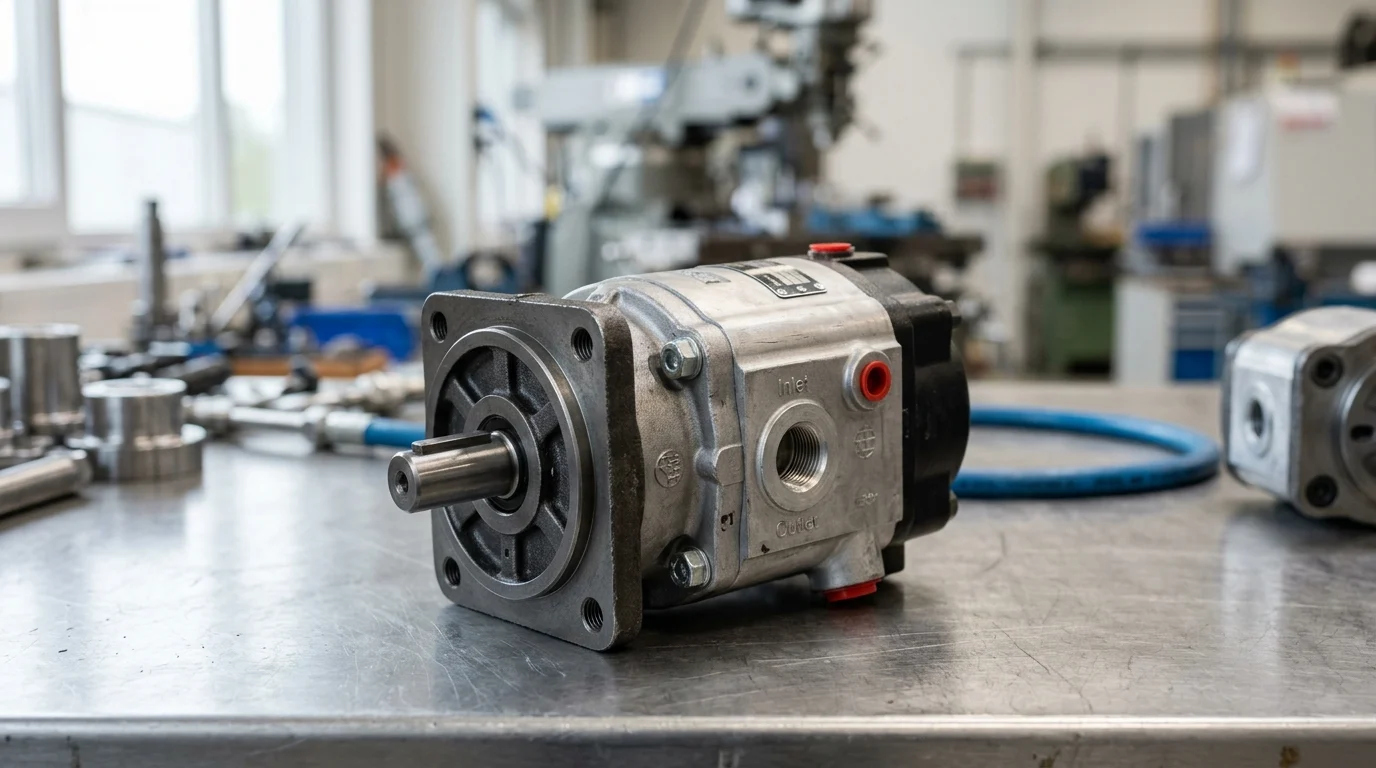
Why OEM Customization Matters
For original equipment manufacturers (OEMs) in sectors such as agriculture, construction, and industrial automation, an off-the-shelf fluid power solution often falls short of exact engineering requirements. Partnering with a specialized hydraulic pump manufacturer allows OEMs to transition from generic components to highly optimized systems. Customization at the pump level directly influences the overall machine footprint, energy consumption, and long-term reliability. By engaging a supplier capable of bespoke design, OEMs can achieve distinct competitive advantages in their respective markets. This collaboration also allows OEMs to safeguard their intellectual property, provided the physical customization is paired with robust contractual protections like non-disclosure agreements (NDAs) and clauses that explicitly secure pump-design IP.
However, full customization is not universally appropriate. Capable manufacturers support OEMs by establishing an early decision framework to determine if the engineering investment is economically justified. As a general guideline, OEMs should weigh the following:
- Commercial Off-The-Shelf (COTS): Best suited for low-volume production runs, applications with standard performance parameters, or projects requiring immediate deployment.
- Custom Solutions: Economically justified when the application demands unique form factors, extreme duty cycles, or proprietary performance advantages that standard units cannot deliver, and where production volumes can amortize the initial engineering costs.
Define OEM Performance Goals
A primary reason customization matters is that it empowers OEMs to define and hit exact performance goals rather than compromising with standard catalog units. For example, instead of settling for a generic pump that delivers 250 bar, a manufacturer can engineer a custom solution to sustain a continuous 350 bar operating pressure, with flow rates precisely tuned to the machine’s primary actuator. This collaborative engineering eliminates the need for complex valving or secondary pressure reduction circuits.
Furthermore, custom engineering can push volumetric efficiency from average industry baselines to peak targets often exceeding 95% in specialized piston designs. This efficiency gain significantly reduces parasitic energy losses, which is especially critical in battery-operated or hybrid mobile equipment where power conservation directly translates to extended operational runtimes. Modern performance goals also increasingly involve electro-hydraulic integration. Customizing a pump to include built-in sensor compatibility and smart-pump controls allows OEMs to connect fluid power systems directly to the machine’s IoT network for real-time performance monitoring.
Identify Strategic and Supply Risks
Relying on standard catalog pumps exposes OEMs to supply chain volatility and the risk of competitor replication. Customization matters because a dedicated manufacturing partner helps mitigate these risks. By locking in proprietary designs and establishing dedicated supply agreements, the manufacturer provides a layer of strategic defense against market fluctuations.
While bespoke designs offer competitive advantages, they also introduce risks such as vendor lock-in and unique field-maintenance challenges. To safely realize the benefits of customization, OEMs must implement strong commercial governance upfront. This includes negotiating clear warranty terms, defining lifecycle support to prevent sudden component obsolescence, and setting stringent defect rate thresholds—such as targeting less than 50 Parts Per Million (PPM) for mission-critical applications. Additionally, OEMs must address aftermarket serviceability by negotiating guaranteed spare-part programs, ensuring global service-network coverage, or designing the pump with modular cartridge components to simplify field repairs.
Key Technical Specifications to Customize
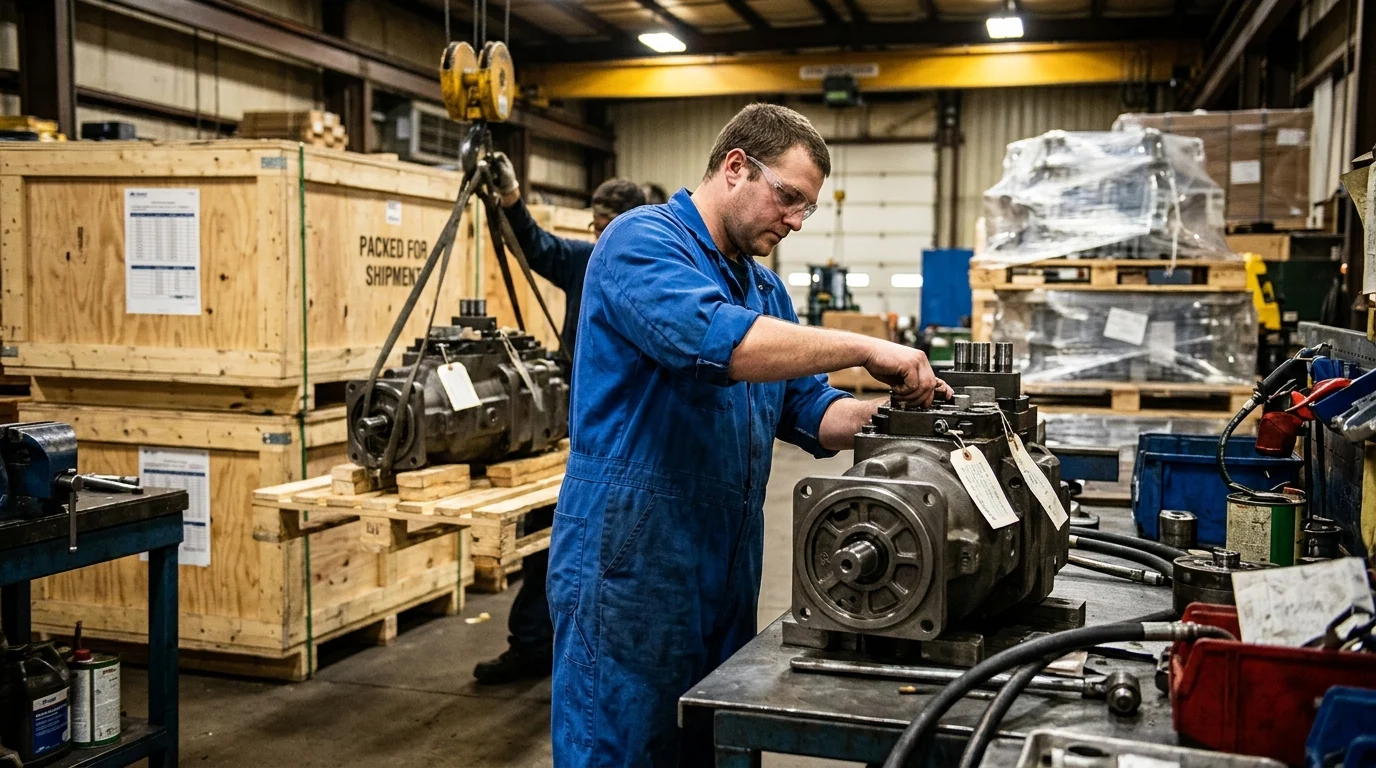
Match Pump Design to Duty Cycle
The core pumping mechanism—whether gear, vane, or piston—must align with the machine’s intended duty cycle. For instance, a municipal refuse truck may require a robust cast-iron gear pump engineered to withstand high-frequency pressure spikes over a 10,000-hour intermittent duty lifecycle. Conversely, continuous-duty industrial presses might necessitate an axial piston pump rated for 20,000 hours of continuous operation under heavy loads.
| Pump Type | Max Operating Pressure (bar) | Volumetric Efficiency | Optimal Duty Cycle |
|---|---|---|---|
| External Gear | Up to 280 bar | 85% – 90% | Intermittent / Medium-Duty |
| Vane Pump | Up to 210 bar | 88% – 92% | Continuous / Low Noise |
| Axial Piston | 400+ bar | 92% – 97% | Continuous / Heavy-Duty |
Specify Interfaces, Materials, and Seals
Physical integration is a primary driver for OEM customization. Manufacturers can modify mounting flanges (such as SAE A, B, or ISO standard configurations), shaft splines, and port orientations to eliminate adapter plates and reduce the overall assembly envelope.
Material selection is equally critical; a manufacturer might recommend a specialized ductile iron housing for high-vibration environments. Seal compounds must also be tailored to the hydraulic fluid and operating temperature: standard Nitrile (NBR) seals are generally sufficient for -20°C to +80°C, whereas Fluorocarbon (FKM/Viton) seals are specified for aggressive synthetic fluids or extreme temperatures up to +120°C.
Control Noise, Heat, and Efficiency
Modern equipment faces strict regulatory and ergonomic constraints regarding noise and emissions. A specialized manufacturer or supplier can alter gear tooth profiles, incorporate micro-pulsation damping, or adjust port timing to reduce airborne noise emissions to sub-70 dB(A) targets for indoor industrial environments.
Thermal management is also addressed through custom casing designs that enhance heat dissipation. By maintaining optimal fluid viscosity through improved heat rejection, the custom pump extends the life of the entire hydraulic system without requiring the OEM to install oversized external heat exchangers.
How to Evaluate Hydraulic Pump Manufacturer Capabilities
Not all suppliers possess the infrastructure necessary to execute complex OEM projects. Evaluating a potential partner requires a deep dive into their technical resources, testing protocols, and quality assurance frameworks to ensure they can meet rigorous industrial demands. This evaluation should be treated as a strict technical audit, distinct from the final strategic selection process.
Compare Engineering and Customization Expertise
A supplier’s capability is heavily dependent on their engineering bench strength. OEMs should look for partners equipped with advanced simulation software, including Computational Fluid Dynamics (CFD) for internal flow analysis and Finite Element Analysis (FEA) for structural integrity under stress.
A strong indicator of customization capability is the ratio of R&D engineers to total staff. While highly capable firms often maintain a dedicated engineering workforce that makes up a significant portion of their total headcount, exact ratios vary widely by region and supplier size. A robust engineering team ensures sufficient bandwidth for collaborative design iterations and rapid problem-solving during the development phase.
Review Prototyping and Endurance Testing
Theoretical design must be validated through rigorous physical testing. Leading manufacturers offer rapid prototyping services, typically delivering first-article machined samples within a timeframe that varies by complexity and supplier capacity, often spanning several weeks after design approval.
Endurance testing is non-negotiable for custom OEM components. The manufacturer’s laboratory should be capable of executing standard protocols like 1-million cycle impulse tests, thermal shock evaluations, and burst pressure testing at 1.5x to 2x the maximum rated operating pressure to guarantee that safety margins against catastrophic failure are well within acceptable limits.
Check Standards, Compliance, and Documentation
Regulatory compliance ensures that the custom pump will not hinder the OEM’s ability to sell their machine globally. The supplier must hold, at minimum, ISO 9001:2015 certification, while those supplying the mobile equipment and automotive sectors should ideally conform to IATF 16949 standards. Furthermore, OEMs must be aware that custom modifications may invalidate existing type certifications, such as CE or UL marks, requiring regulatory re-certification for the modified pump or the overall machine.
Comprehensive documentation is critical for ongoing quality management. The vendor must provide full material traceability, PPAP (Production Part Approval Process) documentation up to Level 3 or 5 depending on OEM requirements, and proof of compliance with environmental directives such as RoHS and REACH where applicable.
How to Manage the OEM Development Process
Successfully bringing a custom hydraulic pump from concept to full-scale production requires strict project management. Manufacturers support OEMs by aligning on commercial terms, timelines, and logistical frameworks early in the engagement to prevent downstream delays.
Prepare a Complete RFQ
The Request for Quotation (RFQ) serves as the foundational document for the partnership. To ensure accurate engineering proposals, a comprehensive RFQ should clearly detail:
- Fluid types and kinematic viscosity ranges
- Environmental conditions and temperature extremes
- Spatial constraints and mounting configurations
- Expected annual volumes and Minimum Order Quantities (MOQ)
Crucially, understanding minimum-volume economics early prevents OEMs from overcommitting to a custom path when volumes do not support the investment. Depending on the supplier’s scale and the pump’s complexity, custom hydraulic units require an MOQ that varies significantly. Highly specialized or large-displacement piston pumps may have lower volume thresholds, while standard custom units often require hundreds or thousands of units annually to justify the engineering and setup costs.
Plan From Concept to Production
The development timeline should be mapped using Advanced Product Quality Planning (APQP) frameworks managed collaboratively by the OEM and the manufacturer.
The process timeline varies by project scope but generally includes distinct phases for initial CAD design and design for manufacturability (DFM) review, tooling and prototyping, endurance testing and validation, and a final phase for first-run production. Establishing clear milestone approvals prevents costly late-stage revisions.
Manage Cost, Lead Time, Tooling, and Logistics
Customization involves upfront capital expenditures that must be amortized over the product lifecycle. While highly variable based on region and core complexity, tooling costs for custom cast-iron housings represent a significant initial investment. This section of the commercial agreement must explicitly define tooling ownership transfer rights in the event the partnership dissolves, ensuring the OEM retains control over its custom assets.
Logistics planning must account for standard production lead times, which fluctuate based on global supply chain conditions once in mass production. Top-tier manufacturers support OEMs by offering vendor-managed inventory (VMI) programs, safety stock agreements, or localized warehousing solutions to prevent assembly line disruptions caused by international shipping delays.
How to Choose the Best Hydraulic Pump Manufacturer
While evaluating capabilities focuses on a technical audit of engineering and testing, the final selection of a vendor hinges on strategic alignment and business-model fit. This requires an objective comparison of design approaches and structured decision-making tools to ensure long-term partnership scalability and commercial viability.
Compare Standard Adaptation vs. Full Custom Design
OEMs must decide whether their application requires a minor adaptation of a standard product or a clean-sheet custom design. Standard adaptation—such as changing a shaft spline or port thread on an existing pump housing—involves minimal tooling costs and accelerates time-to-market.
Full custom design offers maximum integration benefits but is generally reserved for higher-volume applications. At these volumes, the total cost of ownership (TCO) savings achieved through assembly efficiency, weight reduction, and performance gains easily outweigh the initial engineering and tooling investments.
Use a Supplier Decision Scorecard
To remove bias from the selection process, OEMs should implement a weighted supplier decision scorecard. This matrix evaluates potential partners across multiple technical and commercial dimensions, ensuring the chosen manufacturer aligns with the OEM’s long-term growth, financial health, and quality expectations.
| Evaluation Criteria | Weighting | Key Performance Indicators (KPIs) |
|---|---|---|
| Engineering Capability | 30% | CFD/FEA usage, prototype turnaround time, R&D staff ratio |
| Quality Assurance | 25% | PPM defect rates, ISO/IATF certifications, testing lab capability |
| Total Cost of Ownership | 20% | Unit price, tooling amortization, VMI inventory holding costs |
| Production Capacity | 15% | Machining tolerances, automated assembly, scalability limits |
| Supply Chain Stability | 10% | Raw material sourcing, financial health, secondary manufacturing sites |
Key Takeaways
- Use commercial off-the-shelf pumps for low-volume, standard, or urgent projects, and reserve custom hydraulic pump development for applications where performance gains justify the engineering investment.
- Define pressure, flow, efficiency, duty cycle, footprint, and control requirements before design begins so the manufacturer can optimize the pump around the machine’s actual workload.
- Custom pump engineering can remove unnecessary valving or pressure-reduction circuits by matching output directly to the OEM machine’s primary actuator requirements.
- For high-efficiency mobile or hybrid equipment, target pump designs with strong volumetric efficiency and smart-control compatibility to reduce energy losses and enable real-time monitoring.
- Protect custom hydraulic pump programs with NDAs, IP ownership clauses, warranty terms, lifecycle support commitments, and measurable defect-rate targets such as below 50 PPM for critical applications.
Frequently Asked Questions
When should an OEM choose a custom hydraulic pump instead of a catalog unit?
Choose customization when the machine needs a unique footprint, extreme duty cycle, higher pressure, proprietary performance, or enough production volume to justify engineering costs. Catalog pumps are better for low-volume, standard, or urgent projects.
How can a hydraulic pump manufacturer improve OEM machine performance?
A manufacturer can tune pressure, flow, mounting, controls, and efficiency to the machine’s exact operating profile. This can reduce extra valving, lower energy losses, improve reliability, and support compact equipment design.
What performance targets matter most in OEM pump customization?
Key targets include continuous operating pressure, flow rate, volumetric efficiency, duty cycle, noise, heat generation, footprint, and sensor or smart-control compatibility. These should be defined early in the design process.
Can custom hydraulic pumps support electric or hybrid equipment?
Yes. Custom pump designs can prioritize high efficiency, reduced parasitic losses, and electro-hydraulic control integration, helping battery-powered or hybrid machines extend runtime and monitor performance in real time.
What risks should OEMs manage when using custom pump designs?
OEMs should manage vendor lock-in, maintenance complexity, obsolescence, warranty coverage, and intellectual property ownership. Clear contracts, NDAs, lifecycle support terms, and defect-rate targets help reduce these risks.
Post time: Jul-29-2026