A hydraulic vane pump usually loses pressure during operation because of restricted inlet flow, aeration or cavitation, worn cartridge components, a leaking relief path, incorrect rotation, or excessive internal leakage elsewhere in the circuit. Check the reservoir, suction line, oil condition, shaft coupling, pressure-control valves, and actuator seals before replacing the pump.
- Low hydraulic pressure does not automatically mean the pump itself has failed.
- Whining noise, foaming oil, heat, and unstable pressure strongly point to inlet restriction, aeration, or cavitation.
- Worn vanes, cam rings, pressure plates, cartridges, and shaft seals can reduce volumetric efficiency.
- Pressure must be tested at the pump outlet and at the actuator while the machine is both idle and under load.
A hydraulic vane pump can appear to work normally at start-up yet lose pressure as temperature, load, or operating time increases. This article presents a practical pump troubleshooting sequence based on common failure modes reported in vane-pump service literature, including inlet vacuum conditions, cartridge wear, seal damage, coupling faults, and pressure-control problems. The Machinery Lubrication diagnostic guide also emphasizes that several system components, not only the pump, can cause low pressure.
How a Hydraulic Vane Pump Creates and Maintains Pressure
A vane pump produces flow, while system resistance and pressure-control components determine the working pressure. A rotor turns inside a cam ring, and sliding vanes form expanding chambers on the inlet side and contracting chambers on the outlet side. If the pump cannot receive enough oil, cannot seal the chambers, or cannot deliver flow through the outlet circuit, pressure falls during machine operation.
Pressure is therefore a symptom rather than a complete diagnosis. A blocked filter can starve the inlet, a worn cartridge can create internal leakage, and an incorrectly adjusted relief valve can divert flow back to the tank. Testing only the pressure gauge at one location can conceal the actual fault.
Most Common Causes of Low Hydraulic Pressure
1. Restricted suction flow or cavitation
Inlet starvation is one of the fastest ways to make a vane pump lose pressure under load. A blocked suction strainer, collapsed hose, undersized inlet line, closed isolation valve, low reservoir level, or excessive oil viscosity can reduce the absolute pressure at the pump inlet. A partial vacuum can allow gas or vapor bubbles to form; the hydraulic vane pump failure reference describes this mechanism and its damaging effect on pump surfaces.
A whining or growling sound, foamy oil, vibration, and pressure that deteriorates as speed increases are strong clues for cavitation or aeration. Inspect the suction hose for soft spots and loose clamps, confirm that the inlet port is fully submerged, and check whether the reservoir breather is blocked.
2. Air entering the inlet circuit
Air leakage on the suction side can reduce pressure even when no oil visibly leaks out. Loose fittings, damaged O-rings, cracked hoses, a worn shaft seal, or an oil level that exposes the inlet can draw air into the pump. Unlike a pressure-side leak, an inlet leak may remain dry on the outside.
Foam in the reservoir, erratic actuator movement, and a rattling pump after maintenance indicate that air may be circulating through the system. Correct the leak, fill the reservoir with the approved fluid, and follow the equipment maker’s air-bleeding procedure before judging pump condition.
3. Internal wear in the cartridge assembly
Worn vanes, cam rings, side plates, pressure plates, or cartridge surfaces allow high-pressure oil to leak internally toward the low-pressure side. The result is reduced volumetric efficiency: the pump may produce acceptable pressure when cold or unloaded but fail after the oil warms and clearances increase.
Common wear indicators include rising case temperature, slow actuator movement, pressure decay under a fixed load, and metallic contamination in the oil or filter. A service guide from Hydrostatic Transmission identifies cartridge-kit wear, cam-ring damage, burned pressure plates, shaft-seal leaks, and hardened seals among recurring vane-pump failures.
4. Relief-valve or compensator problems
A pressure-control valve that is stuck open, contaminated, incorrectly adjusted, or fitted with a damaged spring can send flow back to the tank instead of the actuator. This condition can imitate a weak pump because the pump outlet pressure remains below the machine’s expected working level.
Test pressure before and after the relief valve where the circuit design permits. If pressure rises abnormally when the valve is isolated only during a controlled service test, the valve may be the fault. Never bypass a safety valve during normal operation, and do not increase its setting beyond the rated pressure of the pump, circuit, or machine.
5. Incorrect rotation, coupling, or installation
A pump that rotates in the wrong direction, has a damaged drive key, or is misaligned with the motor can produce low flow, noise, heat, and rapid mechanical wear. The HOF vane-pump troubleshooting catalog specifically calls attention to shaft and coupling connections, keys, and cartridge dowel-pin positioning.
Verify the specified rotation arrow, motor wiring, coupling engagement, mounting face, shaft alignment, and cartridge locating features. Do not run a replacement pump simply because its shaft fits; displacement, rotation, port arrangement, pressure rating, and cartridge orientation must also match the application.
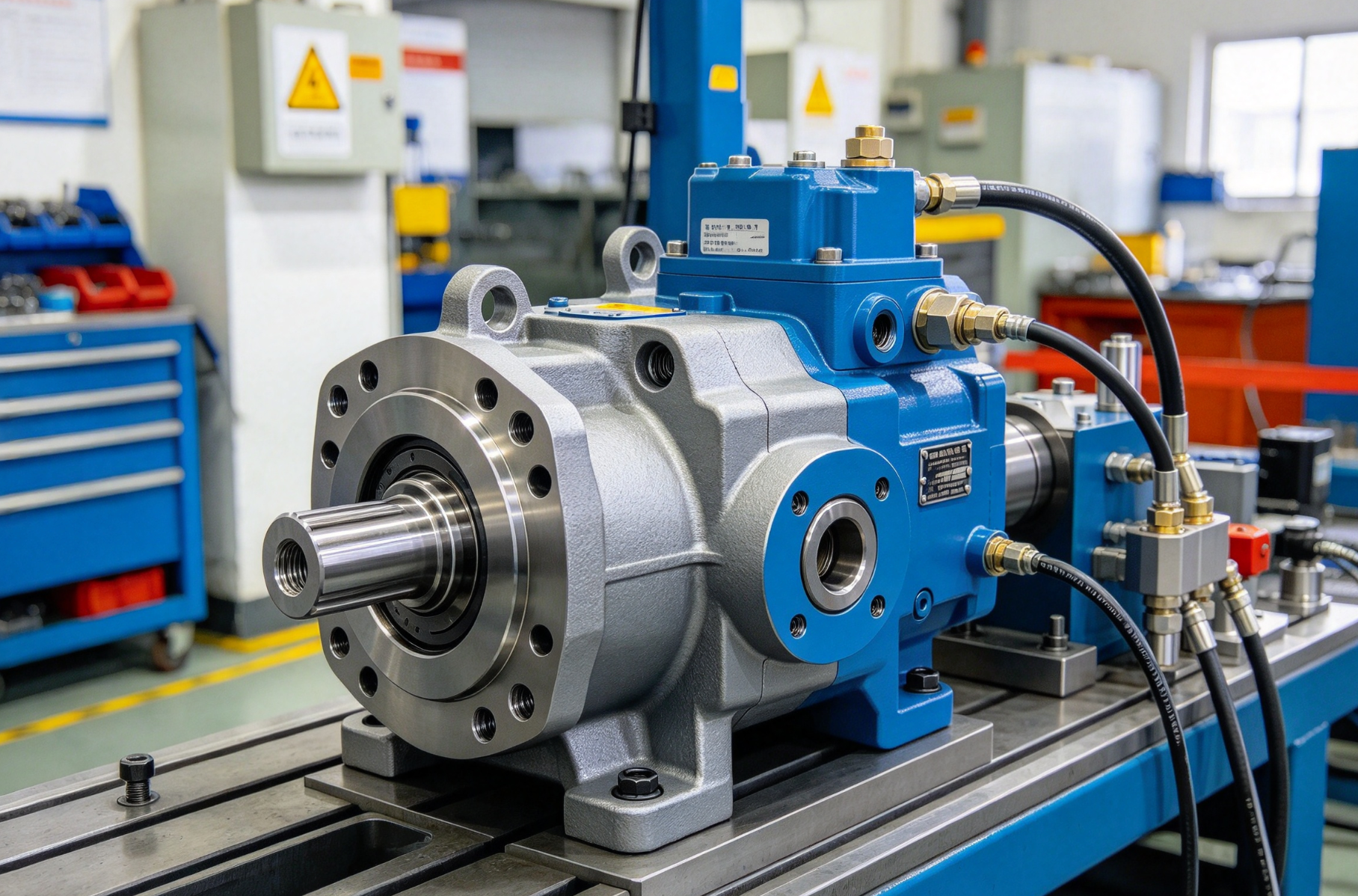
Pressure-Loss Symptoms and Likely Faults
| Diagnostic priority | Observed symptom | Most likely area | First inspection |
|---|---|---|---|
| 1 | Whining, vibration, foaming oil | Inlet circuit or aeration | Oil level, suction hose, strainer, breather, inlet fittings |
| 2 | Pressure falls as oil warms | Internal pump leakage | Cartridge, vanes, cam ring, pressure plates, oil viscosity |
| 3 | Pressure is low immediately after service | Installation or rotation error | Rotation, coupling, key, seals, cartridge alignment |
| 4 | Pump sounds normal but actuator is weak | Valve, actuator, or downstream leakage | Relief valve, directional valve, cylinder or motor seals |
A Safe Pump Troubleshooting Procedure
A structured test prevents unnecessary pump replacement. Record the machine condition, oil temperature, pressure location, and load state so that readings can be compared rather than judged by sound alone.
- Confirm the symptom. Check whether the loss affects every function or only one actuator. A single weak function often indicates a directional valve, actuator, counterbalance valve, or local restriction.
- Check fluid and reservoir conditions. Confirm level, cleanliness, correct fluid grade, temperature, filter condition, and free movement of the breather. Look for foam, discoloration, water, or visible particles.
- Inspect the inlet path. Examine the suction hose, clamps, fittings, strainer, isolation valve, and tank pickup. A suction-side restriction can worsen as flow demand increases.
- Measure pressure at relevant points. Compare pump outlet pressure with pressure at the control valve and actuator. Test at rest and during a controlled load condition using calibrated instruments rated for the circuit.
- Check the pressure-control path. Inspect the relief valve, unloading valve, compensator, and pilot circuit for contamination, incorrect adjustment, damaged springs, or blocked orifices.
- Evaluate the pump mechanically. Verify rotation, coupling alignment, shaft condition, mounting, unusual heat, and case leakage. If external causes are eliminated, remove and inspect the cartridge and sealing surfaces.
Diagnostic Values to Record
Consistent records make intermittent pressure loss easier to isolate. The following log structure uses the minimum comparison points needed for a useful field diagnosis.
| Record item | Condition A | Condition B | Why it matters |
|---|---|---|---|
| Pressure location | Pump outlet | Actuator or valve outlet | Separates pump delivery issues from downstream losses |
| Operating state | Idle or unloaded | Machine under controlled load | Shows whether the fault appears only under demand |
| Oil state | Cold start | At normal operating temperature | Highlights clearance-related internal leakage |
| Sound and fluid condition | Quiet and clear | Whine, vibration, or foam | Supports inlet-starvation or aeration diagnosis |
| Mechanical condition | Normal coupling and shaft | Heat, play, or misalignment | Identifies drive and installation faults |
When Should the Pump Be Repaired or Replaced?
Repair is appropriate when inspection identifies serviceable wear items and the housing, shaft, cam ring, and pressure surfaces remain within the manufacturer’s limits. A cartridge replacement may restore performance when the cartridge is the primary source of internal leakage, but compatibility must be confirmed by model, displacement, rotation, pressure class, and fluid application.
Replacement is more appropriate when the housing is damaged, the shaft is badly worn, contamination has repeatedly destroyed components, or the pump has suffered severe cavitation. The root cause must still be corrected; installing a new pump on a restricted inlet or contaminated circuit can produce the same failure again.
Seven Frequently Asked Questions
1. Can a hydraulic vane pump lose pressure only when hot?
Yes. As oil temperature increases, viscosity usually decreases and internal clearances can pass more leakage flow. A worn cartridge, cam ring, vane, or pressure plate may therefore perform acceptably during a cold start and fail at operating temperature.
2. Does low hydraulic pressure always mean the pump is bad?
No. A relief valve, unloading circuit, suction restriction, air leak, actuator seal, directional valve, or incorrect gauge location can cause low pressure. Test the complete circuit before condemning the pump.
3. What does a whining vane pump indicate?
A whining sound commonly suggests cavitation, aeration, excessive speed, or inlet restriction. Check oil level, inlet hose condition, strainer cleanliness, breather operation, and suction fittings before continuing operation.
4. How can I distinguish cavitation from internal pump wear?
Cavitation usually produces noise, vibration, foaming, and an inlet-related pattern that worsens with speed. Internal wear more often produces heat, slow performance, and pressure loss that becomes pronounced as oil warms. Both conditions can occur together.
5. Can a blocked return filter cause low pump pressure?
A blocked return filter can create backpressure, heat, and bypass flow, but it does not always explain low outlet pressure by itself. Check the filter indicator, bypass condition, tank return path, and pressure at multiple points.
6. Is replacing the vane cartridge enough?
It is enough only when the cartridge is the failed component and the housing, shaft, pressure surfaces, fluid, and inlet circuit are suitable. Confirm the correct cartridge specification and inspect for contamination or cavitation damage.
7. What should be checked after installing a replacement pump?
Confirm correct rotation, clean fluid, priming, open inlet flow, secure fittings, coupling alignment, relief-valve settings, and the absence of air. Start under controlled conditions and monitor sound, temperature, leakage, and pressure.
About Vicks Hydraulic
Vicks Hydraulic develops hydraulic power solutions spanning vane pumps, motors, servo systems, cartridges, and replacement parts. Its product focus supports compatibility with established Vickers, Denison, Yuken, Tokimec, and Rexroth systems, including replacement and legacy-equipment applications. For help matching a pump, cartridge, motor, or servo package, review the available product information and request a technical recommendation before ordering.
For a reliable diagnosis, provide the existing model code, rotation, displacement, operating fluid, machine application, symptoms, and recorded pressure conditions. This information helps a qualified supplier identify a compatible replacement or repair path without guessing.

Demi Ge
Post time: Nov-06-2026