Summary
Cartridge kit service life in offshore platform applications runs 30 to 50 percent below lab-tested ratings. This article explains the fthe stressors responsible and the maintenance practices that recover most of the lost life.
- Salt contamination reduces cartridge life through wear and corrosion on bearing and seal surfaces.
- Thermal cycling from intermittent platform operations causes fatigue that lab testing does not capture.
- Vibration from wave action and crane operations accelerates mechanical wear beyond design margins.
- Five classification societies (CCS, DNV, ABS, BV, LR) certify pumps for offshore service; each has distinct protocols.
- Structured 250-hthe maintenance programs recover 15 to 25 percent of the lost cartridge service life.
Operators routinely contact my team with a frustrating pattern: a vane cartridge that delivers 14,000 hours in the lab test fixture fails in 6,500 hours on the platform. The pump is the same model. The rated specifications match. The operating pressure profile falls within published limits. Yet the service life gap is real and consistent across the segment.
I have spent enough time on platform service calls and post-failure teardowns to understand why this gap occurs, and I would like to share what I have learned about the underlying causes. It is not a single cause. It is the accumulation of fthe stressors that lab testing either simplifies or omits entirely. This article walks through those stressors and the maintenance practices that recover most of the lost service life, based on the field data we have collected across offshore installations in the North Sea, the Gulf of Mexico, and offshore West Africa.
What Lab Testing Actually Validates
Hydraulic pump manufacturers rate cartridge service life based on standardized testing that follows ISO 4391 and manufacturer-specific protocols. The test fixture uses clean hydraulic oil filtered to ISO 4406 18/16/13 or better, operates at a constant target pressure and flow, maintains oil temperature within a narrow band, and runs continuously without vibration or external mechanical stress.
Buyers comparing different pump series for offshore service can review the V series cartridge family alongside the T6 platform to identify the right configuration for specific platform requirements.
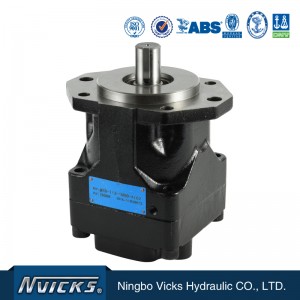
Under these controlled conditions, a T6 single pump cartridge consistently delivers 14,000 to 18,000 operating hours before the three replacement signals appear. The lab test serves a real purpose: it validates design margins, manufacturing consistency, and rated performance across the product family. Manufacturers and customers both rely on these numbers for capacity planning and replacement forecasting.
What the lab test does not capture is the cumulative effect of multiple stressors operating simultaneously in real-world installations. Each individual stressor might be within design margin. The combined impact, however, accelerates wear well beyond what any single lab test can predict. The offshore platform environment is one of the more punishing examples of this compounding effect.
Stressor One: Salt Contamination Pathways
Salt enters the hydraulic system through several pathways that lab testing does not address. The most common is compromised seals, particularly around shaft seals, cylinder rod seals, and reservoir breathers. Salt-laden air and sea spray penetrate these points under platform conditions, introducing chloride ions into the oil.
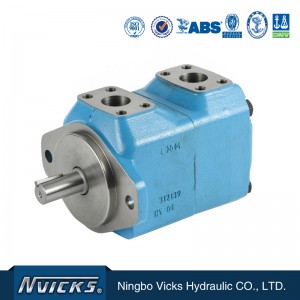
For platform operators evaluating replacement pumps across the entire marine product portfolio, the vane motor family complements the T6 pump line with auxiliary motor drives for positioning systems.
Once in the oil, salt particles act as abrasive contaminants that accelerate wear on the vane tips, pressure plate, and cam ring surfaces. The mechanical wear from salt is the visible failure mode, but the chloride ions also promote electrochemical corrosion on bearing surfaces and shaft seals. This corrosion rarely causes immediate failure but reduces the service life of bearings and seals, creating secondary failures beyond the cartridge itself.
The marine sealing packages available for T6 series pumps use fluorocarbon elastomers rated for salt exposure. These materials cost more than standard nitrile seals but extend seal life by 3 to 5 times in marine environments. Buyers specifying pumps for offshore platforms should always confirm the sealing package selection, since standard seals are the default in many product configurations unless explicitly upgraded.
Beyond seals, the reservoir breather filter is a common contamination pathway in offshore installations. Standard breathers remove particulates but not salt vapor. Specialized marine breathers with salt-trapping media are available and cost USD 50 to USD 150 per unit. For platform operators running multiple pumps, the breather upgrade across the fleet is one of the highest-return maintenance investments available.
Stressor Two: Thermal Cycling From Intermittent Operation
Platform hydraulic systems rarely operate continuously. Crane operations cycle on and off as cargo moves. Winch systems engage briefly during anchor handling or positioning. Power units may sit idle for hours between operational events. Each start-up and shut-down cycle produces a thermal transient that the cartridge must absorb.
Buyers researching offshore pump reliability can reference the European Federation of Materials Handling standards for material handling equipment used in marine and offshore service environments.
In my experience evaluating lab testing protocols, I have found that oil temperature is maintained within a 10 to 15 degrees Celsius band around the design target. Offshore platforms see oil temperature swings of 30 to 50 degrees Celsius during a typical 24-hthe period. Cold-start conditions with oil at ambient temperature stress the vane tips differently than steady-state operation. The differential thermal expansion between the rotor, cam ring, and pressure plate produces micro-movements at the contact surfaces that accelerate wear.
The thermal cycling problem compounds in cold-climate platforms such as those in the North Sea. Cold-start oil at 5 degrees Celsius versus steady-state at 60 degrees Celsius means the cartridge components see a 55-degree swing on every operational cycle. Platform operators in these regions report cartridge service lives at the lower end of the offshore range, often below 7,000 hours.
Buyers specifying pumps for cold-climate platforms should request thermal management features such as heated reservoirs, circulation pumps that maintain minimum oil temperature during idle periods, and cartridge materials rated for low-temperature operation. These features add 5 to 10 percent to the pump cost but recover 15 to 25 percent of the service life lost to thermal cycling.
Stressor Three: Vibration From Wave Action and Crane Operations
Offshore platforms experience continuous low-frequency vibration from wave action, ship-to-platform interfaces, and crane operations. The vibration amplitude varies by platform design and sea state, but it is always present and never simulated in lab testing.
The ISO hydraulic system performance testing protocols referenced in this article are documented at the ISO standards catalog, which provides the testing methodology that manufacturers use for rated service life claims.
Continuous low-frequency vibration accelerates mechanical wear on bearing surfaces, shaft seals, and the cartridge-to-housing interface. The vane pump’s internal components rely on precise clearances that the design assumes will hold under steady-state conditions. Vibration introduces dynamic loads that vary the clearances by small but meaningful amounts. Over thousands of operating hours, the cumulative effect is accelerated wear on every interface surface.
Crane operations produce high-amplitude transient vibration that is even more damaging than continuous platform vibration. The combination of crane swinging, winch operation, and cargo movement creates vibration profiles that exceed the pump’s steady-state design margin for short periods. These transients do not register as failures, but they leave micro-damage that compounds across the operating life of the cartridge.
The most effective countermeasure I have observed across platform retrofits is vibration isolation at the mounting. Resilient mounts rated for marine service reduce transmission of platform vibration to the equipment body by 60 to 80 percent. The mounts cost USD 200 to USD 500 per unit and represent one of the highest-return investments for extending cartridge life. Operators who retrofit resilient mounts typically report 10 to 15 percent longer life within the first replacement cycle.
Stressor Four: Pressure Transients From Crane and Winch Operation
Crane and winch operations produce pressure transients that exceed the steady-state operating pressure by 30 to 60 percent. The pressure spikes occur over milliseconds, but they repeat many times during a single crane cycle. Each transient produces a shock load on the cartridge components that lab testing does not capture.
For deeper reading on marine hydraulic system maintenance practices, the ISO hydraulic fluid cleanliness standard provides the cleanliness code framework used in the offshore oil sampling program described above.
The compounding effect of thousands of pressure transients on the vane tips, pressure plate, and cam ring surfaces is measurable in teardown analysis. Cartridge sets that have seen extensive crane service show characteristic wear patterns at the high-pressure port edge that do not appear in steady-state operation. The wear pattern reduces volumetric efficiency gradually, which is one of the three signals I covered in the cartridge replacement framework article.
Buyers specifying hydraulic units for crane and winch service should evaluate accumulator sizing carefully. Properly sized accumulators absorb pressure transients and reduce the shock loading on the internal components. Undersized accumulators let the transients reach the pump body and accelerate wear. The relationship between accumulator capacity and service life is not widely understood, but the field data consistently shows that platforms with adequate accumulator capacity see 15 to 20 percent longer service life.
The Four-Stressor Compounding Effect
The fthe stressors do not operate independently. They compound on each other in ways that lab testing cannot reproduce. Salt contamination accelerates wear that thermal cycling makes worse. Vibration breaks down seals that would otherwise keep salt out. Pressure transients deliver shock loads to components already weakened by the other stressors.
This compounding is why a cartridge rated for 14,000 to 18,000 hours in the lab delivers 6,000 to 10,000 hours in typical offshore service. No single stressor explains the gap. The interaction of all fis the explanation.
Platform operators who understand this compounding effect design their maintenance programs accordingly. Rather than treating each stressor separately, the most effective maintenance programs address all fsimultaneously through coordinated inspection cycles, oil sampling protocols, seal upgrade programs, and accumulator capacity reviews.
The 250-Hthe maintenance Program That Recovers Lost Life
Across the offshore installations we have analyzed, my team has consistently found that platforms with structured 250-hthe maintenance programs achieve cartridge service lives in the 8,000 to 10,000 hthe range rather than the 6,000 to 8,000 hthe baseline. The 250-hthe interval aligns with typical platform operational cycles and gives maintenance crews a predictable cadence for the critical inspection points.
The five components of the program are straightforward. First, oil sampling at the pump case drain and reservoir. The sample is analyzed for particle count, water content, and chloride concentration. Particle counts above ISO 4406 19/17/14 trigger filtration upgrades. Water content above 100 ppm triggers reservoir inspection. Chloride concentrations above 50 ppm trigger seal inspection.
Second, seal visual inspection at the shaft seal, cylinder rod seals, and reservoir breather. Any sign of salt buildup, hardening, or cracking triggers immediate seal replacement with the marine sealing package. Third, filtration element replacement on a fixed schedule regardless of pressure drop indication. The element replacement prevents the gradual flow restriction problem covered earlier in the cartridge maintenance framework.
Fourth, accumulator pre-charge verification. Loss of pre-charge pressure is the most common cause of accumulator undersizing in service, since nitrogen leaks slowly over time. Annual verification catches the problem before it accelerates cartridge wear. Fifth, vibration mount inspection. Hardened or cracked resilient mounts lose their isolation properties and allow platform vibration to reach the pump body.
Buyers specifying pumps for new platform installations should request the maintenance program documentation from the pump supplier as part of the technical submittal package. Suppliers who cannot provide structured maintenance guidance for offshore service are not the right suppliers for these demanding applications.
Classification Society Certifications and What They Mean
Offshore platform operators specify pumps with classification society certifications that match the flag state and platform operator’s procurement standards. The five societies most commonly referenced are CCS (China Classification Society), DNV (Det Norske Veritas, Norway), ABS (American Bureau of Shipping), BV (Bureau Veritas, France), and LR (Lloyd’s Register, UK).
Each society has distinct testing protocols, certification requirements, and renewal procedures. CCS certification is typically required for platforms operating under Chinese flag or working with Chinese operators. DNV is the most common requirement for North Sea platforms. ABS dominates in the Gulf of Mexico. BV covers many West African and Mediterranean operations. LR handles a significant share of UK sector and global offshore projects.
Suppliers holding multiple certifications can serve a broader range of platforms, but the certifications are not equivalent. Each requires separate testing, separate audit procedures, and separate documentation. The cost of maintaining five certifications is non-trivial, which is why the list of suppliers holding all five simultaneously is short. Vicks Hydraulic maintains all five certifications for the marine cartridge family, which positions us to serve platform operators across the major offshore regions.
The T6EEC: The Workhorse of Offshore Power Units
Among T6 family members, the T6EEC triple-section configuration is the most commonly specified for offshore platform power units and winch systems. The triple design provides three pumping sections in a single housing, sharing inlet and outlet pressure between sections. This architecture offers several advantages specific to offshore service.
Buyers evaluating motor drives for offshore power units can review the Eaton hydraulic catalog for reference materials on marine-rated hydraulic components.
The triple-section design provides built-in redundancy. If one section shows early wear, the pump continues to operate at reduced capacity while maintenance is scheduled. This redundancy matters on platforms where unplanned downtime of crane or winch systems can halt operations entirely. Operators in the North Sea typically insist on triple-section designs for crane service because single-section failures create immediate operational and safety risks.
The T6EEC also delivers the high flow rates required for offshore crane and winch operations without resorting to larger-frame pumps. Larger-frame pumps add weight and footprint to the platform hydraulic room, both of which carry significant cost in offshore construction. The T6EEC delivers the flow capacity in a more compact package, which is a meaningful advantage in space-constrained platform layouts.
For platform operators evaluating T6EEC replacements, specifying the marine sealing package is essential. The standard sealing package uses nitrile elastomers rated for general industrial service. The marine package upgrades to fluorocarbon elastomers throughout the cartridge. The cost difference is 10 to 15 percent of the cartridge price, but the service life recovery is 30 to 40 percent in offshore conditions.
When Aftermarket Makes Sense and When It Doesn’t
The aftermarket cartridge discussion is more nuanced offshore than in any other application segment. In industrial settings, I have walked customers through the cost-of-ownership math that typically favors OEM. The same math offshore is much more one-sided.
Aftermarket cartridges in offshore conditions typically achieve 50 to 65 percent of OEM service life. The compounded stressors that already reduce OEM cartridge life by 30 to 50 percent have an even larger impact on aftermarket products. The vane tip clearance, pressure plate flatness, and surface finish tolerances that OEM manufacturers hold within tight specifications are harder to maintain at the aftermarket price point.
When unplanned downtime on an offshore platform can exceed USD 100,000 per day in lost production and operational standby costs, the aftermarket price premium savings do not compensate for the increased replacement frequency. Operators who standardize on aftermarket offshore typically face 30 to 50 percent higher total cartridge costs over a five-year period despite the lower unit price.
The aftermarket path makes sense in low-criticality applications such as auxiliary platform systems where downtime is acceptable. For primary crane, winch, and power unit applications, OEM is the right answer offshore. The math is less interesting than the operational consequences.
Conclusion: Treating Offshore as a Distinct Application Class
In my experience, the framework that works for industrial applications does not transfer directly to offshore platforms. Service life runs 30 to 50 percent below lab ratings for reasons that controlled testing does not capture. Operators who treat offshore as a distinct application class, with its own maintenance programs, its own supplier qualification criteria, and its own total-cost-of-ownership calculations, consistently achieve better outcomes than those who apply industrial playbooks to platform service.
The combination of salt contamination, thermal cycling, vibration, and pressure transients is the reality of offshore hydraulic service. Suppliers who understand all fthe stressors and design their products, documentation, and support programs accordingly are the suppliers worth partnering with. The cheapest cartridge is rarely the right answer in offshore service, and the OEM premium is more easily justified than in any other segment.
If your engineering group is evaluating hydraulic units for an offshore installation or struggling with service life below lab-rated levels, our marine team can review the duty cycle and recommend a specification tailored to the platform. Send the duty profile and current service data through the contact page, and we will run the analysis against the offshore database. The technical documentation center also contains guidance on marine specifications and the 250-hour maintenance program structure.
Frequently Asked Questions
Why do vane pump cartridges fail faster offshore than in lab testing?
Lab testing uses clean hydraulic oil, stable temperatures, and continuous duty cycles. Offshore platforms expose cartridges to salt contamination, thermal cycling from intermittent operation, vibration from wave action, and pressure transients from crane and winch operations. These combined stressors reduce cartridge service life by 30 to 50 percent compared to lab ratings, even with identical pump models and rated specifications.
What classification society certifications matter for offshore platform vane pumps?
Five classification society certifications cover most offshore applications: CCS (China Classification Society), DNV (Det Norske Veritas, Norway), ABS (American Bureau of Shipping), BV (Bureau Veritas, France), and LR (Lloyd’s Register, UK). Each society has distinct testing protocols and certification requirements. Operators specifying pumps for offshore platforms should confirm the certification required by the flag state and the platform operator’s procurement standards before finalizing the pump supplier.
Which T6 cartridge model works best for offshore applications?
The T6EEC triple-section configuration is the most common T6 family member specified for offshore platform power units and winch systems. The triple design provides redundant flow paths and built-in reserve capacity for transient peak demands. Operators should specify T6EEC cartridges with the marine sealing package, which includes fluorocarbon elastomers rated for salt exposure and additional surface treatment on the pressure plate.
How does salt exposure damage vane pump cartridges?
Salt contamination enters the hydraulic system through compromised seals, breather filters, and condensation in the reservoir. Once in the oil, salt particles accelerate wear on the vane tips, pressure plate, and cam ring surfaces. The chloride ions in salt also promote corrosion on bearing surfaces and shaft seals, which can cause secondary failures beyond the cartridge itself. Marine sealing packages with fluorocarbon elastomers reduce but do not eliminate salt ingress.
Can offshore cartridge life be extended with better maintenance?
Yes, structured maintenance programs can recover 15 to 25 percent of the lost cartridge life. Key practices include 250-hthe oil sampling, monthly seal inspection, quarterly filtration upgrades, and annual pressure plate flatness measurement. Operators who implement these practices consistently report cartridge service lives in the 8,000 to 10,000 hthe range rather than the 6,000 to 8,000 hthe baseline observed in poorly maintained offshore installations.
Is the OEM cartridge worth the price premium offshore?
The OEM price premium is harder to dispute in offshore applications than in any other segment. Aftermarket cartridges typically achieve only 50 to 65 percent of OEM service life in offshore conditions. When the cost of unplanned downtime on a platform can exceed USD 100,000 per day, the OEM cartridge that delivers 50 percent more operating hours easily justifies the 40 to 60 percent price premium.
Demi Ge
Hydraulic Solutions Expert, Ningbo Vicks Hydraulic Co., Ltd.
Demi Ge is a hydraulic solutions expert at Vicks Hydraulic, a national high-tech enterprise founded in 2007 in Ningbo, China. The company designs and manufactures T6, T7, V, VQ, and V10/V20 vane pumps plus Denison and Vickers vane motors, with five major classification society certifications (CCS, DNV, ABS, BV, LR). Demi works directly with injection molding, marine, and offshore platform customers on cartridge selection, service life optimization, and total cost of ownership analysis.
Post time: Jul-16-2026