TL;DR: Injection molding workshops across Southeast Asia — the thousands of plastic processing facilities in Thailand’s Samut Prakan province, Vietnam’s Binh Duong province, and Indonesia’s Tangerang district — are upgrading their hydraulic systems with T7 series vane pumps as a cost-effective alternative to replacing the entire machine or converting to servo technology. The T7 vane pump — a high-pressure, high-flow variable-displacement vane pump manufactured by Vicks Hydraulic with an annual production capacity of 80,000+ units — is the preferred upgrade because it delivers the flow and pressure performance that injection molding machines require, with the certification documentation (CCS, DNV, ABS, BV, LR) that machine builders and end customers in the marine and offshore supply chain demand. The upgrade involves replacing the existing fixed-displacement pump (typically a Vickers V20 or Vickers V series equivalent) with a T7 variable-displacement pump that matches the machine’s flow demand profile — high flow during the injection and plasticising phases, low flow during the cooling and clamping phases. The flow rate matching calculation — determining the required pump displacement in cm³/rev for the clamping, injection, and ejection functions — is the critical specification that determines whether the upgrade delivers the expected energy saving (25-35% reduction in hydraulic power consumption) and the expected cycle time improvement (5-10% reduction from faster clamp and ejection speeds). This article covers the T7 pump’s flow and pressure specification, the pressure compensator logic, the certification advantage for marine-grade injection molding, and the retrofit procedure that workshop managers need to plan for.
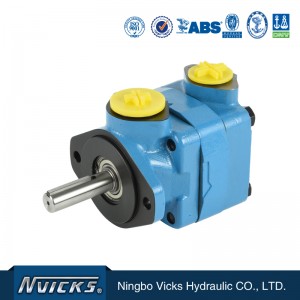
Why T7 Series Vane Pumps Are the Preferred Upgrade for Injection Molding Machines in SEA
The injection molding machine’s hydraulic system in a SE Asian workshop typically operates a fixed-displacement vane pump that runs continuously at the electric motor’s synchronous speed (1,450-1,750 RPM, depending on the motor’s pole count and the local electrical frequency — 50 Hz in all SE Asian countries). The fixed-displacement pump delivers a constant flow rate (proportional to the motor speed) regardless of the machine’s instantaneous flow demand. When the machine is in the cooling phase of the molding cycle — typically 40-60% of the total cycle time — the pump is still delivering full flow, which is diverted through the system’s proportional relief valve at full system pressure, converting the hydraulic power into heat that must be removed by the chiller or cooling tower.
The T7 variable-displacement vane pump solves this inefficiency with a pressure compensator control mechanism. The pump’s displacement (the volume of oil delivered per revolution) is controlled by a spring-loaded compensator spool that senses the pump outlet pressure. When the pressure at the pump outlet reaches the compensator setting (typically set at 10-20% above the system’s load-sensing pressure requirement), the compensator spool shifts, reducing the pump’s displacement to a minimum value (typically 5-15% of the full displacement). The pump continues to rotate at motor speed but delivers only the reduced flow needed to maintain the pressure compensator setting — the flow that was previously wasted through the relief valve is now saved, reducing the pump’s power consumption by 60-80% during the cooling phase.
The energy saving from the variable-displacement pump is proportional to the cooling phase duration as a percentage of the total cycle time. For a typical SE Asian injection molding job shop — producing housewares, automotive parts, or consumer goods with cooling phases of 8-15 seconds in a 20-30 second total cycle — the variable-displacement pump saves 25-35% of the hydraulic system’s electricity consumption compared to a fixed-displacement pump of the same flow rating. The energy saving at SE Asian industrial electricity rates ($0.08-$0.12 per kWh) generates an annual saving of $800-$2,500 per machine per year, and the payback period for the T7 pump upgrade (pump cost + installation labour) is 6-15 months.
Vicks Hydraulic’s T7 vane pump range includes displacements from 16 cm³/rev to 237 cm³/rev, covering the flow requirements of injection molding machines from 50 tonnes (clamping force) to 2,000 tonnes.
Flow Rate Matching: Calculating the Required Pump Displacement for Clamp, Injection, and Ejection
The pump displacement — the volume of oil delivered per revolution of the pump shaft — must be matched to the machine’s highest-demand function. For an injection molding machine, the highest flow demand is the injection function (the plunger advancing to fill the cavity), followed by the clamp function (the moving platen closing the mould) and the ejection function (the ejector pins pushing the part out of the mould).
The displacement calculation formula: Required displacement (cm³/rev) = (Flow demand in L/min × 1,000) ÷ (Motor speed in RPM × volumetric efficiency). For a 200-tonne injection molding machine with a standard electric motor running at 1,450 RPM (50 Hz supply):
- Injection function flow demand: The injection plunger diameter is 60-80 mm, the injection stroke is 150-200 mm, and the injection speed requirement is 80-120 mm/s. The flow demand is 25-50 L/min (depending on the plunger diameter and the injection speed setting). The pump must deliver this flow rate at the injection pressure setting (1,500-2,000 bar injection pressure, which requires a pump outlet pressure of 150-200 bar because the injection pressure is multiplied by the plunger area ratio).
- Clamp function flow demand: The clamp cylinder diameter is 200-300 mm and the closing speed requirement is 250-350 mm/s (the clamp must close quickly during the “fast close” phase before the mould halves contact). The flow demand for the fast-close phase is 100-150 L/min — significantly higher than the injection flow demand.
- Pump selection: The pump’s maximum flow capacity must satisfy the highest flow demand — the clamp function’s 100-150 L/min. A T7 series pump with a displacement of 80-100 cm³/rev operating at 1,450 RPM delivers 110-140 L/min (calculated: 80 cm³/rev × 1,450 RPM × 0.95 volumetric efficiency = 110 L/min). The selected pump displacement for a 200-tonne machine is typically 100 cm³/rev, providing a flow capacity of 138 L/min at 1,450 RPM.
The selected pump must also meet the machine’s maximum pressure requirement — the clamp force generation requires the highest pressure (the pump must deliver the rated clamp force at the rated system pressure). For a 200-tonne machine with a clamp cylinder area of 315 cm² (cylinder diameter 200 mm), the pump pressure required to generate 200 tonnes of clamping force is 200,000 kg ÷ 315 cm² = 635 kg/cm² hydraulic pressure, which is achieved by the clamp force multiplication cylinder — the pump outlet pressure is typically 140-175 bar (regulated by the system relief valve and the pump’s compensator setting).
Pressure Stage Selection: Low-Pressure Fill vs High-Pressure Hold — How the Pump’s Pressure Compensator Works
The T7 vane pump’s pressure compensator is the mechanism that reduces the pump’s displacement when the system pressure reaches the compensator setting. Understanding the compensator’s operation is essential for the workshop manager to set the correct compensator pressure and to troubleshoot system performance issues after the upgrade.
Standard compensator (single-pressure compensator, the default configuration for injection molding machines): The compensator is a spool valve mounted in the pump’s control cover. The spool is spring-loaded to the open position (maximum displacement) and is exposed to pump outlet pressure on the opposite end. When the pump outlet pressure rises above the compensator spring compression setting (adjustable by a hex screw under the compensator cap), the spool shifts, directing a control pressure to the pump’s displacement control piston. The control piston reduces the pump’s cam ring angle, decreasing the displacement. The compensator responds to pressure changes within 50-100 milliseconds — the injection molding machine’s control system must be programmed to sequence the valve openings and closings to allow the compensator time to respond without creating pressure spikes in the system.
Load-sensing compensator (optional, for variable-pressure systems): The pump includes a load-sensing port that is connected to the machine’s control valve bank’s load-sensing line. The compensator maintains a constant pressure margin (typically 15-25 bar) above the highest load pressure demand, instead of defaulting to the fixed compensator setting. The load-sensing compensator is more energy-efficient than the standard compensator in machines that operate multiple functions simultaneously (e.g., clamping + injecting, or ejecting + opening the mould), because the pump pressure tracks the load demand instead of defaulting to the compensator setting when no function is active. The load-sensing compensator adds 15-25% to the pump’s cost and is specified for multi-function machines (2-component injection molding, rotary-table injection, or machines with core-pull cylinders).
For most injection molding machines, the standard compensator setting is 10-20 bar above the system’s highest relief valve setting. If the system relief valve is set at 175 bar, the compensator is set at 190-195 bar. The 15-20 bar margin ensures that the compensator does not interfere with the relief valve’s function during normal operation — if the compensator were set at 175 bar (the same as the relief valve), the compensator would start unloading the pump before the relief valve could lift, preventing the system from reaching the relief valve setting during start-up and causing inconsistent pressure control.
The CCS/DNV/ABS Certification Advantage for Marine-Use Injection Molding Lines
SE Asian injection molding workshops that produce components for the marine, offshore, and shipbuilding supply chains — such as pipe fittings, cable trays, valve handles, and buoyancy modules — require hydraulic pumps that carry classification society certification (CCS, DNV, ABS, BV, or LR). The certification confirms that the pump’s material, design, and test procedures meet the classification society’s rules for marine and offshore equipment.
Vicks Hydraulic’s T7 vane pump range is CCS-certified (China Classification Society), DNV-certified (Det Norske Veritas), ABS-certified (American Bureau of Shipping), BV-certified (Bureau Veritas), and LR-certified (Lloyd’s Register) — a multi-certification package that is unusual for a Chinese hydraulic pump manufacturer and provides a significant advantage for injection molding workshops seeking to serve the marine and offshore supply chain.
The certification is documented in the pump’s classification certificate, which is issued by the classification society after witnessing the pump’s type test (a 1,000-hour endurance test at rated pressure and flow, with periodic measurement of the pump’s volumetric efficiency, noise level, and temperature rise). The certificate lists: the pump model, the rated pressure and flow, the test fluid type and viscosity, the ambient temperature range, and the pump’s certification reference number — the pump is traceable to an individual test report that is filed with the classification society’s engineering office. For an injection molding workshop bidding on a contract that requires certified hydraulic pumps, the Vicks T7′s multi-certification eliminates the cost and time of arranging separate certification testing for each project.
Retrofit Procedure: What an Injection Molder Needs to Know Before Swapping the Hydraulic Pump
The retrofit of a T7 variable-displacement vane pump into an existing injection molding machine — replacing the original fixed-displacement pump — can be completed in one working day by a qualified hydraulic technician, with the machine returning to production on the following day. The procedure has four phases: removal, installation, commissioning, and tuning.
Removal (2-3 hours): The machine’s hydraulic oil is drained and filtered (the oil is reused after the retrofit — a full oil change is not required unless the existing oil is contaminated). The old pump’s suction and pressure lines are disconnected, the pump-motor coupling is disengaged, and the pump mounting bolts are removed. The mounting face is cleaned and inspected for burrs or damage that could misalign the new pump.
Installation (2-3 hours): The T7 pump is installed on the machine’s existing pump mounting flange (the mounting dimensions for the T7 series — SAE-A 2-bolt flange for sizes 16-125 cm³/rev, SAE-B 2-bolt flange for sizes 160-237 cm³/rev — match the Vickers V-series mounting flange, which is the standard for most injection molding machines in SE Asia). The pump-motor coupling is aligned to within 0.050 mm TIR (measured at the coupling rim — misalignment is the most common cause of premature pump failure after a retrofit). The suction and pressure hoses are connected.
Commissioning (1-2 hours): The pump is filled with clean hydraulic oil through the pressure port (never start a dry vane pump — the vanes will seize in the rotor slots within seconds). The compensator setting is adjusted to the machine’s system relief valve setting plus 15-20 bar. The system is purged of air by operating the machine’s functions in manual mode at low speed for 5-10 cycles.
Tuning (2-3 hours): The machine’s process parameters — injection speed, holding pressure, clamp speed, ejection force — are verified and adjusted as needed. The variable-displacement pump’s response time (the time from the control valve signal to the pump reaching the required flow rate) is slightly slower than a fixed-displacement pump because the pump’s displacement control piston must move before flow is delivered. For most injection molding processes, the response time difference is 50-120 milliseconds, which is accommodated by the machine’s process parameter tuning.
Q&A: Injection Molding Workshop Managers Sourcing T7 Vane Pumps from China
Q1: What is the MOQ for a T7 vane pump order?
A: The MOQ is 1 unit for any standard T7 displacement size (16-237 cm³/rev) and any standard control option (standard compensator, load-sensing compensator). For custom control options (special pressure ranges, special shaft extensions, special mounting flanges), the MOQ is 5-10 units per order. For workshop managers ordering for a single machine, the single-unit MOQ allows a trial installation before committing to a fleet-wide upgrade.
Q2: What spare parts should I stock with the T7 pump?
A: The recommended spare parts kit for the T7 pump includes: one vane set (12 vanes for displacements up to 100 cm³/rev, 16 vanes for larger displacements), one cartridge kit (including the cam ring, rotor, and pressure plate assembly — the rotating group that wears over time), one shaft seal kit, and one compensator valve kit (the compensator spool and spring). The spare parts kit cost is approximately 25-35% of the pump price and covers the most common field-replaceable components. The pump’s certified service life before the first major overhaul (vane set replacement) is 10,000-15,000 operating hours.
Q3: What is the hydraulic oil viscosity range that the T7 pump can handle?
A: The T7 pump is designed for mineral-based hydraulic oils with a viscosity range of 20-400 cSt at the pump inlet temperature. For SE Asian ambient temperatures (25-40°C), the recommended oil viscosity grade is ISO VG 46 (46 cSt at 40°C). For workshops operating in high-ambient-temperature conditions (above 40°C), ISO VG 68 provides adequate film thickness at the vane tips to prevent metal-to-metal contact during start-up. The pump should not operate with oil below 20 cSt — the vane tip-to-cam ring contact pressure exceeds the oil film’s load-carrying capacity, causing rapid vane wear.
Q4: How long does a T7 pump last between overhauls?
A: The T7 pump’s certified service life before the first overhaul is 10,000-15,000 operating hours for continuous operation at the rated pressure (210 bar) and the rated speed (1,450 RPM). At lower pressures (below 150 bar) and lower speeds (below 1,200 RPM), the service life extends to 20,000-25,000 hours. The overhaul consists of replacing the vane set, the cartridge kit, and the shaft seal — the pump body, end cover, and compensator are reused for 3-5 overhaul cycles before the pump is retired.
Q5: What are the signs that the T7 pump needs maintenance?
A: Three indicators that the workshop operator can monitor: (1) increased cycle time — if the machine’s clamp or injection speed decreases by more than 10% at the same pressure setting, the pump’s volumetric efficiency has dropped below 80% and the vane set needs replacement; (2) audible noise increase — a healthy T7 pump produces 65-75 dB(A) at 1 metre distance at rated pressure and flow — a noise increase of 5+ dB(A) indicates vane tip wear or cavitation (check the suction line filter and oil level); (3) oil temperature rise — if the pump’s case drain oil temperature exceeds 80°C (measured at the drain port), the pump’s internal leakage has increased beyond the design limits and the cartridge kit needs replacement.
Q6: Does Vicks Hydraulic provide technical support for the first retrofit installation?
A: Yes. For first-time buyers, Vicks provides remote technical support via video call (WhatsApp or WeChat) for the installation and commissioning phases. The support session covers: pump-motor alignment verification, compensator setting adjustment, system pressure setting verification, and the machine’s process parameter tuning. For workshops that install multiple pumps (10+ units), Vicks can dispatch an application engineer to the workshop for a 2-day on-site training and commissioning session.
About the Author: Demi Ge is a hydraulic solutions expert at Vicks Hydraulic, a national high-tech enterprise founded in 2007, specialising in vane pumps, servo systems, and one-stop energy-saving hydraulic solutions. With 6 world-leading production lines and an annual capacity of 80,000+ vane pumps, Vicks serves industries including marine, military, and industrial automation.
Social: Facebook
Post time: Jun-22-2026