- Istanbul press brake OEMs who source ABT servo hydraulic systems wholesale from Ningbo Vicks Hydraulic getMOQ 10 units per order — workable for mid-size sheet metal production lines.
- Servo-driven hydraulic pumps cut energy consumption by up to 40% versus conventional constant-pressure pumps, because the pump activates only when the machine actually fires.
- The ABT series single pump pairs with our full servo system package —servo system solution — for precise ram control and repeatable bending cycles on CNC press brakes.
- As a national high-tech enterprise since 2007, Ningbo Vicks Hydraulic ships globally with ISO-aligned quality documentation, supporting your Istanbul-based OEM compliance needs.
- Wholesale inquiries are processed within 24 hours; send your technical requirements for a structured quotation.
If you’re an OEM purchasing director running a press brake assembly line in Istanbul’s industrial zones — from Istinye to Beylikdüzü — you already know that hydraulic system selection directly determines your machine’s energy bill, maintenance frequency, and ability to serve high-precision sheet metal customers across Turkey and beyond.
I’ve spent 18 years working with hydraulic systems for sheet metal fabrication equipment. When Istanbul OEMs ask me what separates a budget hydraulic package from a proper servo-driven system, I tell them:the difference is in the pump, the control response, and the long-term cost of ownership. This article breaks down everything you need to know about sourcing ABT servo hydraulic systems wholesale — cost structure, technical fit, MOQ realities, and how to evaluate whether this supply relationship makes sense for your production volumes.
What Makes a Servo Hydraulic System Different for Press Brake Applications?
Before we talk cost, let’s be clear on what we’re actually comparing. A conventional hydraulic press brake uses a fixed-displacement pump that runs continuously at full pressure whenever the machine is powered on. That pressure is then throttled down — wasted as heat — every time the ram doesn’t need to move.
Aservo hydraulic system replaces that constant-running pump with a variable displacement or fixed pump driven by an electric servo motor. When the CNC controller sends a positioning signal, the servo motor spins up, builds pressure, and drives the ram. The moment the ram reaches target position, the servo motor slows or stops — no throttling, no heat waste.
Because press brake cycles involve extended dwell periods between bends — often30-60% of total cycle time in low-batch sheet metal runs — this on-demand pressure generation translates directly to energy savings. Because the pump only runs when hydraulic power is actually required, so energy waste from continuous throttling is eliminated entirely.
For an OEM building20-50 press brakes per month, those energy savings compound across your customers’ factory floors. The machine that ships with a servo hydraulic package carries a different value proposition than one with a conventional fixed pump — and your purchasing director clients in the automotive parts, HVAC, and appliance sectors in Turkey notice the difference on their electricity bills.
The Real Cost Breakdown: What Istanbul OEMs Actually Pay
I’ve quote-built with dozens of Istanbul sheet metal OEMs. Here’s how the cost conversation typically goes — and what actually matters when you drill into TCO (total cost of ownership).
Upfront Component Cost vs. Lifecycle Cost
Upfront cost is what you see on the proforma invoice. Wholesale ABT servo system pricing for an order of 10 units or more is structured to support OEM assembly volumes, not one-off project purchases.
But here’s what I’ve learned from working with Turkish press brake builders: the upfront price is rarely the decisive factor. The decisive factor is what your end customers pay in electricity and maintenance over a 5-year operational horizon.
Consider this — a conventional hydraulic system on a 6-axis CNC press brake running two shifts at an Istanbul factory typically consumes 15-22 kW continuously. A servo-driven system doing the same work averages 9-14 kW over the same duty cycle, because the pump isn’t throttling during dwell periods. At Istanbul industrial electricity rates, that delta represents roughlyUSD 4,000-7,000 in annual electricity savings per machine.
Over five years, your end customer saves USD 20,000-35,000 per press brake — before maintenance cost differences are even factored in. Because servo systems generate less heat and experience fewer pressure cycling stresses, so pump and seal service intervals extend from typically12 months to 18-24 months.
What the ABT Series Single Pump Brings to Your Press Brake Line
TheABT series single pump is designed specifically for press brake and similar precision forming applications. When I review the specification requirements for Istanbul OEM assemblies, the ABT series checks the boxes that matter most for sheet metal production lines:
- Pressure stability: ABT pumps deliver consistent delivery pressure across varying speeds, which translates to repeatable ram positioning — essential for multi-pass bending operations on automotive body panels or appliance enclosures.
- Signal compatibility: The pump integrates with standard CNC press brake controllers via conventional hydraulic proportional valves. No custom PLC programming required, which simplifies your assembly and testing workflow.
- Compact footprint: The single-pump configuration reduces hydraulic tank size requirements, making it easier to mount inside standard press brake frames without custom reservoir engineering.
- Wholesale structure: With MOQ 10 per order, the ABT series is positioned for OEMs running continuous press brake assembly programs — not single-machine projects.
When I visit factories in Istanbul’s organize sanayi bölgeleri, I consistently see the same pattern: OEMs who spec servo hydraulic packages on their machines command higher average selling prices than those competing on price alone. The machine is more energy-efficient, more controllable, and more attractive to the export-focused manufacturers who are Turkey’s most demanding sheet metal buyers.
How to Evaluate a Wholesale Hydraulic Supplier: The Criteria That Actually Matter
Not every hydraulic supplier claiming to offer “servo system wholesale” actually understands press brake applications. Here’s the evaluation framework I use — and recommend to Istanbul OEM purchasing directors who are serious about quality.
Quality System: What Standards Does the Supplier Operate Under?
Ningbo Vicks Hydraulic has operated as a national high-tech enterprise since 2007, which means our design and manufacturing processes follow documented quality management protocols aligned with ISO 9001 principles. When I’m talking to a new OEM customer, the first thing I do is walk them through our production documentation, test reports, and inspection procedures.
For Istanbul OEMs exporting machines to EU markets or tendering for automotive OEM contracts, supplier quality documentation is a non-negotiable requirement. TheEuromid standards for medical and industrial equipment manufactured or traded in Turkey provide useful reference frameworks, but the actual documentation expectations come from your end customers’ procurement specifications.
What I recommend: ask any potential hydraulic supplier for a sample test report on the pump model you’re evaluating. A real supplier will provide it. One that can’t — or keeps redirecting to a generic brochure — is signaling something about their actual manufacturing depth.
Lead Time and MOQ Structure: Realistic or Just Marketing?
The MOQ of 10 units for the ABT series is based on our actual production batch economics. We batch-produce pump assemblies in runs of 10-20 units to optimize component sourcing and assembly time. Because production batch size directly affects per-unit component cost, so MOQ 10 allows us to offer wholesale unit pricing while maintaining our quality inspection standards on every individual pump.
Lead time for confirmed wholesale orders is typically 15-25 business days, which fits well within the assembly cycle of a typical Istanbul press brake OEM — most projects run 30-60 days from component receipt to machine commissioning. For emergency requirements or pilot builds below MOQ, we handle inquiries case by case — reach out directly with your timeline.
Technical Support: Do They Understand Your Application?
This is where many international hydraulic suppliers fail Istanbul OEMs. They sell a pump from a catalog and leave you to figure out how it integrates with your press brake’s hydraulic circuit. We’ve been fielding technical questions from sheet metal equipment manufacturers for nearly two decades — and I can tell you that the questions Istanbul OEMs ask are highly specific.
Questions like: “What’s the recommended relief valve setting for a 150-ton press brake running 20 mm mild steel?” or “Can the ABT pump be mounted vertically inside a C-frame press brake housing?” — these require a supplier who understands press brake applications, not just hydraulic theory. The practical guidance published by pressautomation.com on hydraulic press brake integration offers useful industry context for OEMs evaluating system suppliers.
When I work with an OEM on a new ABT integration, I walk through the hydraulic circuit diagram, confirm the proportional valve specifications, and provide recommended tank sizing guidance. Because hydraulic system performance is a system-level equation, not a component spec sheet exercise, so our technical support process starts with your press brake’s actual working pressure and flow requirements.
What Istanbul’s Sheet Metal Market Demands — and How Servo Hydraulics Delivers
Turkey’s sheet metal fabrication sector has undergone significant modernization over the past decade. Istanbul’s industrial zones — from Tuzla to Samandıra — are filled with press brake fleets that are progressively upgrading from conventional to CNC-controlled machines. The customers buying those machines are increasingly energy-conscious, globally competitive manufacturers.
The automotive parts supply chain feeding Istanbul’s export-oriented factories has specific requirements: tight dimensional tolerances on bent components, fast cycle times, and documented repeatability for quality assurance systems. A servo hydraulic system on a CNC press brake directly addresses all three.
When the ABT servo pump responds to the CNC controller’s signal in milliseconds rather than seconds, the ram reaches target position faster and holds it more precisely during the dwell period. For an automotive bracket going through8 progressive bends, that precision consistency matters.Because servo hydraulics eliminates the pressure drop that occurs during rapid multi-axis positioning on conventional systems, so first-pass yield on complex parts improves measurably.
The appliances sector — another major buyer of Istanbul-built press brakes — has its own demands: high volume, low-cost production with minimal changeover time. Servo hydraulics enable faster ram return speeds between bends, which directly improves cycle throughput on long-run production orders. For an OEM building 200-500 identical parts per shift, even a 0.5-second cycle time improvement per part compounds into significant daily throughput gains.
The Wholesale Sourcing Process: From Inquiry to Delivery
For Istanbul press brake OEMs evaluating Ningbo Vicks Hydraulic for the first time, here’s the practical sourcing flow we use:
- Technical requirements submission: Send your press brake’s working pressure, flow rate, and tank capacity requirements via our contact form or WhatsApp. We respond within 24 hours with a technical compatibility check.
- Quotation and documentation: We provide a formal price quotation including product specifications, payment terms, and lead time. Test reports, material certificates, and dimensional drawings are included in the standard documentation package.
- Sample order (optional): For first-time OEM customers, we can produce a sample unit for your inspection and integration testing before the full MOQ 10 batch is confirmed.
- Batch production and inspection: Once the order is confirmed, the MOQ 10 batch enters production. Each ABT pump undergoes pressure testing and flow measurement before shipping.
- Shipping and logistics: Orders ship via sea freight or air freight from Ningbo port. We handle export documentation; your forwarder handles Turkish customs clearance. Typical sea freight transit to Istanbul is 25-35 days.
Payment Terms and Trade Confidence
For established OEM relationships, we offer payment terms that reduce your upfront cash flow pressure. For new customers, we typically work with T/T payment or Letter of Credit. I’ve found that because trust in B2B hydraulic supply relationships is built through consistent on-time delivery and quality documentation, so we prioritize delivery reliability over payment method flexibility.
What matters most is that every unit in your MOQ 10 batch arrives with a matching test report — verified pressure and flow data — so your assembly team can confirm system performance before the press brake goes to final testing.
Comparing Servo Hydraulic Package Options: What Istanbul OEMs Tell Me They Evaluated
I’ve spoken with dozens of Istanbul OEM purchasing directors who evaluated multiple servo hydraulic suppliers before choosing a partner. The evaluation criteria they describe consistently cluster around three themes:
| Evaluation Criterion | Conventional Fixed Pump | Generic Servo Package | ABT Servo System (Ningbo Vicks) |
|---|---|---|---|
| Energy efficiency | Baseline (continuous run) | Moderate improvement | Up to 40% reduction |
| MOQ for wholesale pricing | Varies widely | Often MOQ 20-50 | MOQ 10 units |
| Technical documentation | Basic spec sheet | Generic test report | Full batch test reports per unit |
| Application-specific support | Limited | Catalog-based | Press brake circuit consultation |
| Lead time (wholesale batch) | 10-20 days | 20-35 days | 15-25 business days |
| Pump service life | ~12 months under high-cycle use | Varies | 18-24 months typical |
The comparison that stands out most in conversations with Istanbul OEMs: the ABT Servo System’s MOQ 10 structure is specifically designed for the production batch volumes that a mid-size press brake OEM actually runs. You don’t have to commit to a 50-unit order to get wholesale pricing —10 units per line item is workable within a 2-3 month assembly program.
Frequently Asked Questions
What is the MOQ for ABT servo hydraulic systems from Ningbo Vicks Hydraulic?
The minimum order quantity for ABT servo hydraulic systems is 10 units per order, making it accessible for Istanbul sheet metal OEMs managing medium-scale production lines. This MOQ is designed to match the realistic assembly volumes of press brake OEMs building 15-40 machines per production cycle.
Why do Istanbul press brake OEMs choose servo hydraulic systems over conventional ones?
Servo hydraulic systems reduce energy consumption byup to 40% compared to conventional constant-pressure pumps, because the pump only activates when the press brake actually requires hydraulic power. This translates directly to lower electricity costs across high-cycle sheet metal fabrication runs. Additionally, servo systems deliver faster ram response times and more precise positioning, which improves first-pass yield on complex multi-bend parts.
What certifications does Ningbo Vicks Hydraulic hold?
Ningbo Vicks Hydraulic is a national high-tech enterprise since 2007, operating under ISO 9001-aligned quality management standards. Our products are designed to meet international hydraulic equipment standards coordinated by ISO. Full documentation packages — including test reports, material certificates, and dimensional drawings — are provided with every wholesale batch.
How does the ABT series single pump support sheet metal line automation?
The ABT series single pump integrates with CNC press brake controllers via standard hydraulic signal interfaces, enabling precise ram positioning and repeatable bending cycles. This compatibility with automated sheet metal lines reduces programming time and improves first-pass yield on progressive die bending operations commonly used in automotive and appliance sheet metal fabrication.
What is the typical lead time for wholesale ABT servo system orders?
For wholesale orders matching the MOQ of 10 units, standard production lead time is 15-25 business days, subject to order confirmation and current production scheduling. Expedited production can be discussed for time-sensitive OEM project timelines — contact us early in your project planning cycle to explore options.
Conclusion
For Istanbul press brake OEMs evaluating hydraulic system sourcing, the ABT servo system from Ningbo Vicks Hydraulic offers a compelling combination: MOQ 10 wholesale structure designed for real OEM production volumes, servo-driven energy efficiency that translates to measurable end-customer savings, application-specific technical support, and quality documentation that meets international trade requirements.
The decision framework I recommend to OEM purchasing directors: evaluate not just the per-unit price, but the total value proposition — energy savings for your end customers, service interval extension, assembly integration simplicity, and the documentation package that makes your export documentation process smoother. On all four dimensions, the ABT servo system delivers.
If you’re at the stage of building a new press brake model or refreshing an existing line with servo hydraulics, I’d encourage you to submit your technical requirements and start a conversation. We typically respond within 24 hours with a compatibility assessment and preliminary quotation.
About the Author: Demi Ge is a hydraulic solutions expert at Ningbo Vicks Hydraulic Co., Ltd., a national high-tech enterprise established in 2007, specializing in hydraulic pump and servo system design for sheet metal fabrication equipment. Demi has supported press brake OEMs across Turkey, Europe, and Southeast Asia with application consulting and wholesale hydraulic sou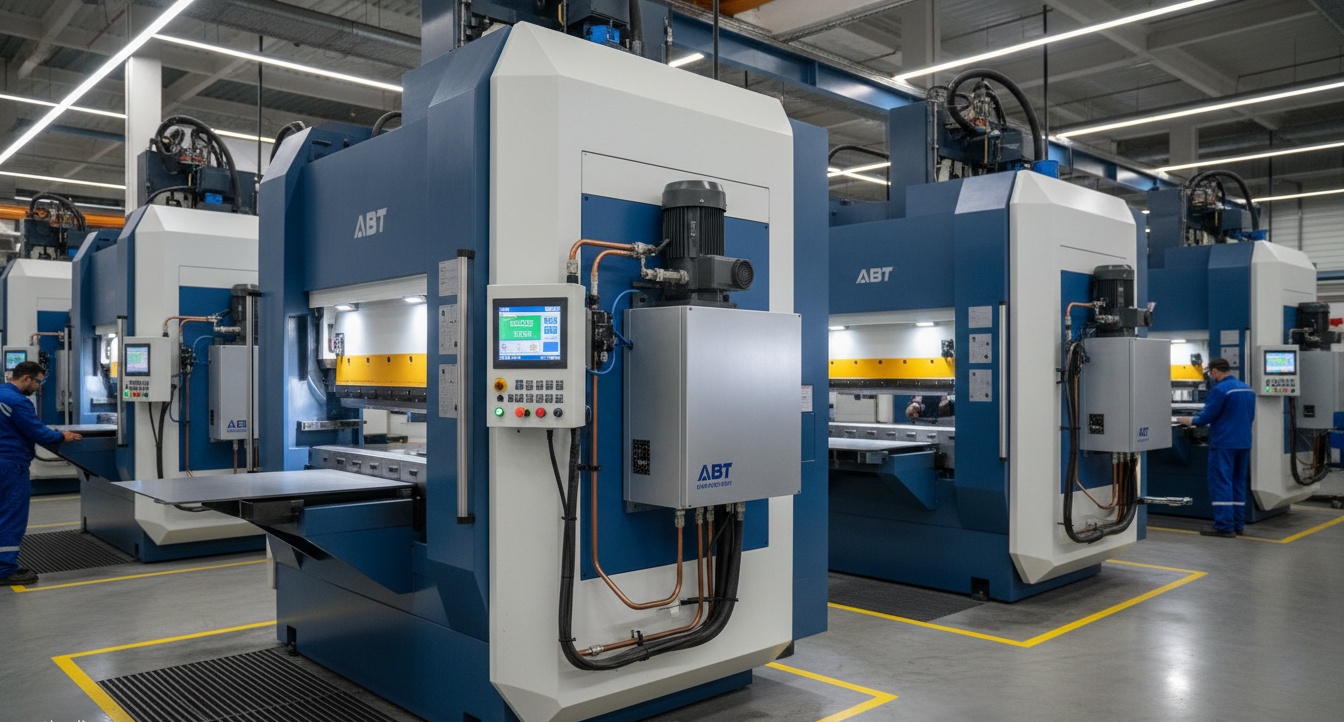 rcing. Contact:demi@hydnvicks.com | WhatsApp: +86186 5820 7796
Post time: Jun-09-2026