Choosing the right pump is a system decision, not a component-only decision. For injection molding, the pump must support fast response, stable pressure, and continuous production without excessive heat.
Outline: Hydraulic Pump Selection for Injection Molding
- Define the machine’s pressure, flow, and duty cycle requirements
- Compare vane, gear, internal gear, and servo pump options
- Check compatibility with the injection molding hydraulic system
- Evaluate efficiency, noise, temperature rise, and maintenance needs
- Match the pump to retrofit, repair, or new-machine applications
- Review supplier capability, spare parts, and technical support
How to Choose a Hydraulic Pump for Injection Molding Machine
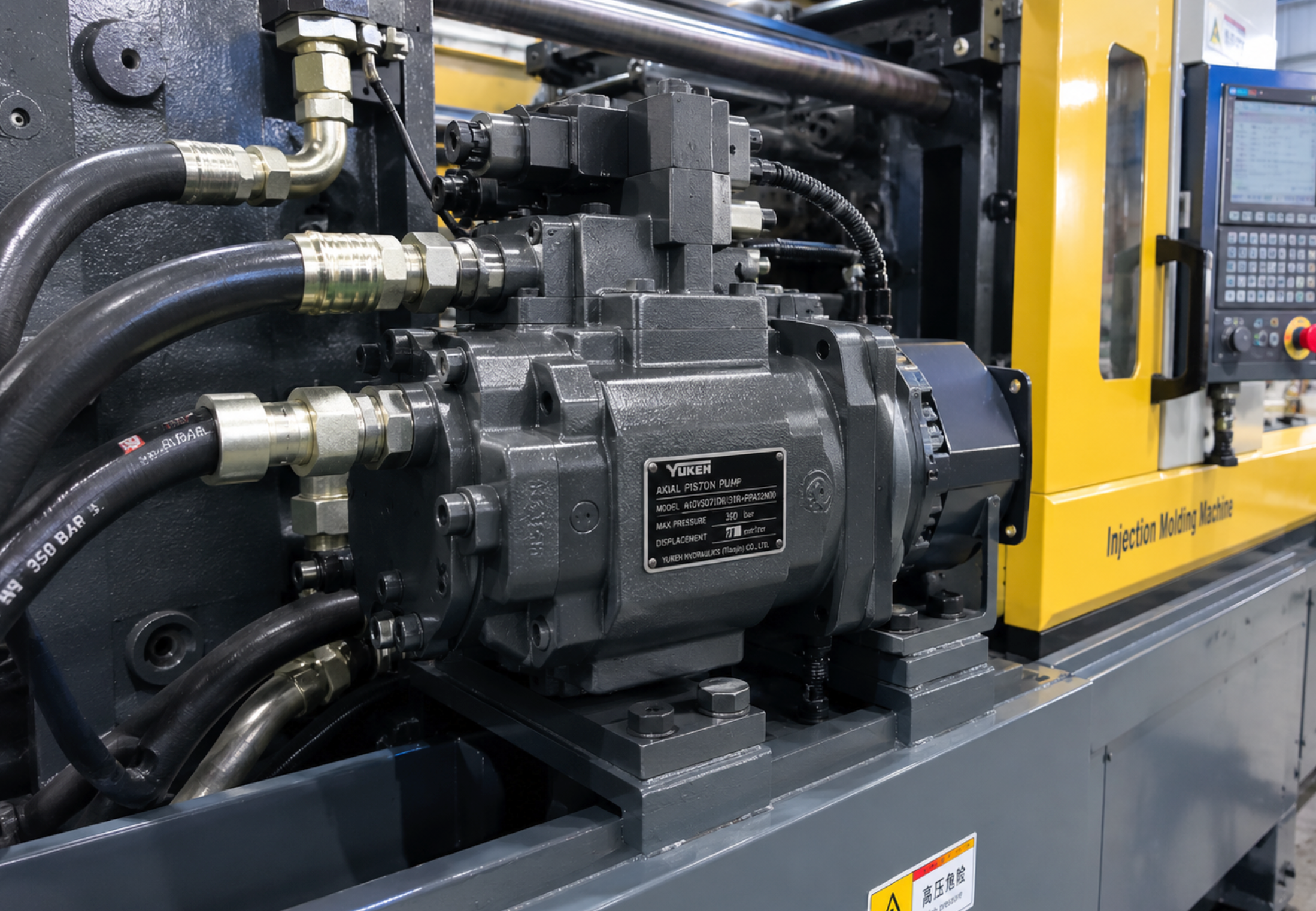
A hydraulic pump for injection molding machine should first be sized to the machine’s clamp, injection, and ejection demands. If the pump cannot maintain stable flow under peak load, the system will suffer from inconsistent cycle times and pressure loss.
The selection process starts with the injection molding hydraulic system requirements. ISO 4413, the international standard for hydraulic fluid power safety, emphasizes safe design, control, and maintenance practices in fluid power systems, which makes documentation and testing essential for hydraulic system design.
Modern injection molding equipment also faces energy-pressure tradeoffs. According to the U.S. Department of Energy, industrial motor systems account for a major share of factory electricity use, so pump efficiency has a direct effect on operating cost and heat generation; see DOE guidance on motor-system efficiency.
In practice, the best hydraulic pump selection balances output, reliability, and serviceability. That is especially important when the machine runs long shifts, uses variable load profiles, or needs retrofit compatibility with existing piping and controls.
Key Factors in Hydraulic Pump Selection
The main selection factors are pressure, displacement, speed, oil quality, noise, and maintenance access. These variables determine whether the pump will run efficiently or create unstable operation and premature wear.
Table 1: Core Selection Factors for an Injection Molding Hydraulic System
| Factor | Why It Matters | Selection Tip |
|---|---|---|
| Working pressure | Determines whether the pump can support clamping and injection force | Choose a pump rated above the system’s peak pressure with margin |
| Required flow | Affects cycle speed and response time | Match flow to the machine’s actual movement profile, not only nameplate size |
| Duty cycle | Influences heat buildup and wear | Use a solution designed for continuous or frequent cycling if needed |
| Oil cleanliness | Strongly affects wear and reliability | Specify filtration and maintenance intervals before installation |
| Noise and heat | Affects workshop conditions and energy loss | Prefer efficient pump types for high daily operating hours |
Pump displacement is another critical parameter. A larger displacement does not automatically mean a better fit, because oversized pumps can waste energy and overheat the oil in part-load conditions.
Speed range also matters because the pump must remain stable across the machine’s operating sequence. During plasticizing, injection, holding, and cooling, flow demand changes quickly, so the pump should maintain predictable output across those stages.
Compare Pump Types for Injection Molding Applications
Different pump types suit different machine generations and efficiency targets. The most common options are vane pumps, gear pumps, internal gear pumps, and servo pump systems.
Table 2: Pump Type Comparison for Injection Molding Applications
| Pump Type | Main Strength | Best Use Case | Typical Limitation |
|---|---|---|---|
| Vane pump | Stable flow and broad industrial compatibility | General injection molding hydraulic circuits and retrofit work | Can be less efficient than servo-driven systems |
| Gear pump | Simple structure and cost efficiency | Basic hydraulic power units and lower-complexity machines | Higher noise and pressure ripple in some applications |
| Internal gear pump | Good pressure stability and compact design | Compact systems and demanding oil supply conditions | Selection must be matched carefully to viscosity and speed |
| Servo pump system | High efficiency and precise control | Energy-saving retrofits and precision molding machines | Higher system integration requirement |
Vane pumps remain widely used because they offer a practical balance between reliability and compatibility. For older machines, replacement-friendly designs are often preferred over a complete hydraulic redesign.
Servo systems are the strongest option when energy saving is a priority. They are especially relevant in injection molding, where load changes are frequent and the hydraulic demand is not constant throughout the cycle.
For companies looking at retrofit or replacement projects, the main Vicks hydraulic product catalog is a useful starting point for vane pumps, motors, and servo solutions. The product structure matters because the correct pump often depends on compatibility with existing equipment rather than a new design.
Match the Pump to the Machine’s Operating Scenario
The machine’s application scenario should determine the final choice. A pump for a 24-hour production line should not be selected the same way as a pump for a low-volume workshop.
- High-volume molding lines need stable flow, low heat rise, and easy maintenance access.
- Retrofit projects need dimensional compatibility, port matching, and familiar performance curves.
- Precision molding needs fast response and reliable pressure control.
- Energy-saving upgrades need servo coordination and system tuning.
Injection molding plants often focus on cycle time, but system stability is just as important. If pressure fluctuates, part quality can change, especially during holding and packing stages.
For older machines, replacement with a compatible pump can be more practical than changing the entire hydraulic circuit. Compatibility reduces downtime and lowers commissioning risk, especially when original equipment is discontinued.
Why Efficiency and Heat Control Matter
Efficiency directly affects oil temperature, seal life, and total operating cost. A pump that wastes energy converts more power into heat, which increases cooling load and accelerates fluid degradation.
According to the U.S. Environmental Protection Agency, efficient industrial systems reduce emissions and operating expense by lowering wasted energy; see EPA industrial energy efficiency guidance. That principle applies directly to hydraulic power units in molding plants.
In servo-driven applications, the pump only delivers the flow needed at a given moment. This reduces throttling losses and is one reason servo hydraulic systems are widely used in energy-conscious injection molding upgrades.
Temperature control also influences repeatability. When oil temperature stays stable, viscosity variation is smaller, which helps the system maintain predictable motion and pressure response.
Compatibility, Spare Parts, and Retrofit Support
Compatibility is often the deciding factor in real-world hydraulic pump selection. Many plants need a pump that can replace a discontinued model without changing the machine frame or manifold layout.
In that context, replacement-oriented product families are useful. The Vicks main website includes solutions for vane pumps, motors, servo systems, and spare parts, which is important for maintenance teams that need complete support rather than a single part number.
The best suppliers usually provide cartridge kits, motor parts, and commissioning support as well. That combination helps reduce downtime because repair can be done faster and with less risk of mismatch.
For buyers, retrofit capability should include three checks: mechanical fit, hydraulic performance, and spare-part availability. If any of those are missing, the project cost and lead time usually rise.
Supplier Directory and Product Categories to Review
The best supplier shortlists usually include both a main platform manufacturer and several established industry references. For a complete review, buyers should compare product range, compatibility, and technical support before placing an order.
On the Vicks site, the most relevant product categories for injection molding and retrofit work include hydraulic vane pump series, servo energy-saving hydraulic systems, hydraulic motor series, and pump parts and repair kits. These categories cover both complete replacement and maintenance-driven purchasing.
For broader market comparison, it is also reasonable to review established industrial fluid power brands and technical references from organizations such as Bosch Rexroth Hydraulics and Eaton Hydraulics. Cross-checking product families helps buyers understand where a compatible substitute may fit.
Practical Selection Checklist
A disciplined checklist reduces sizing mistakes and improves machine uptime. The following points should be confirmed before purchase or retrofit approval.
- Verify peak pressure, working pressure, and required continuous pressure.
- Confirm flow demand during injection, holding, and return stages.
- Check oil viscosity range and filtration level.
- Match the pump mounting, shaft, and port dimensions.
- Review expected duty cycle and cooling capacity.
- Ask for spare parts, cartridge kits, and technical support options.
- Compare energy consumption if a servo upgrade is being considered.
This checklist is especially useful in plants that operate multiple machine models. Standardizing the review process prevents mismatched purchases and simplifies maintenance planning.
Conclusion
The right pump is the one that fits the machine’s pressure, flow, control, and service requirements. In injection molding, the best choice usually supports stable production, low heat, and predictable maintenance rather than maximum theoretical output.
For new machines, efficiency and control should lead the decision. For older machines, compatibility and replacement speed are often more important, especially when downtime is expensive and original parts are hard to source.
FAQ
1. What is the most important factor when selecting a hydraulic pump for injection molding machine?
The most important factor is matching the pump to the machine’s real pressure and flow demand. If the pump cannot support the full operating cycle, the system may overheat, slow down, or produce unstable molding results.
2. Is a servo pump always better than a traditional pump?
A servo pump is usually better for energy-saving and precision-control projects, but not every machine needs one. Traditional pumps can still be the better choice when budget, simplicity, or direct replacement compatibility is the main concern.
3. How do I know whether a vane pump or gear pump is more suitable?
A vane pump is often preferred for smoother flow and broader industrial compatibility, while a gear pump may suit simpler hydraulic units. The final choice depends on noise limits, efficiency targets, and the machine’s operating profile.
4. Can an old injection molding machine use a replacement pump from another brand?
Yes, if the mounting, shaft, ports, pressure rating, and flow curve are compatible. Many retrofit projects rely on interchange-compatible pumps, but technical verification is necessary before installation to avoid damage or poor performance.
5. Why does oil temperature matter so much in hydraulic pump selection?
Oil temperature affects viscosity, sealing performance, and component wear. When the pump wastes energy, more heat enters the system, which can reduce efficiency and shorten service life. Stable temperature helps maintain repeatable molding performance.
Demi Ge
Post time: Oct-25-2026