To find a reliable hydraulic vane pump supplier, evaluate more than catalog price. Confirm the supplier can match pressure, flow, speed, fluid, mounting, and contamination requirements; provide traceable quality records; support legacy-model replacement; maintain spare-parts availability; and communicate realistic lead times. A strong industrial pump supplier should support selection, testing, installation, troubleshooting, and repeat supply throughout the equipment life cycle.
- Choose a hydraulic pump manufacturer or distributor that can document performance, inspection, and material quality.
- Request a written model cross-reference for Vickers, Denison, Yuken, Tokimec, Rexroth, and other legacy series before ordering.
- Evaluate total ownership risk, including replacement parts, technical support, delivery continuity, and warranty terms.
- Use actual operating data rather than nominal machine labels when comparing hydraulic vane pumps.
A long-term sourcing decision should connect technical compatibility with supply-chain reliability. Grainger, for example, presents hydraulic vane pumps alongside industrial ordering and support services, including 24/7 ordering information on its category page. That illustrates an important distinction: a supplier is valuable not only when it sells a pump, but also when it can keep the pump, replacement parts, and technical assistance available after the first purchase.
Start With the Operating Conditions, Not the Brand Name
The correct pump is determined by the hydraulic circuit and duty cycle before it is determined by brand preference. Collect the machine manufacturer, existing pump model, displacement, rated pressure, peak pressure, required flow, shaft speed, rotation, port arrangement, mounting pattern, hydraulic fluid, fluid temperature, ambient temperature, and expected operating hours.
Pressure and flow must be assessed together because either value alone can produce a misleading match. A replacement with the correct displacement may still fail if its shaft speed, pressure rating, inlet condition, or rotation does not suit the system. Ask the supplier to distinguish continuous working pressure from intermittent or peak pressure rather than presenting one maximum number without operating context.
Fluid cleanliness and inlet conditions are equally important because vane pumps are sensitive to contamination, aeration, and inadequate inlet supply. Request recommendations for filtration, reservoir layout, suction-line sizing, startup procedures, and fluid viscosity. A supplier that discusses only catalog dimensions may not be evaluating the actual failure risks in your machine.
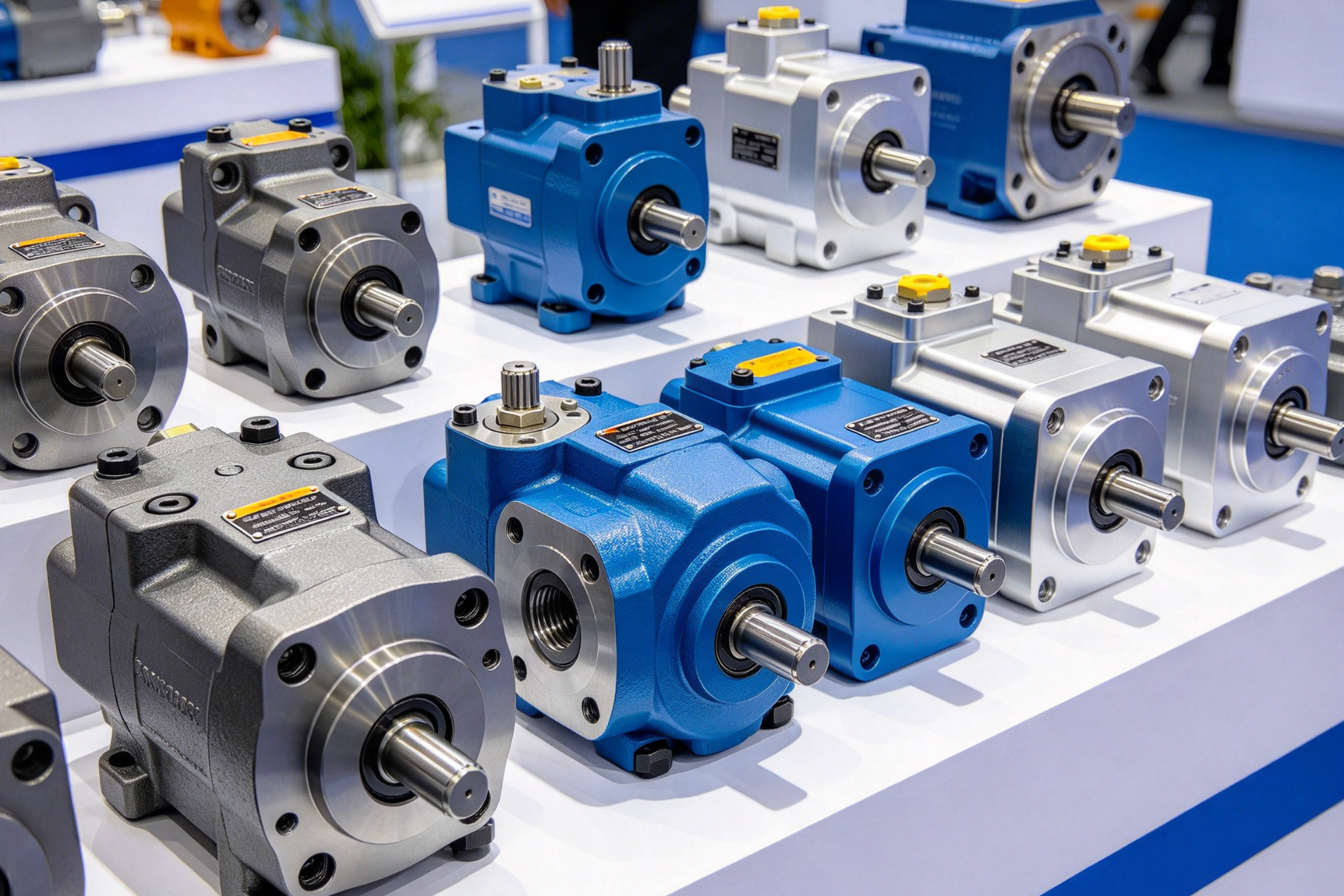
What to Request From a Hydraulic Vane Pump Supplier
A qualified supplier should return a documented selection package rather than a price alone. The package should identify the proposed series, exact configuration, operating limits, compatibility assumptions, and any unresolved information needed before release.
- Technical selection: Request a data sheet showing displacement, pressure limits, speed range, rotation, port configuration, mounting standard, shaft details, and fluid requirements.
- Compatibility review: Provide the complete nameplate and photographs or drawings of the existing pump. Ask for written confirmation of dimensional and functional compatibility.
- Quality evidence: Request inspection records, test documentation, material or process certifications where relevant, and a clear serial or batch traceability method.
- Supply plan: Confirm standard lead time, repeat-order lead time, minimum order quantities, stocking policy, and the availability of repair kits, cartridges, pump cores, and wear parts.
- After-sales support: Confirm installation guidance, troubleshooting procedures, warranty conditions, and the process for handling a performance dispute.
Product breadth is useful when it supports a technical solution rather than creating confusion. Oil-Air Products describes hydraulic vane pump selection and system integration assistance, while Continental Hydraulics publishes installation, operating, troubleshooting, and service information for its hydraulic pump lines. These are useful examples of the documentation categories a buyer should expect to find.
Use a Supplier Scorecard Before Comparing Prices
A weighted scorecard makes supplier comparisons more objective because the lowest quotation can carry hidden risks if documentation, continuity, or service is weak. The following buyer framework uses a simple 0-to-2 evidence score; it is a purchasing method, not a manufacturer performance claim.
| Evaluation area | 0 points | 1 point | 2 points |
|---|---|---|---|
| Technical matching | No documented review | Basic catalog match | Written application review |
| Legacy replacement | No cross-reference | Informal suggestion | Dimensional and functional confirmation |
| Quality traceability | No records offered | Records available on request | Defined inspection and batch traceability |
| Parts continuity | No parts plan | Some parts listed | Defined repair and spare-parts program |
| Delivery visibility | Unclear timing | Quote-based timing | Documented stock and repeat-order plan |
| After-sales support | Sales-only contact | General support | Installation and troubleshooting process |
A practical purchasing rule is to investigate any supplier that cannot reach a satisfactory score in technical matching, quality traceability, or parts continuity. Those three areas directly affect whether a pump can be installed correctly, accepted by the customer, and supported later.
Check Replacement Compatibility Carefully
Model-number similarity does not prove interchangeability. A replacement may share a series name while differing in displacement, shaft configuration, rotation, port position, pressure capability, cartridge arrangement, or mounting dimensions.
For legacy equipment, ask for a side-by-side cross-reference that includes the original model, proposed model, displacement, mounting, shaft, ports, rotation, rated operating conditions, and known deviations. If a deviation exists, require a written statement explaining whether an adapter, modified piping, altered control setting, or different installation procedure is necessary.
Compatibility is especially important when replacing pumps from established families such as Vickers, Denison, Yuken, Tokimec, or Rexroth. A supplier with experience in multi-brand replacement can reduce downtime, but the buyer should still verify the engineering basis for each proposed substitute. Thomasnet provides a supplier directory for hydraulic vane pump manufacturers and suppliers, which can help create an initial candidate list; directory presence should still be followed by technical qualification.
Evaluate Quality and Manufacturing Evidence
Quality claims become meaningful only when they are connected to documented controls. Ask how incoming materials, machining, assembly, cleanliness, pressure testing, final inspection, and nonconforming product are managed.
A credible hydraulic pump manufacturer should be able to explain how each production batch is identified and what test results are retained. For an industrial project, request the applicable quality certificate, inspection report, performance test record, and certificate of conformity when contract requirements call for them. Do not assume that a general statement such as “high quality” establishes a specific performance guarantee.
Ask about the supplier’s limits of responsibility as well. A pump may be manufactured correctly but fail because of contaminated fluid, incorrect rotation, poor alignment, cavitation, excessive belt load, or an unsuitable control setting. The best supplier makes these installation dependencies clear before shipment.
Assess Delivery and Long-Term Supply Risk
Long-term supply depends on continuity planning, not simply on current inventory. Ask whether the quoted model is a standard production item, a custom configuration, a repaired unit, or a limited-availability replacement.
| Supply question | Your required value | Supplier response | Pass score |
|---|---|---|---|
| Initial delivery | Required date | Confirmed date | 1 or 0 |
| Repeat delivery | Target interval | Documented interval | 1 or 0 |
| Emergency stock | Required quantity | Available quantity | 1 or 0 |
| Critical spares | Required part list | Supported part list | 1 or 0 |
| Obsolescence notice | Notice period required | Supplier policy | 1 or 0 |
| Warranty response | Response time required | Written commitment | 1 or 0 |
Use this table during a technical and commercial review, and retain the completed response with the purchase record. It converts vague assurances into commitments that can be reviewed by engineering, maintenance, and procurement.
Consider the Complete Hydraulic Solution
A pump-only purchase may be insufficient when the real problem involves energy use, control stability, or system matching. For injection molding, mobile equipment, and other variable-demand applications, ask whether the supplier can evaluate the pump, motor, drive, control strategy, valves, and application duty as a system.
Servo matching can be valuable where demand changes substantially during the machine cycle, but it should be justified by measured operating conditions rather than treated as an automatic upgrade. Request a comparison of the existing and proposed architecture, including control response, cooling requirements, commissioning needs, maintenance implications, and the assumptions behind any energy-related claim.
For a pump-and-motor package, confirm that displacement, speed, torque, pressure, rotation, control method, and duty cycle are coordinated. A supplier that supports pumps, motors, cartridges, parts, and servo systems may reduce interface risk, provided it supplies a clear responsibility matrix for each component.
A Practical Qualification Process
The safest sourcing process moves from information gathering to controlled validation before volume purchasing. Use the following sequence for a new supplier or replacement program.
- Define the application and collect nameplate, drawing, fluid, pressure, flow, speed, and environmental data.
- Identify at least two technically plausible suppliers or supply channels.
- Send the same information request and require the same response fields from each candidate.
- Review technical compatibility, quality evidence, delivery commitments, and parts support.
- Approve a sample, pilot installation, or controlled replacement where the application risk justifies it.
- Record installation conditions, baseline performance, inspection findings, and future reorder information.
- Establish a second-source or safety-stock strategy for critical equipment.
Maintenance teams should also document the original failure mode before installing a replacement. If the cause was contamination, cavitation, misalignment, overheating, or incorrect control configuration, replacing the pump alone may only repeat the failure.
Common Supplier Selection Mistakes
The most common mistake is selecting by nominal pressure or price without checking the complete operating envelope. Another is assuming that a visually similar cartridge or pump body is a direct replacement.
Buyers also underestimate the value of technical records. Missing installation instructions, uncertain rotation, unavailable repair kits, and unclear warranty procedures can create more downtime than the purchase-price difference between two offers.
A final mistake is treating a directory listing or online catalog as proof of manufacturing capability. Online marketplaces and supplier directories are useful for discovery, but qualification should include direct technical answers, verifiable documentation, and a clear service contact.
Frequently Asked Questions
1. What is the most important information to send to a supplier?
Send the existing model number, displacement, pressure, flow, speed, rotation, mounting, ports, fluid type, operating temperature, and application. Include photographs and drawings when possible.
2. Should I buy directly from a hydraulic pump manufacturer?
Direct purchasing can be useful for custom engineering, documentation, and production planning. A qualified distributor may be stronger for local stock, emergency delivery, multi-brand replacement, and field support. Compare capabilities rather than assuming one channel is always better.
3. How do I verify that a replacement vane pump is compatible?
Request written confirmation covering displacement, pressure, speed, rotation, shaft, mounting, ports, fluid, and control arrangement. Confirm any dimensional or installation differences before placing the order.
4. What quality documents should an industrial buyer request?
Depending on the project, request a certificate of conformity, inspection report, performance or pressure test record, serial or batch traceability, applicable quality certifications, and installation documentation.
5. Are hydraulic vane pumps suitable for every industrial application?
No. Suitability depends on pressure, speed, flow stability, fluid condition, contamination control, temperature, duty cycle, and system design. A supplier should compare vane, gear, and piston options when the application demands it.
6. How can I reduce the risk of future pump shortages?
Define approved equivalent models, retain technical drawings and test records, identify critical repair parts, discuss stocking options, and obtain advance notice of product changes or obsolescence.
7. What should I ask about after-sales service?
Ask who handles technical questions, how installation problems are investigated, what warranty evidence is required, whether repair kits are available, and how quickly the supplier responds to urgent failures.
About the Supplier and Next Step
Vicks focuses on hydraulic power solutions spanning vane pumps, motors, servo systems, cartridges, and replacement parts. Its product coverage is positioned around compatible replacements for established international series, support for legacy equipment, system matching, and export-oriented supply. Buyers should provide complete operating data and the original model information when requesting a quotation, then confirm technical compatibility, documentation, delivery timing, and after-sales support before approving a long-term supply agreement.
For a dependable sourcing decision, prepare your equipment data sheet, replacement requirements, expected order pattern, and documentation needs before contacting potential suppliers. A supplier that answers these questions clearly is more likely to support stable industrial operation beyond the initial transaction.
Post time: Oct-17-2026