Choose a hydraulic vane pump by matching required pressure, flow, speed, fluid viscosity, temperature, drive power, and duty cycle—not by pressure rating alone. A high pressure vane pump can provide smooth, predictable flow for many industrial circuits, but published guidance commonly places conventional vane pump applications at about 2,000 psi or less, while some industrial vane pump circuits are selected for systems at 3,000 psi or below. Confirm the exact continuous and peak ratings in the manufacturer data sheet before purchase.
- Start with measured flow, continuous pressure, peak pressure, shaft speed, and fluid conditions.
- Vane pumps are valued for smooth delivery and lower noise, but pressure limits and contamination sensitivity require careful review.
- Use a pressure-compensated or variable-displacement design only when the circuit actually needs variable flow or pressure.
- For replacement projects, confirm cartridge, shaft, port, rotation, mounting, and control compatibility before ordering.
Introduction
Choosing a hydraulic vane pump for demanding industrial service is a system-matching exercise. The right selection must satisfy the actuator flow requirement, pressure profile, motor power, fluid specification, operating environment, and maintenance strategy at the same time. The supplied technical sources report that vane pumps are often limited to about 2,000 psi or less, while another pump-selection reference describes vane-pump circuits commonly operating at 3,000 psi or less. These figures are application guidance rather than permission to exceed a specific model’s rating. This guide explains how to evaluate a high pressure vane pump, when another pump technology may be better, and how to reduce replacement risk.
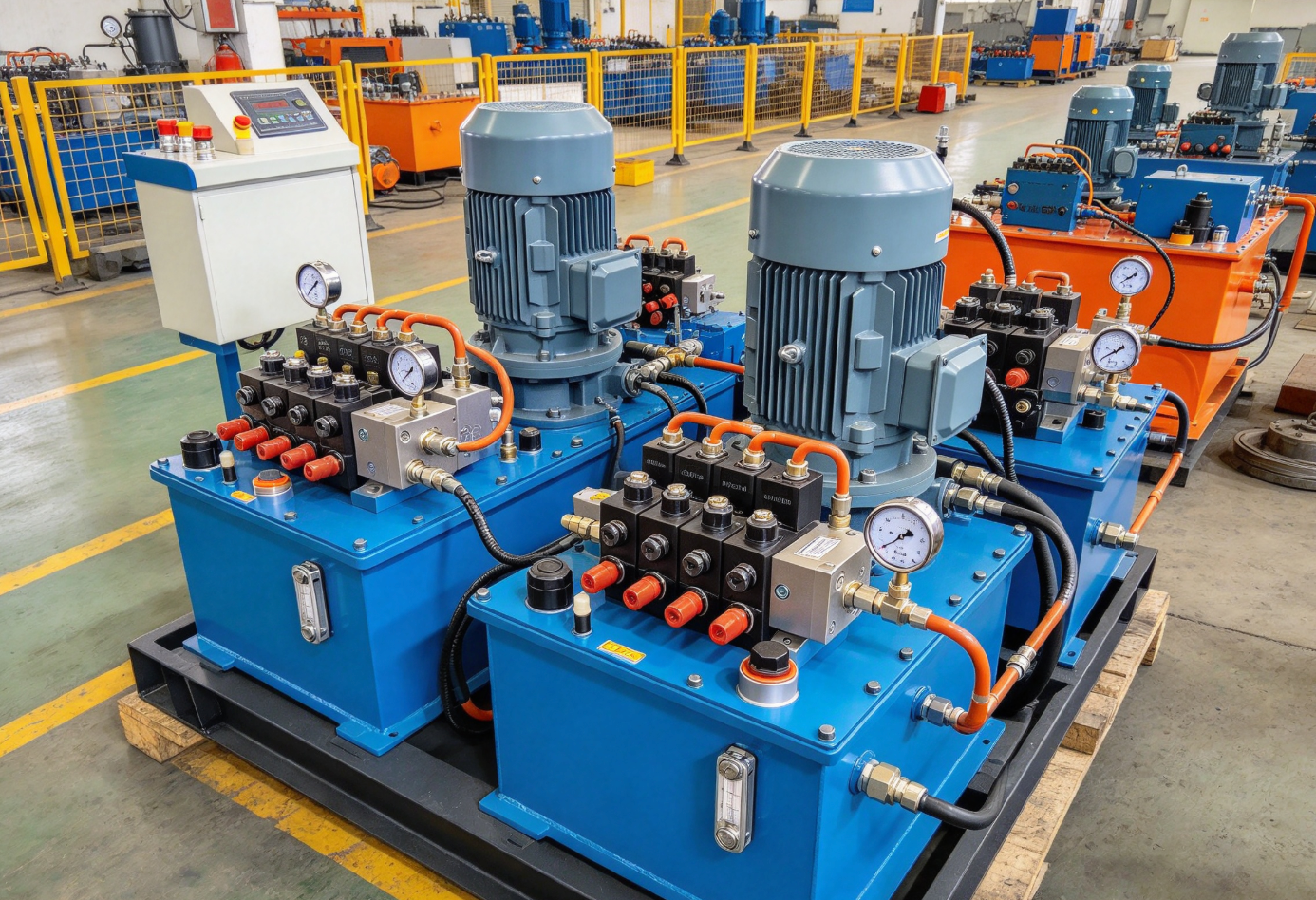
1. Define the hydraulic duty before comparing pump models
The duty cycle determines whether a vane pump is suitable before brand or price enters the decision. Record the required flow, normal pressure, maximum pressure, operating speed, start-stop frequency, ambient temperature, fluid type, and expected service hours. A pump that performs well during intermittent operation may be unsuitable for continuous high-load service if its cooling, bearing, shaft, or vane-loading conditions are different.
Flow must be based on the actuator’s real operating requirement, not the pump’s nominal displacement alone. For a hydraulic cylinder, calculate the flow needed to achieve the target extension or retraction speed, then allow for volumetric efficiency and system losses. For a hydraulic motor, use the required displacement, speed, torque, and efficiency. The final pump flow should be checked at the actual working speed and pressure rather than at an ideal laboratory point.
Pressure should be separated into continuous, intermittent, and peak values. Continuous pressure affects heat generation and component life, while short pressure spikes may be caused by shock loads, rapid valve closure, or actuator deceleration. Use a relief valve and pressure-control strategy that protects the pump, but do not treat the relief setting as the pump’s recommended continuous operating pressure.
| Reported application reference | Pressure value | How to use it |
|---|---|---|
| Common vane-pump limitation reported by Mobile Hydraulic Tips | About 2,000 psi or less | Use as a screening boundary for conventional vane-pump applications; verify the selected model. |
| Vane-pump circuit guidance reported by Quality Hydraulics | 3,000 psi or less | Use as a broad system-selection reference, not as a universal pump rating. |
The two pressure references are not contradictory because a general application ceiling is different from an individual product rating. Construction, vane design, port configuration, fluid, speed, temperature, and duty cycle can change the allowable operating range. Review the original data sheet and ask the supplier for continuous, intermittent, and peak pressure definitions.
2. Check whether the vane-pump architecture fits the application
A vane pump is often attractive when smooth flow, predictable delivery, and moderate noise are more important than extreme pressure capability. A rotor carries sliding vanes inside a cam ring. Centrifugal force, spring force, or hydraulic pressure helps keep the vanes in contact with the cam ring as the rotating chambers expand and contract. This arrangement can deliver comparatively uniform flow, but vane contact also makes lubrication, cleanliness, viscosity, and pressure loading important.
Fixed-displacement pumps suit stable flow requirements, while variable-displacement or pressure-compensated designs suit circuits that change demand. A fixed pump may be simpler and easier to service when the machine has a consistent cycle. A variable design can reduce throttling losses when the system repeatedly moves between high-flow and low-flow conditions, but it introduces additional control and adjustment considerations.
Vane pumps are not automatically the best choice for every high-pressure circuit. Gear pumps may be preferred where simplicity and ruggedness dominate. Piston pumps are often considered when the machine requires sustained higher pressure, high efficiency across a broad operating range, or precise variable displacement. The correct comparison should include total system efficiency, noise, serviceability, contamination tolerance, replacement availability, and lifecycle cost.
3. Match fluid, viscosity, temperature, and cleanliness
Fluid condition is one of the most important reliability factors in a sliding-vane design. The oil must provide sufficient lubrication without becoming too viscous for cold starting or too thin at operating temperature. Review the pump manufacturer’s approved fluid types, viscosity range, temperature limits, seal materials, and compatibility requirements before selecting an alternative fluid.
Contamination control protects the vane-to-cam-ring interface and the entire hydraulic circuit. Identify the required filtration level from the pump documentation, install filtration in the correct location, and prevent dirt from entering during hose connection, filling, maintenance, or component replacement. Water, abrasive particles, incorrect filters, and degraded oil can accelerate wear and cause noise, leakage, loss of flow, or pressure instability.
Temperature must be evaluated at the reservoir and at the pump inlet and outlet. Excessive temperature reduces fluid viscosity and may damage seals, while low temperature increases starting torque and inlet restriction risk. If the pump is used in a factory, mobile machine, injection molding system, or outdoor installation, assess ambient swings, enclosure ventilation, duty cycle, and heat rejection together.
4. Validate speed, inlet conditions, and motor power
Correct rotation and adequate inlet conditions are essential during commissioning. Confirm clockwise or counterclockwise rotation from the pump markings and installation instructions. Check that the suction line is correctly sized, short where practical, properly sealed, and free from restrictions. Excessive inlet vacuum can promote aeration or cavitation, which may produce rattling noise, surface damage, unstable pressure, and premature failure.
Drive power should be checked at the worst credible pressure and flow condition. Motor selection should account for pump efficiency, coupling losses, starting conditions, operating temperature, and the machine’s control method. An undersized motor can overheat or trip, while an unnecessarily oversized motor can increase cost without solving a hydraulic mismatch.
| Selection check number | Input to record | Pass condition | Failure consequence |
|---|---|---|---|
| 1 | Continuous and peak pressure | Both remain within the selected model’s documented limits | Overload, leakage, or shortened service life |
| 2 | Required flow at operating speed | Rated output meets actuator demand after efficiency losses | Slow movement or inadequate cycle performance |
| 3 | Fluid viscosity and temperature | Both remain inside the manufacturer’s approved range | Wear, heat generation, or starting difficulty |
| 4 | Inlet line and filtration | Clean fluid arrives without excessive restriction or aeration | Cavitation, noise, and unstable output |
| 5 | Mounting, shaft, ports, and rotation | All mechanical and hydraulic interfaces match | Installation delay or component damage |
5. Choose a replacement pump without creating new compatibility problems
A replacement pump must match the complete interface, not only the displacement code. Compare mounting flange, pilot diameter, shaft type, shaft length, key or spline arrangement, inlet and outlet port size, port orientation, rotation, control configuration, cartridge dimensions, and seal material. A pump that fits the bolt pattern but has the wrong shaft or rotation can create immediate commissioning risk.
Model identification is especially important when replacing older Vickers, Denison, Yuken, Tokimec, Rexroth, or equivalent equipment. Record the nameplate, full model code, revision or suffix, displacement, control type, and application. Photographs of the pump, mounting face, shaft, and ports can help a technical supplier verify the replacement. For cartridge or pump-core repairs, also confirm whether the housing, cam ring, rotor, vanes, and pressure plates are reusable.
Compatibility should be verified through documentation rather than assumed from a similar-looking model. The RG Group pump-selection guide identifies viscosity, fluid type, flow rate, torque, speed, maximum pressure, and fixed or variable displacement as core selection factors. Those same factors should appear in a replacement request.
6. Use application-specific judgment
Injection molding machines often benefit from a system-level comparison rather than a pump-only replacement. A machine may require high flow during rapid movement, lower flow during holding, and precise pressure control during injection. In that situation, compare the existing vane-pump circuit with a variable-displacement pump or servo-driven package, considering response, energy use, controls, cooling, and integration effort.
Mobile and agricultural equipment require extra attention to vibration, contamination, temperature variation, and field service. Mounting rigidity, hose routing, filtration access, suction conditions, and replacement availability can matter as much as the nominal pressure rating. A slightly different pump architecture may be preferable if the machine experiences shock loading or poor maintenance conditions.
Industrial automation requires repeatable flow and stable control across the complete cycle. Examine pressure ripple, valve sensitivity, actuator synchronization, noise limits, and control response. Test the pump at actual operating temperature and with the production fluid, because a bench test with different conditions may not represent machine behavior.
7. A practical selection workflow
A documented selection workflow reduces both technical and purchasing errors. Use the following sequence before requesting a quotation:
- Write down required flow, continuous pressure, peak pressure, speed, duty cycle, fluid, viscosity, and temperature.
- Decide whether the circuit needs fixed displacement, variable displacement, pressure compensation, or another control method.
- Compare vane, gear, and piston technologies against pressure, efficiency, noise, contamination, and service requirements.
- Verify inlet conditions, motor power, rotation, mounting, shaft, ports, seals, and filtration.
- For a replacement, submit the complete nameplate and interface information rather than only a series name.
- Confirm the manufacturer’s data sheet, installation instructions, warranty conditions, and commissioning procedure.
Supplier questions should focus on evidence that can be checked. Ask for the continuous and peak pressure ratings, allowable speed range, approved viscosity range, efficiency data where available, noise information, spare-parts availability, and compatibility statement. The Mobile Hydraulic Tips overview of high-pressure vane pumps explains why vane movement and cam-ring contact create practical pressure limits, making this verification especially important.
Frequently asked questions
1. Is a vane pump suitable for high-pressure industrial applications?
It can be suitable when the required pressure remains within the selected model’s documented limits. Vane pumps are commonly chosen for smooth, predictable flow, but a piston pump may be more appropriate for sustained pressure beyond the vane pump’s practical range.
2. What pressure can a high pressure vane pump handle?
The answer depends on the design and operating conditions. The supplied references cite common vane-pump application guidance of about 2,000 psi or less and system guidance of 3,000 psi or less. Always use the specific manufacturer rating for the exact model.
3. What is the main advantage of an industrial vane pump?
Its main advantage is generally smooth and predictable flow with a useful range of industrial configurations. Noise, efficiency, pressure capability, and service life still depend on design, fluid, speed, filtration, and duty cycle.
4. Should I choose a fixed or variable-displacement vane pump?
Choose fixed displacement for relatively stable demand and variable displacement when flow or pressure changes substantially during the cycle. Compare control complexity, energy behavior, response, and maintenance before deciding.
5. How do I prevent premature vane-pump failure?
Control contamination, maintain suitable viscosity, prevent inlet restriction, confirm correct rotation, and avoid exceeding continuous pressure limits. Correct installation and clean commissioning are as important as the initial pump selection.
6. Can I replace a Vickers or Denison pump with another brand?
A cross-brand replacement is possible only after mechanical, hydraulic, control, and performance compatibility are verified. Match the complete model code and interface details rather than relying on a series name alone.
7. What information should I send when requesting a quotation?
Send the nameplate, model code, displacement, rotation, mounting details, shaft information, port dimensions, operating pressure, flow, fluid, temperature, and application. Include photographs and the reason for replacement when possible.
About Vicks and next steps
Vicks supports hydraulic replacement and system-matching projects across vane pumps, hydraulic motors, servo systems, and related parts. Its product focus includes compatibility work for established pump families, replacement components, pump cores, cartridges, and industrial applications such as injection molding, mobile equipment, and agricultural machinery. For a reliable recommendation, prepare your operating data and complete model information, then request a compatibility review before ordering an industrial vane pump.
Use the evidence-based selection process above to compare options with confidence. A properly matched pump can improve reliability, simplify maintenance, and protect the wider hydraulic circuit; an incorrectly matched replacement can transfer the original problem to a new component.
Sources

Demi Ge
Post time: Oct-21-2026