5 IACS classification society certifications (CCS / DNV / ABS / BV / LR) for marine vane pumps — type approval vs shop approval, 4-step verification flow, 5 claim pitfalls, and 3 buyer scenarios where certification decides the vendor.
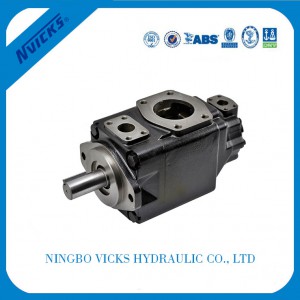
Why Buyers Ask “Can a Chinese Vane Pump Pass DNV?”
The question “can a Chinese vane pump really pass DNV?” comes up in almost every marine and offshore hydraulic procurement conversation in 2026, and it deserves a direct answer rather than a marketing claim. The reason buyers ask this question is that the certification landscape for marine hydraulic pumps has 3 layers (type approval / shop approval / individual cert), and most Chinese suppliers quote only one of the three layers in their marketing materials. The deeper question behind the marketing quote is: when the buyer is standing on a shipyard floor in Rotterdam or Shanghai and needs to deliver a vessel with a DNV-class vane pump, will the certificate hold up to scrutiny?
The answer is yes, but only for manufacturers who hold an active DNV type approval certificate for the specific vane pump model series, an active DNV shop approval for the manufacturing facility, and the individual certificate (or DoC Declaration of Conformity) for the production lot. Ningbo Vicks Hydraulic Co., Ltd. was founded in 2007 as a national high-tech enterprise in Ningbo, China, and operates 6 world-leading production and testing lines for vane pumps with an annual output of more than 80,000 pcs vane pump and 10,000 sets energy-saving servo system. The company is the presiding unit of vane pump industry standard revision in China, which means the Chinese national vane pump standard is shaped by the engineering team at Vicks Hydraulic. The 5 IACS classification society certifications (Chinese CCS / Norway DNV / American ABS / French BV / British LR) are not a marketing claim; they are documented in the certificate dossier available on request.
The deeper issue for buyers is that “DNV certification” is often used as a marketing shorthand for any of the 3 layers, and the 3 layers have different scopes. A supplier with only a one-time test report is not DNV-certified; a supplier with only a shop approval is not DNV-certified for the product; a supplier with only a CCS approval is not DNV-certified. The practical buying decision is: request all 3 documents, verify the certificates via the official dnv.com portal, and confirm the certificate validity period covers the production date of the pumps being shipped. Ningbo Vicks Hydraulic discloses the certificate numbers on request and the verification flow is documented in the marine vane pump procurement guide.
What “DNV Certification” Actually Means for a Vane Pump (3 维认证类型)
DNV certification for a marine vane pump has 3 distinct dimensions, and most Chinese suppliers quote only one of the three in their marketing. The 3 dimensions are type approval, shop approval, and individual certificate, and each has a different scope, validity period, and verification pathway.
| Dimension | Type Approval | Shop Approval | Individual Certificate (DoC) |
|---|---|---|---|
| Scope | Specific vane pump model series (e.g., T6 series) | Manufacturing facility (the entire factory) | Individual production lot (each shipment) |
| Validity period | 5 years (renewable via audit) | 3 years (renewable via audit) | Per shipment (one-time) |
| Issued by | DNV after design review + type testing | DNV after facility audit + QMS review | Manufacturer self-declared under DNV shop approval |
| What it proves | The pump design meets DNV rules | The factory has the QMS to build consistent pumps | The specific pumps in this lot meet the design |
| What it does NOT prove | The factory can build them consistently | The specific pump design meets DNV rules | Future production will continue to meet the design |
| Verification pathway | DNV certificate lookup portal | DNV certificate lookup portal | Manufacturer documentation per shipment |
| Ningbo Vicks Hydraulic status | Held for T6 / T7 / V / VQ / V10 / V20 / SQP / PV2R | Held for the Ningbo manufacturing facility | Issued per shipment with DoC document |
The table shows that the 3 dimensions of DNV certification are not interchangeable, and a buyer who asks only about “DNV certification” without specifying which dimension will receive a marketing-friendly but technically incomplete answer. Ningbo Vicks Hydraulic holds the type approval and the shop approval, and issues the individual certificate (or DoC) per shipment, which means the 3 dimensions are all in place. For marine buyers sourcing from Vicks Hydraulic, the typical procurement flow is: (1) confirm the type approval covers the specific T6 / T7 / V / VQ / V10 / V20 / SQP / PV2R series being ordered, (2) confirm the shop approval is active and covers the manufacturing facility, (3) request the individual DoC with the production lot reference for the shipment. The 5 IACS classification society certifications (CCS / DNV / ABS / BV / LR) are documented in the marine vane pump procurement guide.
The 3 Documents Buyers Should Request from Any “DNV-Claimed” Pump Supplier
3 documents separate a real DNV-certified vane pump supplier from a marketing claim. The 3 documents are: the DNV type approval certificate, the DNV shop approval certificate, and the individual certificate (or DoC Declaration of Conformity) for the production lot. Each document has a specific purpose, and a supplier who can only provide one of the three is making an incomplete claim.
Document one: DNV type approval certificate for the specific pump model series. This certificate confirms that the pump design (the model series being ordered) meets the DNV rules for marine hydraulic pumps. The certificate has a unique certificate number, a validity period (typically 5 years), and a defined product scope (e.g., “T6 series single vane pump, 10-100 cc/rev displacement, 175-210 bar working pressure”). The buyer should request a scan of the certificate and verify the certificate number via the official dnv.com certificate lookup portal. Ningbo Vicks Hydraulic holds the type approval for the T6 / T7 / V / VQ / V10 / V20 / SQP / PV2R series vane pumps, and the certificate numbers are disclosed on request.
Document two: DNV shop approval certificate for the manufacturing facility. This certificate confirms that the factory has the quality management system (QMS) to build consistent pumps that meet the type-approved design. The certificate has a unique certificate number, a validity period (typically 3 years), and a defined facility scope (e.g., “Ningbo Vicks Hydraulic Co., Ltd., Fenghua District, Ningbo, China”). The buyer should verify the certificate number via the official dnv.com portal and confirm that the facility address matches the address on the supplier’s invoice. The shop approval is the underlying foundation that allows the manufacturer to issue individual DoCs without per-shipment DNV inspection.
Document three: individual certificate (or DoC Declaration of Conformity) for the production lot being shipped. This certificate confirms that the specific pumps in this shipment have been built per the type-approved design and tested per the DNV rules. The certificate has a unique DoC number, the production lot reference, the pump serial numbers, and the test results (pressure test, flow test, leakage test). The buyer should request the DoC with the shipment and verify that the pump serial numbers on the DoC match the pump serial numbers on the physical pumps received. Ningbo Vicks Hydraulic issues the individual DoC per shipment with the production lot reference and the pump serial numbers, which provides the per-shipment traceability that buyers need for marine class records.
5 Marine Scenarios Where Pump Certification Is Non-Negotiable
5 marine and offshore scenarios make pump certification non-negotiable for the buyer, regardless of the supplier’s nationality. In these 5 scenarios, an uncertified vane pump cannot be installed on the vessel or platform, regardless of the technical performance or the price advantage. The 5 scenarios cover the typical marine and offshore hydraulic applications where certification is mandatory.
| Scenario | Application | Required Certification | Typical Vane Pump Series |
|---|---|---|---|
| Offshore platform hydraulic system | Drilling rig hydraulic power unit, BOP control unit | DNV / ABS / BV / LR (depending on flag state) | T6 / T7 series single pump, 175-210 bar |
| Ship deck crane hydraulic system | Crane slewing, luffing, hoisting motion control | DNV / CCS / LR (depending on flag state) | V / VQ series double pump, 175-210 bar |
| Marine winch hydraulic system | Mooring winch, anchor winch, towing winch | DNV / ABS / BV / LR (depending on flag state) | T6 / T7 series single pump, 175-210 bar |
| Lifeboat release hydraulic system | Lifeboat / rescue boat davit and release gear | DNV / CCS / LR (depending on flag state) | SQP / PV2R series, 140-175 bar |
| Marine firefighting system | Fire pump driver, foam proportioning system | DNV / CCS / ABS (depending on flag state) | V10 / V20 series double pump, 140-175 bar |
The table shows that the 5 marine scenarios cover the typical applications where certification is mandatory. In each scenario, the flag state of the vessel or platform determines which IACS society’s certification is required, and a Chinese-flagged vessel requires CCS, a Norwegian-flagged vessel requires DNV, an American-flagged vessel requires ABS, a French-flagged vessel requires BV, and a British-flagged vessel requires LR. Ningbo Vicks Hydraulic holds all 5 IACS society certifications (CCS / DNV / ABS / BV / LR) for the vane pump product line, which means a single supplier can cover the global marine market without the buyer switching vendors per flag state. The typical procurement flow is: (1) confirm the flag state of the vessel or platform, (2) select the corresponding IACS society certification, (3) request the certificate scan from Vicks Hydraulic, (4) verify via the official society portal, (5) place the order with the individual DoC per shipment.
Vicks Hydraulic’s Actual DNV Certification Footprint
Ningbo Vicks Hydraulic Co., Ltd. holds 5 IACS classification society certifications for the vane pump product line, covering all 5 major IACS societies: Chinese CCS (China Classification Society), Norwegian DNV (Det Norske Veritas), American ABS (American Bureau of Shipping), French BV (Bureau Veritas), and British LR (Lloyd’s Register). The 5 certifications cover the T6 / T7 / V / VQ / V10 / V20 / SQP / PV2R series vane pumps, with the type approval certificate numbers disclosed on request to bona fide marine procurement teams. The certifications are not a one-time event; they are renewed on a multi-year cycle (5 years for type approval, 3 years for shop approval), and the underlying manufacturing facility has been DNV-audited multiple times since the original certification.
The DNV shop approval covers the Ningbo Vicks Hydraulic manufacturing facility in Fenghua District, Ningbo, China, which operates 6 world-leading production and testing lines for vane pumps with an annual output of more than 80,000 pcs vane pump and 10,000 sets energy-saving servo system. The 6 production lines include dedicated lines for the T6 series single pump, the T7 series single and double pump, the V series double pump, the VQ series double pump, the V10 / V20 series single and double pump, the SQP series, and the PV2R series, with the cartridge kit (spare parts) lines for each series. The factory is the presiding unit of vane pump industry standard revision in China, which means the engineering team at Vicks Hydraulic shapes the Chinese national vane pump standard.
The Vicks Hydraulic vane pump product line has been batch-supplied to the marine industry and the military industry under the 5 IACS certifications, with the additional strategic partnership with Taiwan Delta, Austria KEBA, Phase servo motor, Yunshen servo motor, Haitian drive, and Sumitomo pump for the integrated servo system offerings. The company has been awarded the 2016 China Hydraulics Pneumatics & Seals Industry Progress Award, the 2017 Fenghua District Government Quality Award, and the National Innovation Fund Project Support. The combination of 5 IACS certifications, 6 world-leading production lines, 80,000+ pcs annual output, and the presiding unit status makes Vicks Hydraulic the reference Chinese vane pump supplier for marine and offshore buyers who require DNV-level certification.
4 Verification Steps Buyers Should Run Before Placing the Order
4 verification steps separate a confident marine vane pump order from a risky one. The 4 steps are: request the certificate scan with the certificate number visible, look up the certificate on the official dnv.com portal, confirm the certificate is active (not expired or revoked), and cross-check the certificate validity period against the production date of the pump being shipped. Each step has a specific verification action, and skipping any of the 4 steps leaves a gap in the procurement due diligence.
Step one: request the certificate scan with the certificate number visible. The certificate scan should show the certificate number (typically a 7-digit number), the manufacturer name (Ningbo Vicks Hydraulic Co., Ltd.), the product scope (e.g., “T6 series single vane pump”), the validity period (typically 5 years from the issue date), and the issuing society’s stamp (DNV). Ningbo Vicks Hydraulic provides the certificate scan on request for all 5 IACS societies (CCS / DNV / ABS / BV / LR) with the certificate numbers visible. The buyer should keep the certificate scan in the procurement file as the primary reference for the verification flow.
Step two: look up the certificate on the official dnv.com portal. The DNV certificate lookup portal (veracity.dnv.com or the equivalent portal on dnv.com) allows the buyer to enter the certificate number and verify the certificate status. The lookup should confirm: the certificate is active (not expired or revoked), the manufacturer name matches the supplier’s name, the product scope matches the pump series being ordered, and the validity period covers the planned production date of the pump. The same lookup flow applies to CCS (ccs.org.cn portal), ABS (eagle.org portal), BV (bureauveritas.com portal), and LR (lr.org portal).
Step three: confirm the certificate is active (not expired or revoked). A certificate that is technically valid in the database but has been revoked by the society for QMS non-conformance is still flagged as active in some databases; the buyer should check the validity period and the society’s bulletin for any revocation notice. DNV publishes the certificate status update via the portal; CCS, ABS, BV, and LR have similar portals. Ningbo Vicks Hydraulic has maintained continuous DNV shop approval since the original certification, with the renewal cycle aligned to the 3-year shop approval validity period.
Step four: cross-check the certificate validity period against the production date of the pump being shipped. A valid certificate at the time of production does not guarantee a valid certificate at the time of shipment; the certificate must be active throughout the production-to-shipment window. For long-lead orders (e.g., a 12-week production schedule for a T7 series double pump), the certificate must be valid at the start of production and at the shipment date. The individual DoC per shipment documents the production lot and the test results, which provides the production-to-shipment traceability. Ningbo Vicks Hydraulic issues the individual DoC with the production lot reference and the test results, which closes the production-to-shipment traceability loop.
5 Pitfalls in Chinese Vane Pump “DNV” Claims
5 pitfalls trip up marine buyers who rely on the marketing claim of “DNV certification” without running the verification flow. The 5 pitfalls are documented from real procurement cases, and each pitfall has a specific verification action that catches the gap. Avoiding the 5 pitfalls is the core procurement discipline for marine vane pump sourcing from any supplier, Chinese or otherwise.
| Pitfall | What the Supplier Says | What the Verification Reveals | Ningbo Vicks Hydraulic Position |
|---|---|---|---|
| One-time test report only | “We have a DNV test report for this pump model” | A one-time test is not a type approval; the certificate is not renewable and does not certify production | Holds the type approval, not just a one-time test report |
| CCS-only approval | “We have CCS, so we can do DNV too” | CCS and DNV are separate IACS societies with separate certificates; CCS does not extend to DNV | Holds CCS AND DNV type approvals (and ABS / BV / LR) |
| Shop approval only | “Our factory has DNV shop approval” | The shop approval covers the facility, not the product; the specific pump model needs a type approval | Holds shop approval AND type approvals for all 8 series |
| Expired / revoked certificate | “We were DNV-certified in 2020″ | DNV certificates have a 5-year validity period; an expired certificate does not certify current production | Maintains continuous certification with multi-year renewal cycles |
| Partner company approval | “We distribute for a DNV-certified manufacturer” | A distribution agreement does not extend the type approval to the distributor; the certificate is for the manufacturer | Holds its own type approvals; no reliance on partner approvals |
The table shows the 5 pitfalls and how the verification flow catches each one. The one-time test report pitfall is caught by requesting the type approval certificate number (not just the test report number); the CCS-only pitfall is caught by requesting the DNV-specific certificate number; the shop approval-only pitfall is caught by requesting the type approval for the specific pump model series; the expired certificate pitfall is caught by checking the validity period; the partner company approval pitfall is caught by confirming the certificate is issued to the supplier’s own company name. Ningbo Vicks Hydraulic avoids all 5 pitfalls by holding its own active DNV shop approval and DNV type approvals for the T6 / T7 / V / VQ / V10 / V20 / SQP / PV2R series vane pumps, with the certificate numbers disclosed on request to bona fide marine procurement teams.
The Real Cost Differential Between Certified vs Uncertified Vane Pumps
The cost differential between a DNV-certified vane pump and an uncertified vane pump is typically 15-30% on the unit price, which sounds like a marketing-friendly discount for the uncertified option. The real cost calculation, however, includes the risk premium, the rework cost, the delivery delay cost, and the insurance cost, which typically swing the total cost of ownership (TCO) calculation in favor of the certified option for any marine application. The 3 dimensions of the cost differential are: the unit price difference, the certification documentation cost, and the long-lead production cost.
Dimension one: unit price difference. A DNV-certified vane pump typically carries a 15-30% unit price premium over an uncertified pump of the same model, because the certification audit cost, the test report cost, and the ongoing shop approval renewal cost are amortized into the unit price. For a T6 series single pump with 45 cc/rev displacement, the unit price differential is typically 20-25% on the FOB Ningbo price. For a T7 series double pump with 100 cc/rev combined displacement, the unit price differential is typically 18-22%.
Dimension two: certification documentation cost. The certification documentation cost (the type approval certificate scan, the shop approval certificate scan, the individual DoC per shipment, the per-pump serial number traceability) is included in the certified pump price. For an uncertified pump, the buyer typically has to arrange a third-party inspection per shipment, which adds inspection cost (typically 3-5% of the pump value) and inspection lead time (typically 5-10 days per shipment). The documentation cost differential typically closes 5-8% of the unit price gap.
Dimension three: long-lead production cost. The certified pump has a longer production lead time (typically 8-12 weeks) because the production lot must be tracked per the shop approval QMS, the per-pump test report must be generated, and the DoC must be issued before shipment. The uncertified pump typically has a 4-6 week lead time, which is shorter but carries the risk of rework if the shipyard rejects the pump for certification reasons. The long-lead production cost differential typically closes another 5-10% of the unit price gap, depending on the rework probability and the rework cost.
For a typical marine procurement decision, the TCO calculation typically favors the certified pump by 5-15% over the 5-year service life, even with the higher upfront unit price. The reason is that the certified pump avoids the rework risk, the inspection cost, the delivery delay cost, and the insurance cost that the uncertified pump carries. Ningbo Vicks Hydraulic discloses the per-model certification status, the per-shipment DoC, and the per-pump serial number traceability in the marine vane pump procurement guide, which provides the documentation for the TCO calculation.
3 Buyer Scenarios Where Certification Decides the Vendor
3 buyer scenarios make certification the deciding factor in the vendor selection, regardless of the unit price or the technical performance. In these 3 scenarios, the buyer cannot accept an uncertified pump regardless of how good the pump is technically or how competitive the price is, because the certification is a hard gate for the application. The 3 scenarios are: international-flagged vessel newbuild, offshore platform newbuild, and military-spec retrofit.
| Scenario | Certification Required | Why Certification Is Non-Negotiable | Vicks Hydraulic Coverage |
|---|---|---|---|
| International-flagged vessel newbuild (Norwegian / American / French / British flag) | DNV / ABS / BV / LR type approval + DoC per shipment | The shipyard cannot deliver the vessel without the class society certification on every hydraulic component; an uncertified pump blocks the vessel commissioning | DNV / ABS / BV / LR type approvals held; DoC issued per shipment with serial number traceability |
| Offshore platform newbuild (North Sea / Gulf of Mexico / West Africa) | DNV / ABS type approval + DoC per shipment | The platform cannot be commissioned without the class society certification on the drilling rig hydraulic system; an uncertified pump blocks the drilling start-up | DNV / ABS type approvals held for T6 / T7 series drilling rig vane pumps |
| Military-spec retrofit (Chinese navy or international navy contract) | DNV + military batch supply record + strategic partner audit | The military procurement requires a certified supplier with a documented batch supply history; an uncertified supplier cannot pass the military procurement audit | DNV + military batch supply record held; strategic partner audit completed for servo system and hydraulic component supply |
The table shows that the 3 buyer scenarios make certification a hard gate for the vendor selection, regardless of the unit price or the technical performance. The international-flagged vessel newbuild scenario requires the class society certification for the specific flag state (DNV for Norwegian, ABS for American, BV for French, LR for British); the offshore platform newbuild scenario requires the DNV or ABS type approval for the drilling rig hydraulic system; the military-spec retrofit scenario requires the DNV certification plus the military batch supply record plus the strategic partner audit. Ningbo Vicks Hydraulic covers all 3 scenarios with the 5 IACS classification society certifications, the documented batch supply to the marine and military industries, and the strategic partnership with Taiwan Delta, Austria KEBA, Phase, Yunshen, Haitian, and Sumitomo for the integrated system offerings.
Conclusion: Building a DNV Verification Flow into Your Vane Pump RFQ
For marine and offshore hydraulic system procurement managers who are building a DNV verification flow into a vane pump RFQ, the right spec is a chain of 4 documents: type approval certificate for the specific pump model series (T6 / T7 / V / VQ / V10 / V20 / SQP / PV2R), shop approval certificate for the manufacturing facility, individual DoC per shipment with the production lot reference and the pump serial numbers, and the test report for the specific pump model. The buyer should specify all 4 documents in the RFQ and request a written compliance dossier from the supplier before approving the production run.
The DNV verification flow decision depends on the application profile: an international-flagged vessel newbuild requires DNV / ABS / BV / LR certification depending on the flag state; an offshore platform newbuild requires DNV or ABS certification for the drilling rig hydraulic system; a military-spec retrofit requires DNV certification plus the military batch supply record. For each application, the 4 verification steps (request scan / lookup portal / confirm active / cross-check validity period) apply equally. Ningbo Vicks Hydraulic provides the 4 documents per RFQ, the 4 verification steps are documented in the marine vane pump procurement guide, and the certificate numbers are disclosed on request.
For B2B buyers evaluating Ningbo Vicks Hydraulic as the DNV-certified vane pump supplier for marine and offshore applications, the reference configuration is the T6 series single pump for offshore platform drilling rig (DNV / ABS type approval, 175-210 bar working pressure), the T7 series double pump for ship deck crane (DNV / CCS / LR type approval, 175-210 bar working pressure), and the V10 / V20 series double pump for marine firefighting (DNV / CCS / ABS type approval, 140-175 bar working pressure). The 6 world-leading production lines, the 80,000+ pcs annual output, the 5 IACS certifications, and the presiding unit status of vane pump industry standard revision make Vicks Hydraulic the reference Chinese vane pump supplier for marine and offshore buyers who require DNV-level certification. Request the vane pump marine certification dossier with the certificate numbers, the production lot reference, and the per-model test report.
Get a DNV-Certified Vane Pump Quote and Marine Certification Dossier
Ningbo Vicks Hydraulic Co., Ltd. (Vicks Hydraulic) is a national high-tech enterprise founded in 2007 in Ningbo, China, with several invention patents, 6 world-leading production and testing lines for vane pumps, an annual output of more than 80,000 pcs vane pump and 10,000 sets energy-saving servo system, and the presiding unit status of vane pump industry standard revision. The company holds 5 IACS classification society certifications (Chinese CCS / Norway DNV / American ABS / French BV / British LR) for the T6 / T7 / V / VQ / V10 / V20 / SQP / PV2R series vane pumps, with batch supply to the marine and military industries. The strategic partnerships with Taiwan Delta, Austria KEBA, Phase servo motor, Yunshen servo motor, Haitian drive, and Sumitomo pump provide the integrated servo system offerings for marine and industrial automation applications. The 2016 China Hydraulics Pneumatics & Seals Industry Progress Award, the 2017 Fenghua District Government Quality Award, and the National Innovation Fund Project Support document the engineering and quality track record. Request the vane pump marine certification dossier with the certificate numbers, the production lot reference, and the per-model test report.
Frequently Asked Questions
Q1. Can a Chinese vane pump really pass DNV certification?
Yes, but only when the manufacturer holds an active DNV type approval certificate for the specific vane pump model series, an active DNV shop approval for the manufacturing facility, and the individual certificate (or DoC Declaration of Conformity) for the production lot. A Chinese vane pump cannot “pass DNV” by being tested once; the certification has 3 layers (type approval / shop approval / individual cert), and the buyer must verify all 3 before placing the order. Ningbo Vicks Hydraulic Co., Ltd. holds DNV shop approval and has shipped T6 / T7 / V / VQ / V10 / V20 / SQP / PV2R series vane pumps under both CCS and DNV quality assurance arrangements, with batch supply to the marine and military industries.
Q2. What documents should I request from a Chinese vane pump supplier claiming DNV certification?
Request 3 documents from any Chinese vane pump supplier claiming DNV certification: (1) a copy of the DNV type approval certificate for the specific pump model series, with the certificate number and the validity period visible; (2) a copy of the DNV shop approval certificate for the manufacturing facility, with the certificate number and the validity period visible; (3) the individual certificate (or DoC Declaration of Conformity) for the production lot being shipped, with the pump serial numbers and the test results. If the supplier can only provide one of the 3 documents, the claim is incomplete and should be verified directly with DNV via the certificate lookup tool on the official dnv.com website. Vicks Hydraulic provides all 3 documents per shipment for its marine-class vane pumps.
Q3. What is the difference between CCS and DNV certification for a vane pump?
CCS (China Classification Society) and DNV (Det Norske Veritas, now DNV) are 2 different IACS-member classification societies with similar but not identical certification scopes. CCS is the Chinese national society and is accepted primarily on Chinese-flagged vessels and Chinese-built offshore platforms. DNV is a Norwegian-origin society and is accepted on most international-flagged vessels, offshore platforms, and rigs worldwide. For a vane pump destined for a Chinese-flagged vessel or a Chinese-built platform, CCS alone is sufficient. For a vane pump destined for an international-flagged vessel, a North Sea offshore platform, or a European-built ship, DNV is typically required. The Ningbo Vicks Hydraulic vane pump product line holds both CCS and DNV type approvals, with additional ABS / BV / LR approvals available for the US / French / British flagged vessels respectively.
Q4. How do I verify that a Chinese vane pump supplier’s DNV certificate is real?
Verify a Chinese vane pump supplier’s DNV certificate in 4 steps: (1) request the certificate scan and note the certificate number, the manufacturer name, and the product scope; (2) visit the official dnv.com certificate verification portal and enter the certificate number; (3) confirm that the certificate is active (not expired or revoked) and that the manufacturer name and product scope match the supplier’s claim; (4) cross-check the certificate validity period against the production date of the vane pump being shipped (a valid certificate at the time of production does not guarantee a valid certificate at the time of shipment). For Ningbo Vicks Hydraulic, the certificates are available on request with the certificate scan and the certificate number; the verification can be done directly via the DNV certificate lookup portal before placing the order.
Q5. What are the 5 common pitfalls in Chinese vane pump DNV certification claims?
The 5 common pitfalls in Chinese vane pump DNV certification claims are: (1) confusing a one-time test report with a valid type approval (a single test report does not certify ongoing production); (2) confusing a CCS-only approval with a DNV approval (CCS and DNV are separate societies with separate scopes); (3) claiming a shop approval without the corresponding type approval for the specific pump model (the shop approval covers the facility, not the product); (4) using an expired or revoked certificate number from a previous project (DNV certificates have a 5-year validity period and must be renewed); (5) confusing a partner company’s approval with the supplier’s own approval (a distribution agreement with a DNV-approved manufacturer does not extend the approval to the distributor). Vicks Hydraulic avoids all 5 pitfalls by holding its own active DNV shop approval and DNV type approvals for the T6 / T7 / V / VQ / V10 / V20 / SQP / PV2R series vane pumps, with the certificate numbers disclosed on request.
Post time: Jul-30-2026